📰 Today's Current AffairsRead Now →
📷 Follow on Instagram

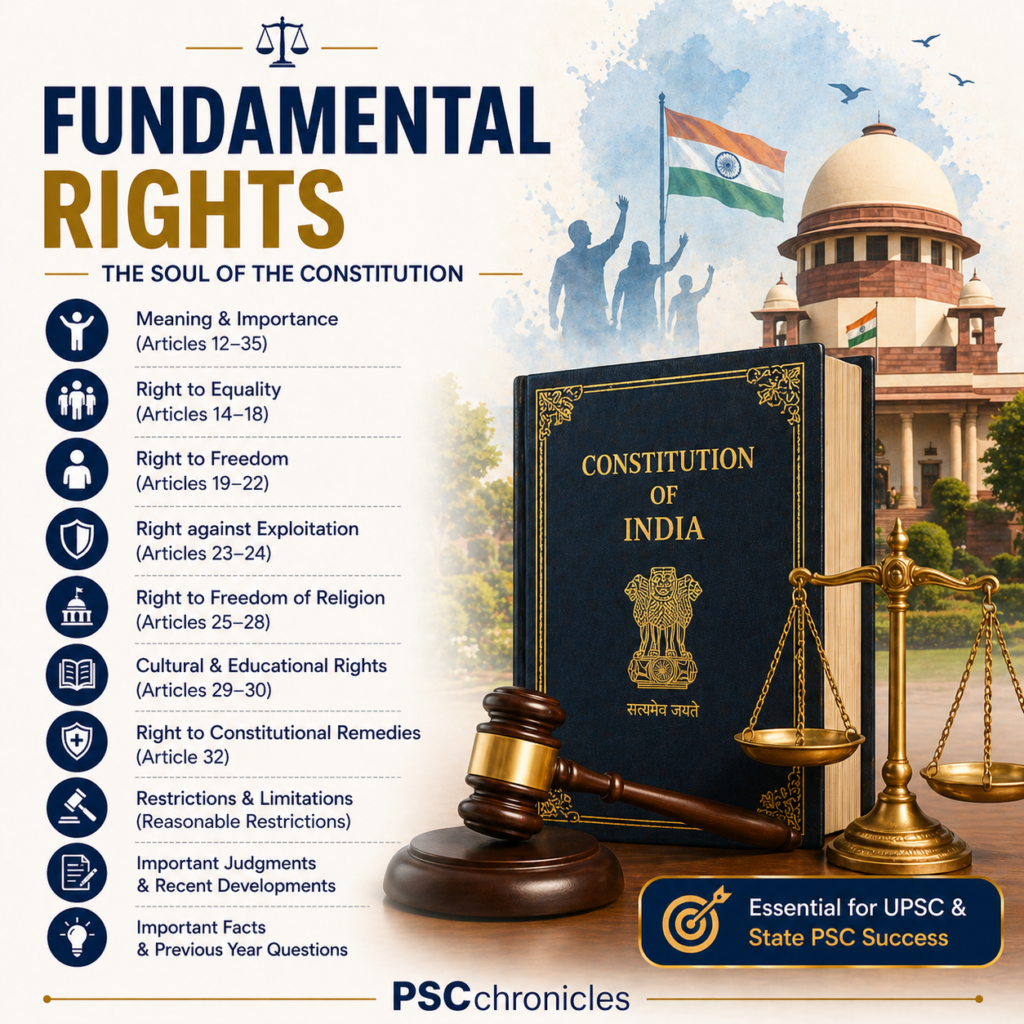
Fundamental Rights Practice Questions for UPSC and State PSC exams

1. Fundamental Rights are enshrined in which Part of Constitution?


2. Article 12 defines ‘State’ for Fundamental Rights to include:


3. Article 13 declares laws inconsistent with FRs as:


4. Right to Equality is guaranteed under Articles:


5. Article 14 provides:


6. Reasonable classification under Article 14 must be based on:


7. Article 15 prohibits discrimination on grounds of:


8. Article 15(4) enabling reservations for SC/ST/OBC was added by:


9. Article 15(5) for educational institutions (including private) added by:


10. Article 15(6) for EWS reservation added by:


11. Article 16 provides:


12. Article 16(4) allows:


13. Article 16(4A) for SC/ST promotions added by:


14. Article 17 abolishes:


15. Article 18 abolishes:


16. Right to Freedom under Articles 19-22 includes:


17. Freedom of speech and expression under Article 19(1)(a) includes:


18. Reasonable restrictions on Article 19 include:


19. Article 20 provides protection in respect of conviction for offences:


20. Article 21 provides:


21. Right to Privacy was held fundamental under Article 21 in:


22. Article 21A provides Right to Education for children aged:


23. Article 22 provides protection against:


24. Preventive detention maximum period without advisory board is:


25. Right against Exploitation Articles 23-24 prohibit:


26. Right to Freedom of Religion Articles 25-28 provide:


27. Article 26 gives religious denominations right to:


28. Article 27 prohibits:


29. Article 28 prohibits religious instruction in:


30. Cultural and Educational Rights Articles 29-30 protect:


31. Article 30 applies to:


32. Right to Constitutional Remedies under Article 32 is called:


33. Article 32 can be suspended during emergency except for Articles 20 and 21 after:


34. Writ jurisdiction of High Courts is under:


35. Fundamental Rights are available against:


36. Article 15(2) prohibits discrimination in access to:


37. Right to property was originally Fundamental Right under Article 31, deleted by:


38. Present status of Right to Property:


39. Article 33 empowers Parliament to:


40. Article 34 provides for:


41. Article 35 gives power to make laws on FRs to:


42. Doctrine of severability is related to:


43. Doctrine of eclipse applies to:


44. Judicial review of FRs is part of:


45. Right to Equality includes:


46. Reservation for EWS up to 10% was upheld in:


47. Creamy layer concept applies to:


48. Article 19 freedoms are available to:


49. Freedom of press is:


50. Right to assemble peaceably under Article 19(1)(b) is subject to:


51. Right to form associations under 19(1)(c) includes:


52. Right to move freely under 19(1)(d) can be restricted for:


53. Right to reside under 19(1)(e) subject to:


54. Right to profession under 19(1)(g) subject to:


55. Article 21 expanded to include:


56. Right to speedy trial is part of:


57. Right to legal aid is part of:


58. Article 22(1) rights not available to:


59. Preventive detention laws include:


60. Article 23 prohibits begar, enforced by:


61. Child labour prohibition under Article 24 strengthened by:


62. Article 25 freedom subject to:


63. Shirur Mutt case defined:


64. Article 26 rights subject to:


65. Article 28(3) allows religious instruction in:


66. Article 29(1) protects:


67. Article 29(2) prohibits denial of admission to state-aided institutions on grounds of:


68. Article 30(1) right to establish institutions is:


69. Article 32 writs can be issued by:


70. Article 32 is itself a Fundamental Right, hence:


71. Public Interest Litigation expanded locus standi for FR enforcement under:


72. Right to constitutional remedies includes:


73. Habeas corpus means:


74. Mandamus means:


75. Prohibition is issued to:


76. Certiorari quashes:


77. Quo warranto questions:


78. Fundamental Rights can be amended:


79. Article 13(4) inserted by 24th Amendment states:


80. Doctrine of basic structure limits:


81. Right to property as legal right can be deprived by:


82. Article 15(3) permits special provisions for:


83. Article 16(3) allows Parliament to prescribe:


84. Article 19(1)(a) does not protect:


85. Article 21 includes right to die?


86. Right to education under 21A made enforceable by:


87. Article 22 safeguards do not apply to:


88. Preventive detention must be communicated grounds within:


89. Article 23 exception allows:


90. Article 24 prohibits child labour under 14 in:


91. Freedom of religion does not include:


92. Article 25(2) allows state to:


93. Article 28 distinguishes between institutions:


94. Article 29 protects:


95. Article 30 protects:


96. State can regulate minority institutions for:


97. Article 32 remedies are:


98. High Court writ jurisdiction under 226 is:


99. Fundamental Rights aim to:


100. FRs are negative obligations on State to:


Fundamental Rights MCQs

To study current affairs from exam point of Click here

To study current affairs from exam point of Click here

fundamental rights mcqs

Leave a Comment

Your email address will not be published. Required fields are marked *