πŸ“° Today's Current AffairsRead Now →
📷 Follow on Instagram

Indian Polity and Constitution MCQs

This section covers essential Indian Polity questions, focusing on the Constitution, the Preamble, Fundamental Rights, and the roles of the President and Parliament. It’s designed to help you master the key concepts and legal frameworks frequently tested in competitive exams

Motion of Thanks

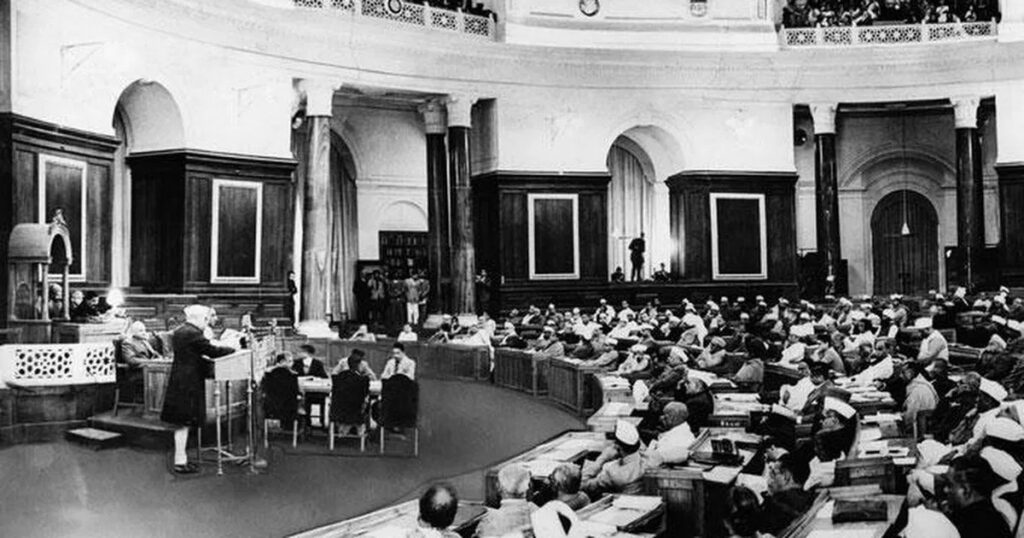
Lok Sabha clears Motion of Thanks without PM’s reply:

The Lok Sabha passed the Motion of Thanks on the president’s address without Prime Minister Narendra Modi giving his customary reply as the Opposition continued its protest.

What is Motion of Thanks?

The Motion of Thanks is a formal motion moved in both Houses of Parliament (Lok Sabha and Rajya Sabha) after the President’s Address at the beginning of the first session after a general election and at the first session of every year.

  • It is mentioned in Article 87 of the Indian Constitution.
  • The Motion must be passed by a simple majority in the Lok Sabha. Failure to pass it amounts to a defeat for the government and signifies a lack of confidence, which can lead to theΒ government’s resignation.

Motion of Thanks Read More Β»

CITIZENSIP TRAIL

Which case is associated with the Supreme Court striking down the Illegal Migrants (Determination by Tribunals) Act 1983?


What is meant by ‘domicile’ in the context of Indian citizenship law?


What is the minimum period of residence required in India for citizenship by naturalisation (general category)?


The Citizenship Act 1955 was amended to provide citizenship to persons of Indian origin in which year β€” also when OCI was introduced?


Which Part of the Indian Constitution deals with Citizenship?


Which Fundamental Right is available to citizens of India ONLY (not to all persons)?


Which of the following correctly states the relationship between Articles 5 to 11 of the Constitution and the Citizenship Act 1955?


Which of the following is correct about the Overseas Citizen of India (OCI) card?


What is the significance of the Assam Accord of 1985 in the context of citizenship?


Article 6 of the Indian Constitution relates to citizenship of which category of persons?


Consider the following statements about citizenship provisions in the Indian Constitution:
1. Articles 5 to 11 in Part II deal with citizenship.
2. Article 9 states that a person who voluntarily acquires foreign citizenship ceases to be an Indian citizen.
3. Article 11 empowers state legislatures to make laws relating to citizenship.
Which of the statements given above is/are CORRECT?


Which of the following bodies determines disputes related to citizenship in India?


Which of the following persons can apply for registration as an Indian citizen under Section 5 of the Citizenship Act 1955?


Which of the following is a ground for DEPRIVATION of citizenship under Section 10 of the Citizenship Act 1955?


Which Article of the Indian Constitution provides that a person shall not be a citizen of India if they voluntarily acquire citizenship of a foreign state?


In which Schedule of the Indian Constitution is citizenship listed as a Union subject?


Citizenship in India is listed under which Schedule and Entry of the Constitution?


The concept of ‘Jus Soli’ in citizenship law means:


Which Article of the Indian Constitution specifically abolishes untouchability and its practice is an offence?


Which of the following is the correct sequence of constitutional articles dealing with citizenship?


Which Article of the Indian Constitution empowers Parliament to make laws on citizenship?


Which provision prevents a person from being both an Indian citizen and a citizen of another country simultaneously (barring OCI)?


Which among the following statements about the Foreigners Act 1946 is CORRECT?


What is the difference between an ‘NRI’ (Non-Resident Indian) and an ‘OCI’ (Overseas Citizen of India)?


Deprivation of citizenship under Section 10 of the Citizenship Act does NOT apply to persons who acquired citizenship by:


The right of a minor who has renounced Indian citizenship to resume it is available:


Which of the following correctly describes ‘citizenship by incorporation of territory’ under the Citizenship Act 1955?


The National Register of Citizens (NRC) was first prepared and updated in which state?


Which part of the Indian Constitution guarantees Fundamental Rights?


The Constituent Assembly of India adopted the Constitution on:


The Citizenship (Amendment) Act 2019 reduces the residency requirement for naturalisation to 5 years for minorities from Pakistan Bangladesh and Afghanistan. This amendment is to Clause __ of Section __ of the Citizenship Act 1955.


The ‘basic structure’ doctrine related to citizenship was most importantly articulated in which Supreme Court case?


The Citizenship Amendment Act 2019 grants fast-track citizenship to persecuted minorities from which three countries?


The Citizenship (Amendment) Act 2019 was challenged in the Supreme Court primarily on the basis of violation of which constitutional provision?


Article 15 of the Indian Constitution prohibits discrimination on which grounds?


Article 5 of the Indian Constitution deals with which of the following?


The Citizenship Act was enacted by the Indian Parliament in which year?


The Citizenship Amendment Act (CAA) was passed by the Indian Parliament in which year?


Article 19 of the Indian Constitution guarantees six freedoms. Which of the following groups correctly identifies ALL six freedoms?


Which of the following is NOT a mode of acquiring Indian citizenship under the Citizenship Act 1955?


Under which article does the Indian Constitution address citizenship of persons of Indian origin residing outside India?


A person born in India on or after 26 January 1950 but before 1 July 1987 is a citizen of India by:


Which committee/body of the Constituent Assembly dealt with the Draft Articles on Citizenship?


Which of the following persons CANNOT be granted Indian citizenship by naturalisation?


Which of the following is NOT included in the Fundamental Rights guaranteed under Article 19 to Indian citizens?


What does Article 10 of the Indian Constitution state about citizenship?


India follows which type of citizenship system?


In India, citizenship is a subject in the _______ List, meaning only _______ can legislate on it.


The concept of ‘Jus Sanguinis’ in citizenship law refers to:


Under the Citizenship Act 1955, which of the following can lead to termination of Indian citizenship?


CITIZENSIP TRAIL Read More Β»

Practice Questions on External Sector for UPSC, APPSC, TGPSC and other state PSC exams

Practice Questions on External Sector for UPSC, APPSC, TGPSC and other state PSC exams Read More Β»

Practice Questions on Industrial sector (Economy) for UPSC, APPSC, TGPSC and other state PSC exams

Practice Questions on Industrial sector (Economy)

Please go to Practice Questions on Industrial sector (Economy) for UPSC, APPSC, TGPSC and other state PSC exams to view the test

Practise Questions on Agriculture Sector

Practice Questions on Industrial sector (Economy) for UPSC, APPSC, TGPSC and other state PSC exams Read More Β»