Why in News?
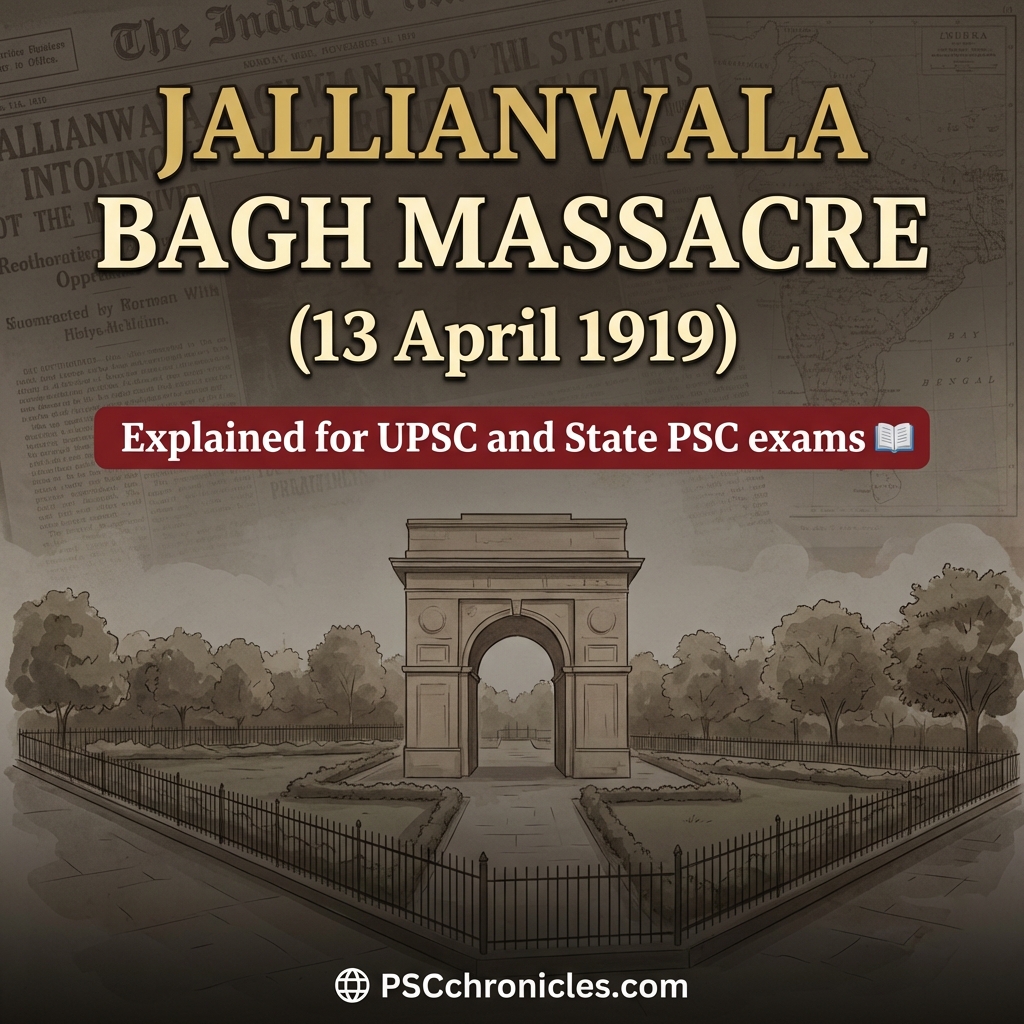
India marks the 107th anniversary of the Jallianwala Bagh Massacre on April 13, 2026. This tragic event became a major turning point in India’s freedom struggle, exposing the brutal nature of British colonial rule.
Causes Jallianwala Bagh Massacre:
- The Jallianwala Bagh Massacre, which took place on 13 April 1919 massacre arose from intense resentment against the Rowlatt Act (March 1919), a “Black Act” allowing detention without trial.
- Following Gandhi’s call for satyagraha, protests surged in Punjab.
- The arrest of local leaders Dr. Saifuddin Kitchlew and Dr. Satyapal led to riots, causing Brigadier-General Dyer to take control and ban public meetings.
The Incident (13 April 1919)
On Baisakhi day, an unarmed gathering in Amritsar was fired upon by troops under Brigadier-General Dyer, who blocked the only exit. Reports vary, with British figures at 379, while Indian estimates suggest over 1,000 deaths
Reactions:
- Rabindranath Tagore renounced his Knighthood in protest.
- Mahatma Gandhi gave up his title ‘Kaiser-i-Hind’ and called off the Rowlatt Satyagraha, citing widespread violence.
- Aftermath:
- Hunter Commission (1919): Appointed by the British government to investigate. It condemned Dyer’s actions but took no punitive action.
- Response: The incident fueled the nationwide demand for Swaraj and led to the launch of the Non-Cooperation Movement (1920–22).
To study current issues related to History & culture, Click here