📰 Today's Current AffairsRead Now →
📷 Follow on Instagram

History and Culture Current Affairs

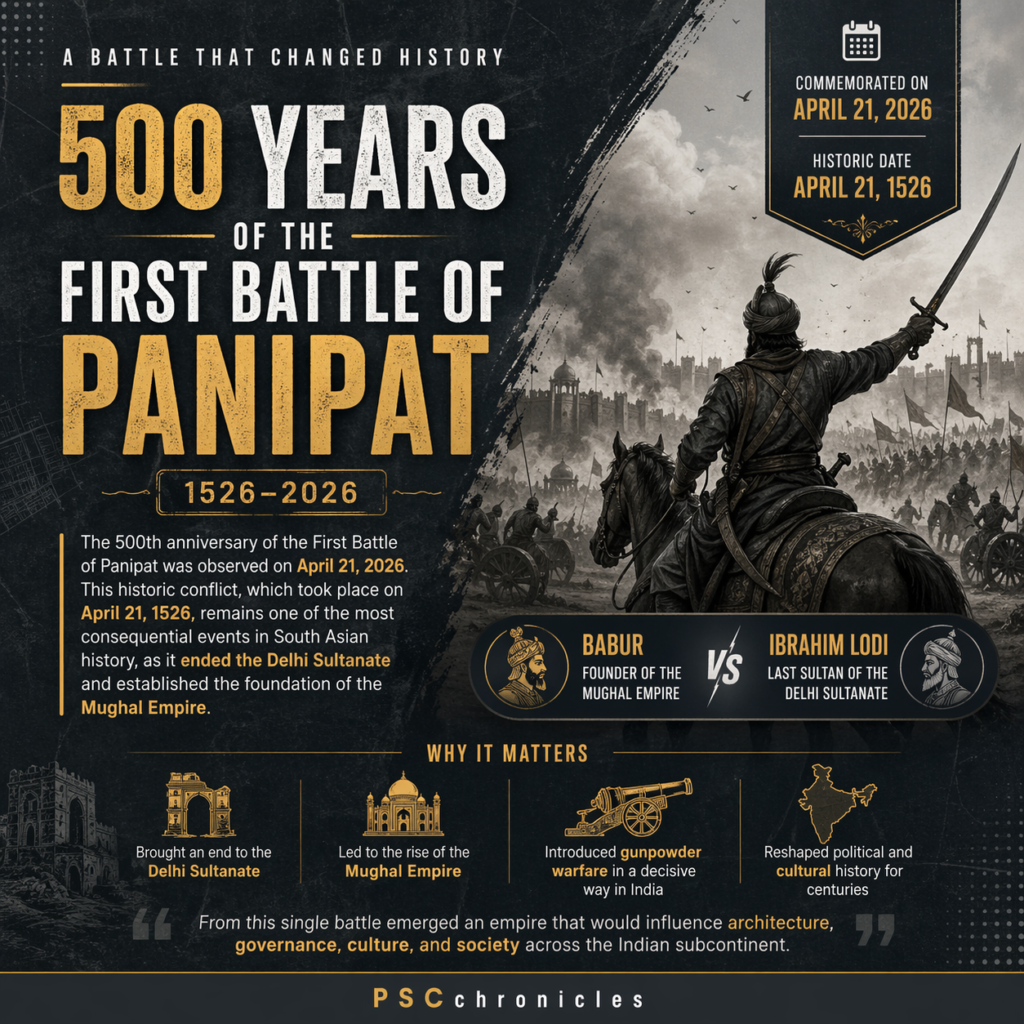
500 years for First Battle of Panipat (1526)

Why in News?

India marked the 500th anniversary of the First Battle of Panipat on April 21, 2026. Fought in 1526, this battle reshaped Indian history by ending the Delhi Sultanate and laying the foundation of Mughal rule.

first battle of panipat

Background of the Battle

The First Battle of Panipat was fought on April 21, 1526, between:

  • Babur (invader from Central Asia)
  • Ibrahim Lodi (ruler of Delhi Sultanate)

Immediate Cause

  • Internal conflicts weakened the Delhi Sultanate
  • Afghan nobles, including:
    • Daulat Khan Lodi
    • Alam Khan
  • They invited Babur to invade India and overthrow Ibrahim Lodi

Results of the Battle

  • Ibrahim Lodi was defeated and killed
  • Babur captured Delhi and Agra
  • End of the Delhi Sultanate (1206–1526)

Impact and Significance

1. Foundation of the Mughal Empire
  • Established the rule of the Mughal dynasty
  • Continued for nearly 300 years
2. Military Transformation
  • Introduction of gunpowder warfare in India
  • Decline of traditional warfare methods like war elephants
3. End of Delhi Sultanate
  • Marked the collapse of a 320-year-old regime

To study more History and culture related current affairs from exam point of view, Click here

500 years for First Battle of Panipat (1526) Read More »

Adi Shankaracharya Jayanti 2026

Why in News?

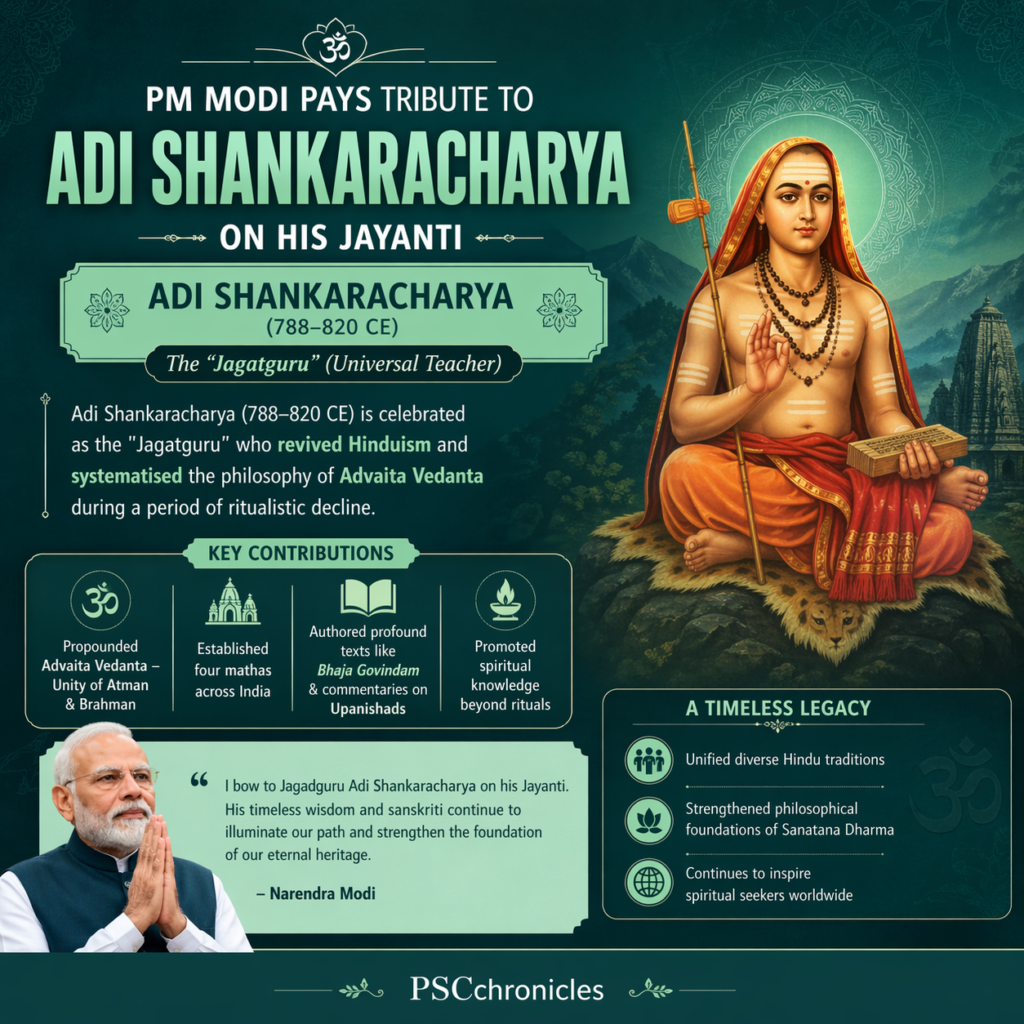
Prime Minister Narendra Modi paid tribute to Adi Shankaracharya on his Jayanti, highlighting his enduring influence on Indian philosophy and spirituality. His teachings continue to shape India’s cultural and intellectual traditions

adi shankaracharya jayanti

Who was Adi Shankaracharya?

Adi Shankaracharya (788–820 CE) was one of the greatest philosophers of India and is widely known as “Jagatguru” (World Teacher).

Key Contributions

  • Revived Hindu philosophy during a time of excessive ritualism
  • Systematised the doctrine of Advaita Vedanta
  • Established four major mathas (monasteries) in India:
    • Sringeri (South)
    • Dwaraka (West)
    • Puri (East)
    • Badrinath (North)

Core Philosophy: Advaita Vedanta (Non-Dualism)

The term Advaita means “not two”, implying that reality is one and indivisible.

Three Fundamental Concepts

1. Brahman (Ultimate Reality)
  • The only eternal and unchanging reality
  • Formless, infinite, and beyond human perception
2. Atman (Individual Soul)
  • The inner self or soul of an individual
  • According to Shankaracharya, Atman = Brahman

Famous Mahavakya: “Aham Brahmasmi” (I am Brahman)

3. Maya (Illusion)
  • The material world is an illusion
  • It creates a false perception of diversity and separation

To study History and culture current affairs from exam point of view, Click here

Adi Shankaracharya Jayanti 2026 Read More »

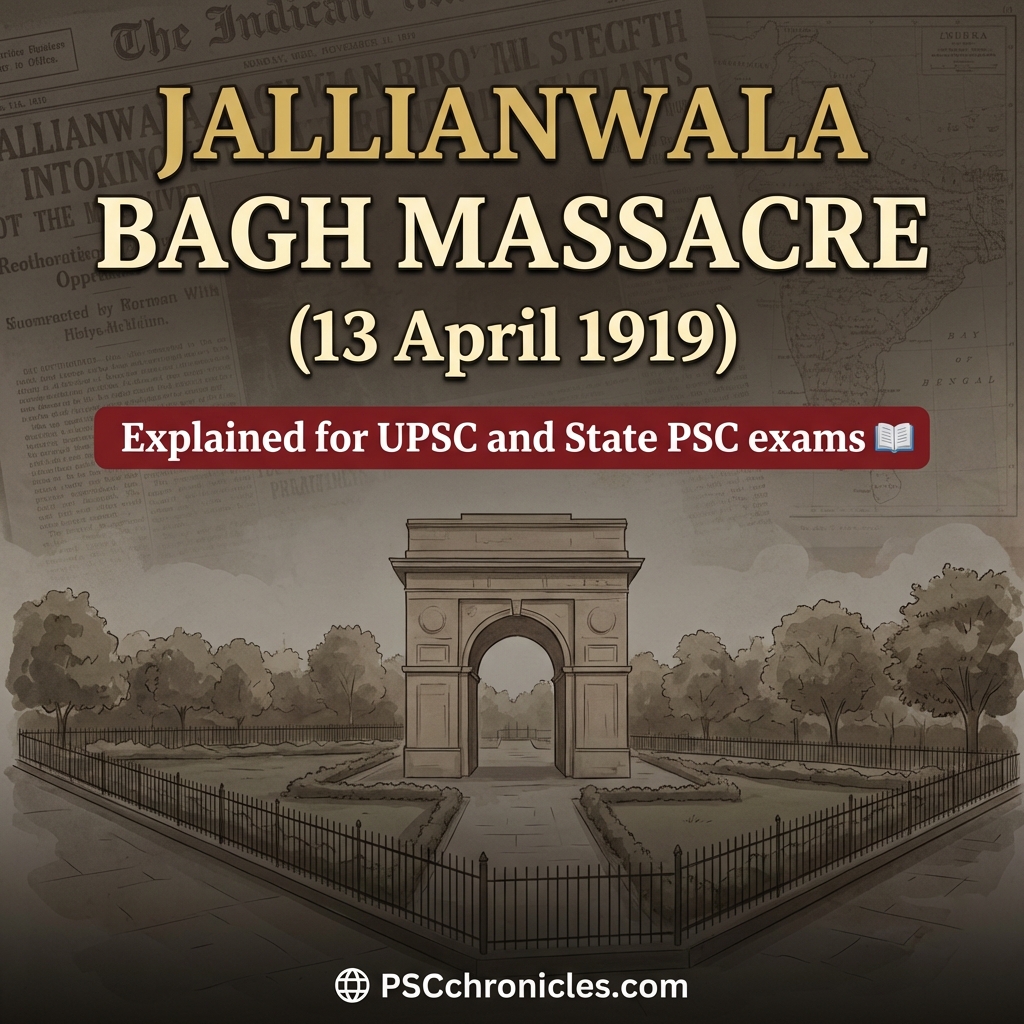
107th anniversary of the Jallianwala Bagh Massacre:

Why in News?

India marks the 107th anniversary of the Jallianwala Bagh Massacre on April 13, 2026. This tragic event became a major turning point in India’s freedom struggle, exposing the brutal nature of British colonial rule.

jallianwala bagh massacre (13 april 1919)

Causes Jallianwala Bagh Massacre:

  • The Jallianwala Bagh Massacre, which took place on 13 April 1919 massacre arose from intense resentment against the Rowlatt Act (March 1919), a “Black Act” allowing detention without trial.
  • Following Gandhi’s call for satyagraha, protests surged in Punjab.
  • The arrest of local leaders Dr. Saifuddin Kitchlew and Dr. Satyapal led to riots, causing Brigadier-General Dyer to take control and ban public meetings. 

The Incident (13 April 1919)

On Baisakhi day, an unarmed gathering in Amritsar was fired upon by troops under Brigadier-General Dyer, who blocked the only exit. Reports vary, with British figures at 379, while Indian estimates suggest over 1,000 deaths

Reactions:

  • Rabindranath Tagore renounced his Knighthood in protest.
  • Mahatma Gandhi gave up his title ‘Kaiser-i-Hind’ and called off the Rowlatt Satyagraha, citing widespread violence.
  • Aftermath:
    • Hunter Commission (1919): Appointed by the British government to investigate. It condemned Dyer’s actions but took no punitive action.
    • Response: The incident fueled the nationwide demand for Swaraj and led to the launch of the Non-Cooperation Movement (1920–22).

To study current issues related to History & culture, Click here

107th anniversary of the Jallianwala Bagh Massacre: Read More »

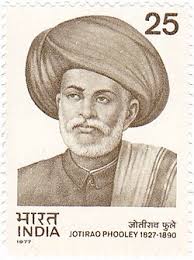
Mahatma Jyotiba Phule Jayanti 2026: Complete Notes for UPSC & PSC Exams

Why in News?

Prime Minister Narendra Modi paid tribute to Mahatma Jyotiba Phule on his birth anniversary, recognizing his immense contribution to social justice, education, and equality in India.

mahatma jyotiba phule

Mahatma Jyotiba Phule Major contributions:

1. Pioneer of Women’s Education

  • In 1848, started the first girls’ school at Bhide Wada, Pune
  • Educated his wife Savitribai Phule, who became India’s first woman teacher
  • Promoted education as a tool for social transformation

2. Satyashodhak Samaj (1873)

  • Founded Satyashodhak Samaj to promote social equality and fight against caste discrimination

3. Concept of ‘Dalit’

  • Among the first leaders to use the term “Dalit” (meaning oppressed)

4. Literary Contribution – Gulamgiri (1873)

  • Famous book Gulamgiri (means Slavery)
  • Compared caste oppression in India with racial slavery in America
  • Highlighted exploitation and inequality

5. Title of “Mahatma”

  • Conferred in 1888 by social activist Vithalrao Krishnaji Vandekar
  • Recognized for his lifelong service to society

Legacy and Influence

  • Inspired leaders like Dr. B. R. Ambedkar
  • Ambedkar considered Phule as one of his three gurus (along with Buddha and Kabir)
  • Laid foundation for the modern anti-caste movement in India

To know more about Jyotiba Phule, Click here

Mahatma Jyotiba Phule Jayanti 2026: Complete Notes for UPSC & PSC Exams Read More »

Samrat Samprati Museum Inaugurated in Gandhinagar

Why in News?

Prime Minister Narendra Modi inaugurated the Samrat Samprati Museum at Koba Tirth in Gandhinagar, Gujarat on the occasion of Bhagwan Mahavir Jayanti. The museum highlights the legacy of Samrat Samprati, a Mauryan emperor known for promoting Jainism

samrat samprati

Who was Samrat Samprati?

  • Period: c. 224–215 BCE
  • Dynasty: Mauryan Dynasty
  • Lineage:
    • Grandson of Emperor Ashoka
    • Son of Kunala

Key Contributions

  • Promoted Jainism across India
  • Converted to Jainism by monk Suhastin
    • Disciple of Acharya Bhadrabahu
  • Known for:
    • Construction of Jain temples
    • Spreading Jain teachings
    • Commissioning lakhs of Tirthankara idols

For more current affairs on History and culture, Click here

Samrat Samprati Museum Inaugurated in Gandhinagar Read More »

Centre Issues New Guidelines on ‘Vande Mataram’: Key Facts, History & Exam Notes

Why in News?

Union Government has issued new guidelines for the rendition of ‘Vande Mataram’, India’s National Song. It mandates that all six stanzas of the official version be rendered first when performed along with the National Anthem.

Vande Mataram

Composition

  • Written by Bankim Chandra Chattopadhyay in 1875
  • First published in Bangadarshan journal
  • Later included in his novel Anandamath (1882)

Political & Historical Significance

  • First sung publicly by Rabindranath Tagore at the 1896 INC Session (Calcutta)
  • Became a symbol of India’s freedom struggle
  • Used as a rallying cry against British rule

Global Recognition

  • Madam Bhikaji Cama unfurled India’s early flag with Vande Mataram” inscribed in Stuttgart (1907)

Constitutional Status

  • On 24 January 1950, the Constituent Assembly:
    • Declared ‘Vande Mataram’ as National Song
    • Granted it status “equal in honour” to National Anthem (‘Jana Gana Mana’)
  • Initially, only the first two stanzas were officially adopted
https://timesofindia.indiatimes.com/india/all-6-stanzas-of-vande-mataram-now-must-for-all-govt-events-schools-what-centres-new-guidelines-say/articleshow/128187027.cms: Centre Issues New Guidelines on ‘Vande Mataram’: Key Facts, History & Exam Notes

Centre Issues New Guidelines on ‘Vande Mataram’: Key Facts, History & Exam Notes Read More »

80th Anniversary of Royal Indian Navy Revolt (1946): Key Facts, Causes & Significance for exams:

Why in News?

February 18, 2026 marks the 80th anniversary of the Royal Indian Navy (RIN) Revolt, 1946.

royal indian navy (rin) revolt

Key Highlights:

  • Also known as the 1946 Naval Uprising.
  • Began on February 18, 1946, and lasted for 5 days.
  • Originated at HMIS Talwar (Bombay) and spread to other naval establishments.
  • Involved around 20,000 naval ratings across ships and shore establishments.
  • Received mass public support including strikes by workers and students.

Causes of the RIN Revolt

  • Poor Quality of Food served to Indian sailors
  • Racial Discrimination and ill-treatment by British officers
  • Low Pay and Harsh Working Conditions
  • Influence of nationalist movements and INA trials

Course of Events

Immediate Trigger

  • Began as a hunger strike by ~1,100 ratings at HMIS Talwar
  • Protest against Commander Arthur Frederick King’s racial behaviour

Organisation

  • Formation of Naval Central Strike Committee (NCSC)
  • Leadership by M.S. Khan

Demands

  • Better food and service conditions
  • Equal treatment with British personnel
  • Release of Indian National Army (INA) prisoners

Outcome

  • Revolt ended on February 23, 1946, after surrender
  • Suppressed by British authorities with negotiations and force

Significance
  • Demonstrated declining loyalty of Indian armed forces to British rule
  • Seen as the “final nail in the coffin” of British colonialism in India
  • Accelerated British decision to transfer power in 1947
  • Highlighted unity among soldiers, workers, and civilians
https://www.thehindu.com/education/the-1946-royal-navy-revolt-solidarity-amid-sharpening-polarisation/article70642960.ece: 80th Anniversary of Royal Indian Navy Revolt (1946): Key Facts, Causes & Significance for exams:

80th Anniversary of Royal Indian Navy Revolt (1946): Key Facts, Causes & Significance for exams: Read More »

Bust of C. Rajagopalachari Unveiled at Rashtrapati Bhavan:

Why in News?

The President of India unveiled a bust of Chakravarti Rajagopalachari (Rajaji) at Rashtrapati Bhavan.

rajagopalachari

Chakravarti Rajagopalachari:

  • First and only Indian Governor-General of independent India.
  • Served as the last Governor-General (1948–1950)

Close associate of Mahatma Gandhi

  • Known as the “conscience-keeper of Gandhi”

Participated in major movements:

  • Non-Cooperation Movement (1920)
  • Civil Disobedience Movement (1930)
  • Vedaranyam Salt Satyagraha (1930)

Proposed the C.R. Formula (1944):

  • Aimed to resolve the Congress–Muslim League deadlock
https://www.pib.gov.in/PressReleasePage.aspx?PRID=2231850&reg=3&lang=2: Bust of C. Rajagopalachari Unveiled at Rashtrapati Bhavan:

Bust of C. Rajagopalachari Unveiled at Rashtrapati Bhavan: Read More »

వినాయక్ దామోదర్ సావర్కర్ వర్ధంతి (ఫిబ్రవరి 26) – సేవలు, పుస్తకాలు & స్వాతంత్ర్య పోరాటంలో పాత్ర

వార్తలలో ఎందుకు? ఫిబ్రవరి 26వ తేదీ వినాయక్ దామోదర్ సావర్కర్ (వీర్ సావర్కర్) వర్ధంతి. ప్రధానమంత్రితో సహా పలువురు నాయకులు, భారతదేశ స్వాతంత్ర్య ఉద్యమంలో ఆయన పోషించిన పాత్రను ప్రముఖంగా ప్రస్తావిస్తూ నివాళులర్పించారు.

వీర్ సావర్కర్ యొక్క ప్రధాన సేవలు: విప్లవ సంస్థలు: మిత్ర మేళాను స్థాపించారు (1899). తరువాత ఇది అభినవ్ భారత్ సొసైటీగా రూపాంతరం చెందింది (1904). లండన్‌లో కార్యకలాపాలు: ఇండియా హౌస్ (లండన్)తో అనుబంధం కలిగి ఉన్నారు. భారతీయ విద్యార్థులను సమీకరించడానికి ఫ్రీ ఇండియా సొసైటీని స్థాపించారు. 1857 తిరుగుబాటు పునర్వివరణ: ‘ది హిస్టరీ ఆఫ్ ది వార్ ఆఫ్ ఇండియన్ ఇండిపెండెన్స్’ (1909) గ్రంథాన్ని రచించారు. ఈ తిరుగుబాటును “మొదటి స్వాతంత్ర్య యుద్ధం” అని పిలిచిన మొదటి వ్యక్తి. జైలు శిక్ష: 1910లో అరెస్టు (నాసిక్ కుట్ర కేసు). సెల్యులార్ జైలులో (అండమాన్ & నికోబార్ దీవులు) 50 సంవత్సరాల జైలు శిక్ష విధించబడింది. https://www.

newsonair.gov.

వినాయక్ దామోదర్ సావర్కర్ వర్ధంతి (ఫిబ్రవరి 26) – సేవలు, పుస్తకాలు & స్వాతంత్ర్య పోరాటంలో పాత్ర Read More »

Swami Dayanand Saraswati Birth Anniversary – Arya Samaj, Satyarth Prakash & Key Contributions

Why in News?

The birth anniversary of Swami Dayanand Saraswati was observed recently. The President and Vice President of India paid tribute, highlighting his role in social and religious reforms.

swami dayanand saraswati

Major Contributions of Swami Dayanand Saraswati:

Famous Slogan:

  • “Back to the Vedas” (Return to pure Vedic teachings)

Concept of Swaraj:

  • First to give the call “India for Indians” (1876)

Religious Reforms:

  • Promoted Monotheism
  • Opposed idol worship and polytheism
  • Emphasized Vedas as supreme authority

Shuddhi Movement:

  • Focused on reconversion to Hinduism

Education Initiatives:

  • Inspired establishment of DAV (Dayanand Anglo-Vedic) institutions
  • First DAV School established in Lahore (1886) by Mahatma Hansraj

Literary Work:

  • Authored “Satyarth Prakash”
https://ddnews.gov.in/en/pm-modi-pays-homage-to-maharshi-dayanand-saraswati-on-birth-anniversary/: Swami Dayanand Saraswati Birth Anniversary – Arya Samaj, Satyarth Prakash & Key Contributions

Swami Dayanand Saraswati Birth Anniversary – Arya Samaj, Satyarth Prakash & Key Contributions Read More »