πŸ“° Today's Current AffairsRead Now →
📷 Follow on Instagram

Daily Current Affairs

Tetanus and Diphtheria Vaccine Launched in India – Key Facts for Exams

Why in News?

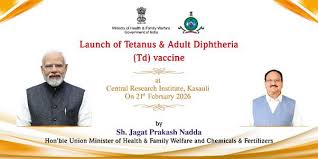
The Union Health Minister launched a Tetanus and Diphtheria (Td) vaccine programme. The initiative aims to strengthen protection against life-threatening infectious diseases in India.

tetanus and diphtheria vaccine launched

Tetanus and Adult Diphtheria (Td) vaccineΒ isΒ a dual-protection shot that immunizes older children and adults against tetanus and diphtheria.

About Tetanus:

Tetanus isΒ a serious, sometimes fatal, disease caused byΒ Clostridium tetaniΒ bacteria, which produce a toxin causing severe, painful muscle spasms and “lockjaw”

  • Source: Soil, dust, animal manure.
  • Transmission: Enters body through cuts, wounds, or injuries

About Diphtheria:

Diphtheria is a serious, highly contagious bacterial infection caused by toxin-producing strains of Corynebacterium diphtheriae. While it typically affects the mucous membranes of the nose and throat, it can also impact the skin.

Cause: Bacterium Corynebacterium diphtheriae.

Transmission: Spread through respiratory droplets.

Symptoms:

  • Sore throat, fever
  • Thick grey membrane (pseudomembrane) in throat
https://www.pib.gov.in/PressReleasePage.aspx?PRID=2230793&reg=3&lang=1: Tetanus and Diphtheria Vaccine Launched in India – Key Facts for Exams

Tetanus and Diphtheria Vaccine Launched in India – Key Facts for Exams Read More Β»

World Wetlands Day 2026 (Feb 2): Theme, Ramsar Convention & Montreux Record – Exam Notes

Why in News?

World Wetlands Day is observed on February 2, marking the anniversary of the Ramsar Convention (1971). The 2026 theme highlights traditional knowledge and cultural heritage linked to wetlands.

world wetlands day

Key Highlights:

  • Date: February 2 (every year).
  • Purpose: To raise awareness about the importance of wetlands for ecology, biodiversity, and livelihoods.
  • 2026 Theme:β€œWetlands and Traditional Knowledge: Celebrating Cultural Heritage”

Ramsar Convention on Wetlands:

  • Signed on February 2, 1971 in Ramsar
  • It is the only global treaty focused on a specific ecosystem (wetlands)
  • India became a member on February 1, 1982
  • Objective: Conservation and wise use of wetlands

Montreux Record:

  • A register under the Ramsar Convention
  • Includes wetlands facing ecological threats due to human interference or pollution

Indian Sites in Montreux Record:

  • Keoladeo National Park
  • Loktak Lake
https://www.downtoearth.org.in/water/world-wetlands-day-2026-promoting-chilika-red-rice-can-help-enhance-food-and-livelihood-security-around-indias-first-ramsar-site: World Wetlands Day 2026 (Feb 2): Theme, Ramsar Convention & Montreux Record – Exam Notes

World Wetlands Day 2026 (Feb 2): Theme, Ramsar Convention & Montreux Record – Exam Notes Read More Β»

Project Tiger Completes 50 Years: Centre Forms Expert Groups for Policy Review

Why in News?

The Government of India has constituted four expert working groups to review five decades of tiger conservation policies under Project Tiger, marking its 50-year milestone.

project tiger

Project Tiger:

  • Project Tiger was launched on 1 April 1973.
  • The launch took place at Jim Corbett National Park.
  • It is a Centrally Sponsored Scheme.
  • Objective: To ensure a viable population of Bengal tigers in their natural habitats.
  • Recognized as the world’s largest species conservation programme.

Exam TIP: National Tiger Conservation Authority (NTCA):

  • Established in 2005 and given statutory status in 2006.
  • Formed under the Wildlife (Protection) Act, 1972.
  • Functions:
    • Supervises Project Tiger implementation
    • Strengthens tiger conservation efforts
  • Chaired by the Union Minister of Environment, Forest and Climate Change
https://www.newindianexpress.com/nation/2026/Feb/09/govt-forms-expert-groups-for-upgrade-of-50-year-old-project-tiger-scheme: Project Tiger Completes 50 Years: Centre Forms Expert Groups for Policy Review

Project Tiger Completes 50 Years: Centre Forms Expert Groups for Policy Review Read More Β»

Telangana Opposes Almatti Dam Height Increase on Krishna River – Key Facts for TGPSC exams

Why in News?

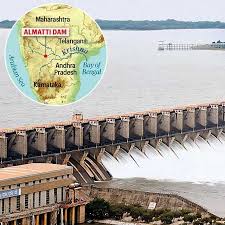
Telangana government has decided to oppose Karnataka’s proposal to increase the height of the Almatti Dam on the Krishna River, citing concerns over reduced downstream water availability.

almatti dam

Key Highlights:

  • Almatti Dam is located across the Krishna River in Karnataka.
  • It is officially called Lal Bahadur Shastri Dam.
  • Present Storage Capacity: 123.08 TMC at 519 metres height.
  • Proposed Increase: Height to be raised to 524.256 metres.
  • Expected Storage After Expansion: Around 300 TMC.
  • Telangana fears that increased storage will reduce water flow to downstream states like Telangana and Andhra Pradesh.

Background:

  • The Krishna River is one of the major inter-state rivers in India, flowing through Maharashtra, Karnataka, Telangana, and Andhra Pradesh.
  • Water sharing is governed by Krishna Water Disputes Tribunal (KWDT) awards.

Post-Bifurcation Water Sharing (2014):

  • Total allocation to undivided Andhra Pradesh: 811 TMC
    • Andhra Pradesh: 512 TMC
    • Telangana: 299 TMC
  • Any upstream project like Almatti impacts downstream states, leading to interstate disputes.
https://www.hindustantimes.com/india-news/telangana-to-move-sc-challenging-karnataka-government-s-plan-on-almatti-dam-height-101762372079396.html: Telangana Opposes Almatti Dam Height Increase on Krishna River – Key Facts for TGPSC exams

Telangana Opposes Almatti Dam Height Increase on Krishna River – Key Facts for TGPSC exams Read More Β»

Asian Waterbird Census 2026 at Kolleru Wildlife Sanctuary – Notes for APPSC exams

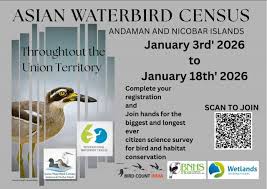
The Asian Waterbird Census (AWC) was recently conducted at Kolleru Wildlife Sanctuary in Andhra Pradesh. This annual census helps monitor waterbird populations and assess the health of wetland ecosystems.

asian waterbird census 2026

Asian Waterbird Census:

  • The Asian Waterbird Census (AWC) is part of the global International Waterbird Census (IWC).
  • The IWC was launched in 1967 by Wetlands International.
  • Conducted every year during January (2nd & 3rd weeks).
  • Census period coincides with the mid-winter non-breeding season of migratory birds.

About Kolleru Lake:

Kolleru Lake is Asia’s largest shallow freshwater lake and one of the largest freshwater lakes in India. Located in Andhra Pradesh between the deltas of the Krishna and Godavari rivers, it is a vital ecological site designated as both a Wildlife Sanctuary (1999) and a Ramsar Wetland of International Importance (2002)

  • Water Sources:Β The lake is fed by seasonal streams like theΒ BudameruΒ andΒ TammileruΒ and drains into the Bay of Bengal through theΒ Upputeru outlet.
  • Biodiversity Hub:Β Known as a “Bird Heaven,” it serves as a critical stop on theΒ Central Asian Flyway

Biodiversity Importance

  • Recognized as a major wetland ecosystem and bird habitat.
  • Key species:
    • Spot-billed (Grey) Pelican
    • Painted Stork
    • Open-billed Stork
    • Ibis
    • Siberian Crane

Protected Areas

  • Atapaka Bird Sanctuary is located within the Kolleru region.
  • Serves as a safe breeding and feeding ground for migratory birds.
https://www.thehindu.com/news/national/andhra-pradesh/asian-waterbird-census-in-ap-on-jan-5-and-6/article33489082.ece: Asian Waterbird Census 2026 at Kolleru Wildlife Sanctuary – Notes for APPSC exams

Asian Waterbird Census 2026 at Kolleru Wildlife Sanctuary – Notes for APPSC exams Read More Β»

Supreme Court Hearing on CAA Petitions from May 5 – Key Points for UPSC & PSC Exams

Why in News?

The Supreme Court of India has scheduled final hearings from May 5, 2026 on more than 250 petitions challenging the Citizenship (Amendment) Act, 2019 (CAA). The petitions question the constitutional validity of the Act, especially on grounds of alleged religious discrimination.

citizenship amendment act

Key Highlights:

  • The CAA amends the Citizenship Act, 1955.
  • It provides fast-track Indian citizenship to certain migrants facing religious persecution.
  • Eligible communities: Hindus, Sikhs, Buddhists, Jains, Parsis, and Christians.
  • Countries covered: Afghanistan, Bangladesh, and Pakistan.
  • Cut-off date: Migrants must have entered India on or before 31 December 2014.
  • It reduces the residency requirement for citizenship from 11 years to 5 years for eligible migrants.
  • Over 250 petitions challenge the Act’s constitutionality, mainly citing violation of Article 14 (Right to Equality). The Supreme Court will now conduct final hearings, which could have major constitutional implications
https://www.indiatoday.in/india/law-news/story/supreme-court-caa-final-hearing-may-5-iuml-plea-petitions-2870995-2026-02-19: Supreme Court Hearing on CAA Petitions from May 5 – Key Points for UPSC & PSC Exams

Supreme Court Hearing on CAA Petitions from May 5 – Key Points for UPSC & PSC Exams Read More Β»

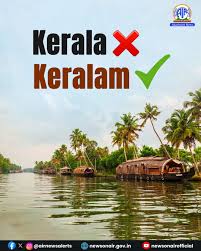
Kerala Renaming to β€˜Keralam’ Approved – Article 3 & State Name Change Procedure Explained for Exams

Why in News?

Union Cabinet has approved a proposal to rename Kerala as β€œKeralam”, initiating the constitutional process under Article 3 of the Indian Constitution.

keralam

Constitutional Basis:

Article 3 – Alteration of State Name

Parliament has the power to:

  • Form new states
  • Alter boundaries
  • Increase or decrease area
  • Change the name of a state

Article 4 – Supplemental Provisions

  • Any law under Article 3:
    • Amends the First Schedule (list of states)
    • Amends the Fourth Schedule (Rajya Sabha seats)
  • Such changes:
    • Are not considered Constitutional Amendments
    • Passed by simple majority

Step-by-Step Procedure to Change State Name:

  1. Presidential Recommendation:
    • Bill can be introduced in Parliament only with prior approval of the President.
  2. Reference to State Legislature:
    • President refers the Bill to the concerned State Legislature for its opinion.
  3. Non-Binding Opinion:
    • State’s views are not binding on Parliament.
  4. Parliamentary Approval:
    • Bill passed by simple majority in both Houses.
  5. Presidential Assent:
    • After approval, the President signs the Bill β†’ Name change becomes official.
https://ddnews.gov.in/en/union-cabinet-approves-proposal-to-rename-kerala-as-keralam/: Kerala Renaming to β€˜Keralam’ Approved – Article 3 & State Name Change Procedure Explained for Exams

Kerala Renaming to β€˜Keralam’ Approved – Article 3 & State Name Change Procedure Explained for Exams Read More Β»

Rajya Sabha Elections 2026 – 37 Seats Notified | Composition, Tenure & Articles Explained

Why in News?

The Election Commission of India (ECI) has issued notification for elections to 37 Rajya Sabha seats, with polling scheduled in March 2026, as the terms of these members are expiring in April.

rajya sabha elections

Rajya Sabha – Key Features:

Maximum Strength: 245 members

  • 233 elected from States & UTs
  • 12 nominated by the President

Nature of House:

  • Permanent body (cannot be dissolved)
  • Ensures continuity in Parliament

Tenure:

  • Each member serves 6 years
  • 1/3rd members retire every 2 years (biennial elections)
  • Based on Article 83(1)

Composition & Representation:

  • Allocation of seats is based on population.
  • Governed by the Fourth Schedule of the Constitution.

Nominated Members (Article 80(3)):

  • 12 members nominated by the President of India.
  • Chosen from fields like:
    • Literature
    • Science
    • Art
    • Social Service
  • They may join a political party within 6 months of taking their seat
https://ddnews.gov.in/en/eci-announces-march-16-polling-for-37-rajya-sabha-seats-across-10-states/: Rajya Sabha Elections 2026 – 37 Seats Notified | Composition, Tenure & Articles Explained

Rajya Sabha Elections 2026 – 37 Seats Notified | Composition, Tenure & Articles Explained Read More Β»

SC/ST Sub-Classification Verdict 2024 – Supreme Court Seeks Centre Report | Article 341 Explained

Why in News?

The Supreme Court has asked the Union Government to submit a report on actions taken following its landmark 2024 Constitution Bench verdict allowing sub-classification within SC/ST categories for reservation.

sc st sub classification

SC/ST sub-classification:

SC/ST sub-classificationΒ isΒ the process of dividing the Scheduled Castes (SC) or Scheduled Tribes (ST) categories into smaller sub-groups to ensure that reservation benefits reach the most disadvantaged communities within them

This concept, often called “quota within a quota,” was validated by a landmark 6:1 majority ruling of a seven-judge Supreme Court bench in August 2024 in the case of State of Punjab v. Davinder Singh

What is the Supreme Court Verdict (2024)?

A 7-judge Constitution Bench upheld the validity of sub-classification within SC/ST categories. It ruled that:

  • SC/ST groups are not homogeneous.
  • States can provide preferential treatment to the most backward sub-castes.

The judgment overturned the 2004 E.V. Chinnaiah case, which had disallowed such sub-classification.

Constitutional Provisions Involved:

Article 341 – Scheduled Castes

  • Empowers the President to notify SCs for each State/UT.
  • Done in consultation with the Governor.
  • Parliament alone can modify the list (include/exclude groups).

Key Clarification by Supreme Court:

  • Article 341 defines who is included in SC list.
  • It does not prevent internal classification for reservation benefits.
  • Sub-classification does not violate Article 14 (Right to Equality)
https://indianexpress.com/article/legal-news/sc-seeks-centres-report-on-action-taken-on-its-sc-st-sub-classification-verdict-10525491/: SC/ST Sub-Classification Verdict 2024 – Supreme Court Seeks Centre Report | Article 341 Explained

SC/ST Sub-Classification Verdict 2024 – Supreme Court Seeks Centre Report | Article 341 Explained Read More Β»

Substantive Motion in Lok Sabha – Meaning, Types & Constitutional Significance for Exams

Why in News?

A substantive motion was recently proposed in the Lok Sabha against the Leader of Opposition, seeking cancellation of membership.

substantive motion

Substantive Motion:

  • A substantive motion is an independent proposal placed before the House.
  • It seeks a definite and binding decision of the House.
  • It is complete in itself and not dependent on any other motion.
  • Admission of a substantive motion depends entirely on the Speaker’s discretion.
  • Once adopted, it reflects the formal opinion or will of the House.
  • It differs from:
    • Subsidiary motions (depend on another motion)
    • Procedural motions (relate to House functioning)

Examples of Substantive Motions in Lok Sabha:

  • Election of Speaker and Deputy Speaker
  • Motion of Thanks on the President’s Address
  • No-confidence motion / Confidence motion
  • Adjournment motion on urgent public issues
  • Resolution for removal of Speaker/Deputy Speaker
  • Motion declaring a seat vacant
  • Motions for general public interest discussions
https://www.thehindu.com/news/national/what-is-a-substantive-motion-why-bjp-wants-rahul-gandhi-disqualified-from-lok-sabha/article70627499.ece: Substantive Motion in Lok Sabha – Meaning, Types & Constitutional Significance for Exams

Substantive Motion in Lok Sabha – Meaning, Types & Constitutional Significance for Exams Read More Β»