📰 Today's Current AffairsRead Now →
📷 Follow on Instagram

January 2026 current affairs

India–Germany Submarine Deal under Project-75I

Why in News?

India and Germany are in the final stages of negotiations for a major submarine deal under Project-75I.
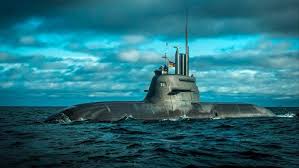
submarine

Key Highlights

Project-75 (India), or P-75(I), is a major Indian Navy program to indigenously build six advanced conventional diesel-electric attack submarines

  • Project Name: Project-75I
  • Total Submarines: 6
  • Estimated Cost: $8 billion
  • Foreign Partner: Germany.
  • Equipped with Air Independent Propulsion (AIP)
What is Air Independent Propulsion (AIP)?

A technology that allows submarines to operate without surfacing for oxygen Enhances:

  • Stealth capability
  • Underwater endurance

Critical for non-nuclear submarines

Exam Tip:

AIP = Longer underwater stay without oxygen

India–Germany Submarine Deal under Project-75I Read More »

Mission Sudarshan Chakra: India Building Counter-Drone Grid

Why in News?

India is developing a joint Counter Unmanned Aerial Systems (CUAS) grid to tackle rising threats from hostile and rogue drones. This initiative is part of the broader Mission Sudarshan Chakra, aimed at strengthening India’s air defence network.

mission sudarshan chakra

Mission Sudarshan Chakra:

Mission Sudarshan Chakra is a comprehensive 10-year national security initiative launched by Prime Minister Narendra Modi on August 15, 2025, during the 79th Independence Day address. It aims to build an indigenous, AI-enabled, multi-layered air and missile defence shield for India by 2035.

It consists of Multi-Layer Interceptor Systems. They are

  • Project Kusha: An indigenous Long-Range Surface-to-Air Missile (LRSAM) system featuring three missile variants—M1 (150 km)M2 (250 km), and M3 (350–400 km)—designed to rival the S-400.
  • Ballistic Missile Defence (BMD): A two-tier system for tracking and destroying ballistic missiles both inside (endo) and outside (exo) the atmosphere.
  • Integrated Air Defence Weapon System (IADWS): A tactical layer consisting of QRSAM (Quick Reaction SAM), VSHORADS (Very Short Range), and 5 kW laser-based Directed Energy Weapons (DEW).
Exam Tip:

Mission Sudarshan Chakra = India’s version of multi-layered air defence shield

https://indianexpress.com/article/india/drdo-air-defence-system-mission-sudarshan-chakra-10208827/: Mission Sudarshan Chakra: India Building Counter-Drone Grid

Mission Sudarshan Chakra: India Building Counter-Drone Grid Read More »

President Murmu Undertakes Submarine Sortie on INS Vagsheer

Why in News?

President Droupadi Murmu undertook a historic submarine sortie aboard INS Vagsheer at Karwar Naval Base. She became only the second Indian President after Dr. APJ Abdul Kalam (2006) to experience a submarine dive.

president sorties ins vaghasheer

INS Vagsheer:

  • Sixth and final submarine of Project-75 (Kalvari-class).
  • Built by Mazagon Dock Shipbuilders Limited (MDL), Mumbai Technology collaboration with Naval Group, France

Background: Project -75 (Kalvari-Class Submarines)

Project-75 (P-75) is a major Indian Navy program for the indigenous construction of six Kalvari-class diesel-electric attack submarines. These vessels are based on the Scorpène-class design from the French firm Naval Group (formerly DCNS) and were built at Mazagon Dock Shipbuilders Limited (MDL) in Mumbai through a Transfer of Technology (ToT) agreement

The list of Six submarines are:

  • INS Kalvari (2017)
  • INS Khanderi (2019)
  • INS Karanj (2021)
  • INS Vela (2021)
  • INS Vagir (2023)
  • INS Vagsheer (2025)
Exam Tip:

Project-75 = Kalvari-class submarines (6 total)

Kalvari-class = Diesel-electric (NOT nuclear submarines)

https://www.pib.gov.in/PressReleasePage.aspx?PRID=2209213&reg=3&lang=2: President Murmu Undertakes Submarine Sortie on INS Vagsheer

President Murmu Undertakes Submarine Sortie on INS Vagsheer Read More »

Suryastra Rocket System: Indian Army Deal | Current Affairs 2026

Why in News?

The Ministry of Defence (MoD) has signed a ₹292.69 crore deal to procure Suryastra Multi-Calibre Rocket Launcher Systems. The move aims to strengthen India’s long-range artillery and deep-strike capabilities.

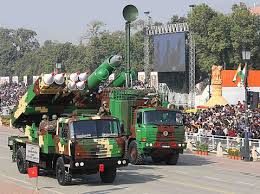
suryastra’ rocket launchers

Suryastra Multi-Calibre Rocket Launcher

Suryastra is India’s first indigenous universal multi-calibre long-range rocket launcher system, officially inducted into the Indian Army in January 2026. It is designed for high-precision, surface-to-surface strikes at ranges between 150 km and 300 km, significantly extending the reach of India’s artillery.

  • Manufacturer: NIBE Limited (Pune-based company)
  • Developed in collaboration with Israel’s Elbit Systems.
  • Range: Up to 300 km
  • Type: Multi-calibre rocket launcher system Can launch different types of rockets from a single platform

Exam Tip

Suryastra = Rocket Launcher (NOT missile system)

https://www.thehindu.com/news/national/army-to-procure-long-range-rocket-launchers-in-major-deal-backed-by-israeli-technology/article70468168.ece: Suryastra Rocket System: Indian Army Deal | Current Affairs 2026

Suryastra Rocket System: Indian Army Deal | Current Affairs 2026 Read More »

Indian Navy to Induct Drishti-10 MALE Drones

Why in News?

The Indian Navy is set to induct 10 indigenous Drishti-10 Starliner drones to enhance round-the-clock maritime surveillance. This move boosts India’s capability in sea security and intelligence gathering in the Indian Ocean Region (IOR)

drishti 10 male drones

Drishti-10 MALE Drones

Drishti-10 Starliner is India’s first indigenously manufactured Medium-Altitude Long-Endurance (MALE) unmanned aerial vehicle (UAV).

  • Developed by Adani Defence & Aerospace in collaboration with Israel’s Elbit Systems.
  • Drone Name: Drishti-10 Starliner
  • Type: MALE (Medium-Altitude Long-Endurance) UAV.
  • Endurance: More than 36 hours
  • Operating Altitude: 30,000–32,000 feet
  • Payload Capacity: Up to 450 kg
  • Use: Maritime surveillance, intelligence gathering

Exam Tip:

MALE = Medium Altitude + Long Endurance

https://www.business-standard.com/external-affairs-defence-security/news/adani-defence-delivers-2nd-drishti-10-starliner-surveillance-drone-to-navy-124120400689_1.html: Indian Navy to Induct Drishti-10 MALE Drones

Indian Navy to Induct Drishti-10 MALE Drones Read More »

DRDO Conducts Twin Launch of ‘Pralay’ Missiles

Why in News?

DRDO successfully carried out a salvo launch (back-to-back firing) of two Pralay missiles from the Odisha coast.

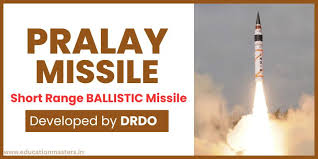
pralay missile

Pralay Missile:

Pralay (meaning “Apocalypse”) is India’s first indigenously developed short-range, surface-to-surface tactical ballistic missile designed for conventional strikes.

It fills a critical gap in India’s arsenal between long-range strategic nuclear missiles (Agni series) and short-range battlefield rockets (Pinaka)

  • Range: 150 km to 500 km.
  • Speed: Capable of reaching terminal speeds of Mach 6.1.
  • Payload: Can carry conventional warheads weighing between 500 kg and 1,000 kg.
  • Propulsion: Powered by a solid propellant rocket motor.
  • Trajectory: It is a quasi-ballistic missile, meaning it follows a low trajectory and can perform in-flight maneuvers to evade interceptor missiles.
Exam Tip:

Pralay = Quasi-ballistic missile (NOT cruise missile)

https://www.pib.gov.in/PressReleasePage.aspx?PRID=2210128&reg=3&lang=1: DRDO Conducts Twin Launch of ‘Pralay’ Missiles

DRDO Conducts Twin Launch of ‘Pralay’ Missiles Read More »

DRDO Tests 120 km Range Pinaka Rocket

Why in News?

DRDO successfully conducted the maiden flight test of the Pinaka Long Range Guided Rocket (LRGR-120) at Chandipur, Odisha.

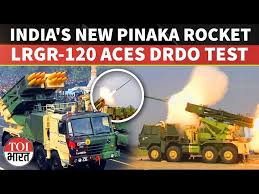
pinaka 120

Pinaka

  • Pinaka is an indigenous Multi-Barrel Rocket Launcher (MBRL) system developed by DRDO.
  •  A single Pinaka launcher can fire a salvo of 12 rockets in just 44 seconds.
Current variants & range
Pinaka Mark-IThe initial version with a range of approximately 40 km
Pinaka Mark-IIOffers an extended range of 60–75 km
Pinaka Long-Range Guided Rocket (LRGR)This variant reaches up to 120 km with precision guidance.
Global Interest:

 India has successfully exported the Pinaka system to Armenia in a deal worth approximately ₹2,000 crore. Other nations, including France, have expressed interest in evaluating the system for their own artillery needs.

Exam Tip

Pinaka = Rocket System (Not a Missile)

https://ddnews.gov.in/en/drdo-successfully-conducts-maiden-flight-test-of-120-km-strike-range-pinaka-rockets/: DRDO Tests 120 km Range Pinaka Rocket

DRDO Tests 120 km Range Pinaka Rocket Read More »

PSLV-C62 / EOS-N1 mission failed due to anomaly during upper-stage flight:

Why in News?

The PSLV-C62 mission carrying the EOS-N1 satellite was declared unsuccessful due to an anomaly during the upper-stage flight. This raises concerns as it is the second consecutive failure of PSLV, India’s trusted launch vehicle

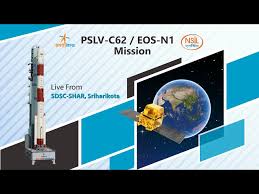
pslv c62

Key Highlights:

  • Mission Name: PSLV-C62
  • Launch Vehicle: Polar Satellite Launch Vehicle (PSLV)
  • Payload: 16 satellites
  • Main Satellite: EOS-N1 (Anvesha)
  • Failure Reason: Anomaly during upper-stage flight (PS4 stage)
  • Previous Failure: PSLV-C61 (May 2025, third-stage issue)
EOS-N1 (Anvesha)

EOS-N1, also known as Anvesha, was a highly advanced hyperspectral Earth-observation satellite developed by DRDO.  
It was intended to serve as a critical strategic asset for national security, capable of “seeing” through camouflage by identifying materials based on their unique spectral fingerprints.

Exam Tip:

Remember: PSLV = 4 stages → Solid + Liquid + Solid + Liquid

https://theprint.in/science/isro-pslv-c62-eos-n1-satellite/2825191/: PSLV-C62 / EOS-N1 mission failed due to anomaly during upper-stage flight:

PSLV-C62 / EOS-N1 mission failed due to anomaly during upper-stage flight: Read More »

IIT Madras Launches ‘Param Shakti’ Supercomputer

Why in News?

IIT Madras has launched ‘Param Shakti’, an indigenously developed supercomputer. It marks a significant advancement in India’s high-performance computing (HPC) under the National Supercomputing Mission (NSM)

param shakti

Key Highlights:

  • Developed by Centre for Development of Advanced Computing (C-DAC).
  • Installed at IIT Madras.
  • Built under the National Supercomputing Mission (NSM) jointly led by: Ministry of Electronics and Information Technology (MeitY) and Department of Science and Technology (DST)
Background:

A supercomputer is a highly powerful computer capable of performing extremely complex calculations at very high speeds. India has been developing supercomputers under the PARAM series, starting with PARAM 8000 (1991).

The National Supercomputing Mission (NSM) aims to create a network of 70+ supercomputers across India to boost research and innovation.

https://www.newindianexpress.com/states/tamil-nadu/2026/Jan/09/supercomputer-param-shakti-launched-at-iit-madras: IIT Madras Launches ‘Param Shakti’ Supercomputer

IIT Madras Launches ‘Param Shakti’ Supercomputer Read More »

World’s First Mountain Ice Core Vault Opens in Antarctica

Why in News?

Scientists have inaugurated the world’s first global mountain ice core repository, called the Ice Memory Sanctuary, in Antarctica. The initiative aims to preserve climate records stored in glaciers, which are rapidly melting due to global warming

world

Key Highlights:

  • The facility is located at the Concordia Research Station on the Antarctic Plateau.
  • It is designed to store ice cores from mountain glaciers across the world.
  • The vault maintains a constant temperature of around –52°C, ideal for long-term preservation.
https://www.indiatoday.in/science/story/global-ice-archive-antarctica-climate-history-glacier-melt-2852853-2026-01-16: World’s First Mountain Ice Core Vault Opens in Antarctica

World’s First Mountain Ice Core Vault Opens in Antarctica Read More »