January 2026 (3rd week) Current affairs Practice Questions:


January 2026 (3rd week) Current affairs Practice Questions: Read More »
The Telangana government has initiated the Munneru–Palair Link Project to stabilise the Nagarjuna Sagar Project (NSP) ayacut. The project aims to utilize surplus water and reduce flood risks in the region.
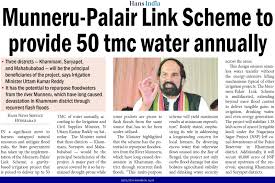
Munneru–Palair Link Project is a gravity-based irrigation and flood control initiative by the Telangana government. It involves constructing a 9.6-kilometre-long link canal to divert surplus floodwaters from the Munneru River to the Palair balancing reservoir
Munneru–Palair Link Project – Telangana Irrigation & Water Supply Scheme | TGPSC Notes Read More »
The Dedicated Backward Classes (BC) Commission in Telangana has submitted its report recommending 34% reservation for BCs in Urban Local Bodies (ULBs).
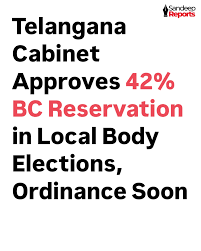
Busani Venkateshwara Rao is the Chairman of the Dedicated Commission for Backward Classes (BCs) in Telangana. The commission was established as a “One-Man Commission” following directives from the High Court and Supreme Court to conduct a “triple test” for reservations in local bodies.
Mandate: The commission is tasked with enumerating the BC population and submitting a comprehensive report to the state government to provide a legal basis for increasing reservations (targeted at 42%).
https://www.thehansindia.com/telangana/bc-quota-for-ulbs-finalised-1039518: BC Reservation in Telangana ULBs – 34% Quota Proposal Explained |TGPSC NotesBC Reservation in Telangana ULBs – 34% Quota Proposal Explained |TGPSC Notes Read More »
The Telangana Chief Minister inaugurated the renovated shrine at Medaram ahead of the Sammakka–Saralamma Jatara. The State government reconstructed sacred platforms (gaddelu).
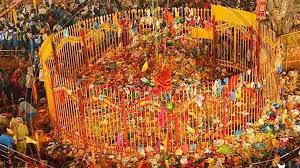
Medaram Maha Jatara (also known as the Sammakka Saralamma Jatara) is Asia’s largest tribal religious congregation, held biennially in the state of Telangana, India. It commemorates the brave fight of a mother and daughter, Sammakka and Saralamma, against the unjust tax laws of the Kakatiya rulers in the 13th century
Medaram Maha Jatara 2026 – Sammakka Saralamma Festival & Key Facts for TGPSC Read More »
The Telangana government has unveiled the Next-Gen Life Sciences Policy 2026–30. The policy aims to position Telangana as a global hub for life sciences and advanced therapies by 2030.
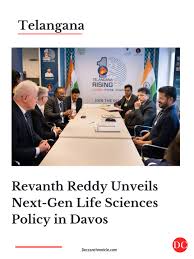
The Telangana Next-Gen Life Sciences Policy 2026–30, aims to position the state as a top-five global life sciences cluster by 2030.
The policy targets USD 25 billion in investments, creates 500,000 high-quality jobs, and focuses on transforming the ecosystem toward innovation-driven, advanced therapies, such as cell and gene therapies, precision fermentation, and peptides
Telangana Next-Gen Life Sciences Policy 2026–30 – Targets, Features & TGPSC Notes Read More »
The Telangana Deputy Chief Minister inaugurated the Solar Model Village Programme in Ravinuthala village (Khammam district). The initiative aims to convert rural households and farms into solar power producers.
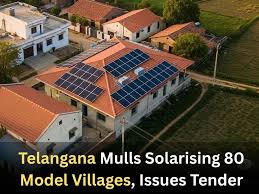
The Telangana Solar Model Village Programme, launched by Deputy CM. It aims to solarize rural areas by promoting rooftop solar and solar-powered agriculture, starting with a pilot in 81 villages.
This initiative aligns with the PM Surya Ghar Yojana and PM-KUSUM Component-C to reduce dependence on conventional energy.
Telangana Solar Model Village Programme – Rural Solarization Initiative | TGPSC Notes Read More »
Telangana government has implemented major reforms in the Greater Hyderabad Municipal Corporation (GHMC). The expansion includes merger of 27 Urban Local Bodies (ULBs) and restructuring of administrative units.
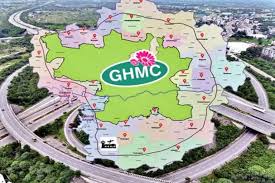
ULB Merger: 27 Urban Local Bodies merged into GHMC
Territorial Expansion:
Population Coverage:
Administrative Restructuring:
Ward Delimitation:
GHMC Expansion 2026 – Merger of ULBs, New Wards & Administrative Changes | TGPSC Notes Read More »
Telangana Legislature passed the Telangana Universities (Amendment) Bill, 2026. The Bill establishes and renames an Earth Sciences university after Dr. Manmohan Singh, granting it statutory status.
Dr. Manmohan Singh Earth Sciences University Bill 2026 – Telangana | TGPSC Notes Read More »
Telangana Legislative Assembly passed the Telangana Panchayat Raj (Amendment) Bill, 2026. The Bill removes the two-child norm, allowing individuals with more than two children to contest local body elections.
TFR (Total Fertility Rate) is the average number of children a woman is expected to have during her reproductive years (15–49 years).
Replacement Level Fertility: ~2.1 children per woman
Andhra Pradesh government has approved a Three-Zone Growth Model to accelerate industrialization and reduce regional disparities. The initiative divides the State into three economic development zones with sector-specific focus.
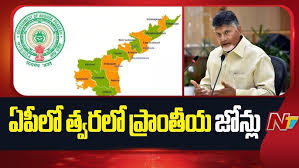
Andhra Pradesh government has approved a Three-Zone Growth Model to accelerate industrialization and ensure balanced regional development, dividing the state into North Coastal, Central Coastal, and Rayalaseema zones.
This strategy aims to foster 15% GSDP growth, with specialized, CEO-led zones focusing on unique strengths—such as port-based industries, IT, and agro-processing—to create jobs and attract investment.