๐Ÿ“ฐ Today's Current AffairsRead Now →
📷 Follow on Instagram

January 2026 current affairs

India to Establish First State-Funded BSL-4 Lab in Gujarat

Why in News?

Union Home Minister laid the foundation stone for a Bio-Safety Level 4 (BSL-4) Containment Facility in Gandhinagar, Gujarat, marking a significant step in strengthening Indiaโ€™s high-risk pathogen research infrastructure.
bsl

Biosafety levels: Explained

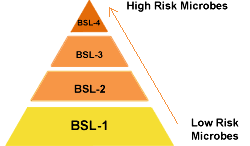
  • BSL-1 (Lowest Level): Handles organisms that do not cause disease in healthy humans, such as non-pathogenic E. coli. Standard precautions like hand hygiene and basic protective gear are sufficient.
  • BSL-2: Deals with pathogens causing moderate illness (e.g., Staphylococcus aureus, Hepatitis viruses). Requires restricted access, proper waste management, PPE, and biosafety cabinets.
  • BSL-3: Involves pathogens that can cause severe or potentially fatal diseases and spread through aerosols, such as Mycobacterium tuberculosis, SARS-CoV, and MERS-CoV. Enhanced containment and ventilation systems are essential.
  • BSL-4 (Highest Level): Reserved for highly dangerous pathogens with high fatality rates and no available treatment, such as Ebola and Marburg viruses. These labs feature complete isolation, full-body positive-pressure suits, and stringent decontamination protocols.

Biosafety level laboratories are specifically designed to study the worldโ€™s most dangerous and highly infectious pathogens, many of which have no known vaccines or effective treatments.

Exam Tip

Remember the sequence: BSL-1 โ†’ BSL-2 โ†’ BSL-3 โ†’ BSL-4 (increasing risk and containment)

https://indianexpress.com/article/explained/explained-health/gujarat-bsl-4-lab-10474986/: India to Establish First State-Funded BSL-4 Lab in Gujarat

India to Establish First State-Funded BSL-4 Lab in Gujarat Read More ยป

๐Ÿ‡ฎ๐Ÿ‡ณ First โ€˜Made in Indiaโ€™ C-295 Aircraft to Roll Out Soon

Why in News?

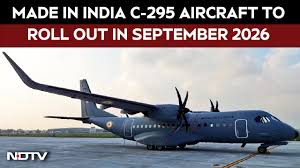
The first โ€˜Made in Indiaโ€™ C-295 military transport aircraft is expected to roll out before September. This marks a major milestone in Indiaโ€™s defence indigenisation and Make in India initiative.

c 295 aircraft

Key Highlights:

The โ€˜Made in Indiaโ€™ C-295 programme represents a major milestone in defence manufacturing, as it marks the first instance of a complete military aircraft being produced in India by a private company, Tata Advanced Systems Limited (TASL).

  • India signed a โ‚น21,935 crore deal in 2021 with Airbus Defence and Space to procure 56 C-295 aircraft. The project is a joint collaboration between Airbus and TASL.
  • 16 aircraft will be delivered in fly-away condition from Spain. The remaining 40 aircraft will be manufactured in India by Tata Advanced Systems Limited (TASL).
  • This is the first time a private Indian company is manufacturing a complete military aircraft in India.
  • The manufacturing facility is located in Vadodara, Gujarat.
Background:

The C-295 aircraft is a medium tactical transport aircraft used for logistics, troop transport, and medical evacuation. It will replace the ageing Avro aircraft of the Indian Air Force (IAF)

https://indianexpress.com/article/explained/made-in-india-c295-aircraft-defence-capabilities-10491194/: ๐Ÿ‡ฎ๐Ÿ‡ณ First โ€˜Made in Indiaโ€™ C-295 Aircraft to Roll Out Soon

๐Ÿ‡ฎ๐Ÿ‡ณ First โ€˜Made in Indiaโ€™ C-295 Aircraft to Roll Out Soon Read More ยป

SHANTI Bill Passed by Parliament to Reform Nuclear Law

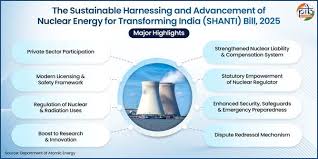
Parliament has cleared the Sustainable Harnessing and Advancement of Nuclear Energy in India (SHANTI) Bill.

shanti bill

key features

  • Opening of Nuclear Sector: The SHANTI Bill brings a major shift by allowing private and foreign participation in Indiaโ€™s nuclear power sector, which was earlier fully controlled by the government
  • Private Participation & Licensing: Under the Bill, private Indian companies can now obtain licences to build, own, and operate nuclear power plants. It also permits foreign suppliers to participate in the sector
  • Government Control & Ownership Pattern: The Bill allows up to 49% private participation, while ensuring 51% government control over critical areas such as: Nuclear fuel production, Heavy water manufacturing etc
  • End of NPCIL Monopoly: Earlier, the Nuclear Power Corporation of India Limited (NPCIL) had exclusive control over nuclear plant operations. The Bill removes this monopoly and allows private players and joint ventures to operate nuclear power plants
  • Liability Provisions

โ‚น3,000 crore โ†’ Large plants (3600 MW)
โ‚น1,500 crore โ†’ Medium plants (1500โ€“3600 MW)
โ‚น100 crore โ†’ Small Modular Reactors (150 MW)

Exam Tip:

SHANTI Bill = Private entry + End of NPCIL monopoly + SMRs + Fixed liability

https://www.pib.gov.in/PressNoteDetails.aspx?NoteId=156593&ModuleId=3&reg=3&lang=2: SHANTI Bill Passed by Parliament to Reform Nuclear Law

SHANTI Bill Passed by Parliament to Reform Nuclear Law Read More ยป

Indiaโ€™s First Hydrogen Train Trial Begins

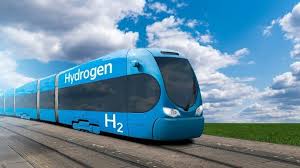
India has commenced the trial run of its first indigenously developedย Hydrogen-powered trainย on theย Jindโ€“Sonipat sectionย in Haryana.

hydrogen train
  • Trial conducted by Research Designs & Standards Organisation (RDSO).
  • Train developed by Integral Coach Factory (ICF), Chennai.
  • Uses hydrogen fuel cells instead of diesel. Produces only water vapor and heat as by-products.
  • India joins countries like Germany, Japan, China, and Sweden in hydrogen train technology
Exam Tip

Hydrogen Train = Fuel Cell + Zero Emissions + Water as by-product

https://www.business-standard.com/india-news/indian-railways-hydrogen-train-clears-load-tests-launch-soon-125081500957_1.html: Indiaโ€™s First Hydrogen Train Trial Begins

Indiaโ€™s First Hydrogen Train Trial Begins Read More ยป

India Becomes First to Produce Bio-Bitumen Commercially

Why in News?

India has become the first country in the world to commercially produce bio-bitumen for road construction. This is a major step towards green infrastructure and sustainable development.

biutemen

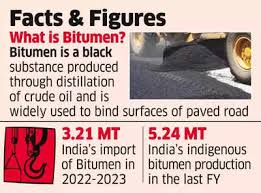
Bio-bitumen is manufactured through the thermal decomposition of biomass, a process known asย pyrolysis, which converts organic matter into a usable binder

  • It is an eco-friendly alternative to petroleum-based bitumen.
  • Produced from renewable biological sources instead of crude oil.
  • Used as a binder in road construction, similar to traditional bitumen. Helps in reducing carbon emissions and fossil fuel dependency.
Background

Traditional bitumen is derived from crude oil, which contributes to pollution and carbon emissions.

To promote environment-friendly infrastructure, researchers developed bio-bitumen using organic and renewable materials

Exam Tip:

Bio-bitumen = Renewable + Eco-friendly + Used in roads

https://www.newsonair.gov.in/india-becomes-first-country-to-commercially-produce-bio-bitumen-in-road-construction/: India Becomes First to Produce Bio-Bitumen Commercially

India Becomes First to Produce Bio-Bitumen Commercially Read More ยป

US Invites India to Join Pax Silica Initiative

Why in News?

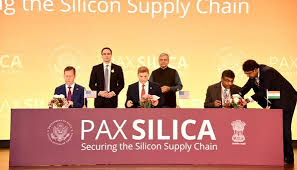
United States has announced that India will be invited to join Pax Silica as a full member in February 2026.

pax silica initiative

Pax Silica is a multilateral technology and economic security initiative launched by the US.

  • Focuses on trusted global supply chains.
  • Aims to reduce dependence on China in critical technologies.
Background:

In recent years, global tensions and supply disruptions have exposed risks in depending on a few countries for semiconductors and critical minerals.

To address this, the US launched Pax Silica to build a secure and reliable technology ecosystem with like-minded countries.

Exam Tip:

Pax Silica = Tech alliance + supply chain security + reduce dependence on China

https://www.pib.gov.in/PressReleasePage.aspx?PRID=2230648&reg=3&lang=1: US Invites India to Join Pax Silica Initiative

US Invites India to Join Pax Silica Initiative Read More ยป

Dhruv-NG Helicopter First Flight: Indiaโ€™s Civil Aviation Milestone

Why in News?

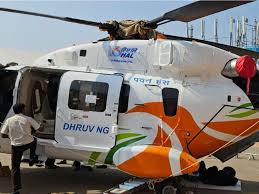
India achieved a major milestone in civil aviation as Hindustan Aeronautics Limited (HAL) successfully conducted the first flight of Dhruv New Generation (NG) helicopter in Bengaluru. This marks HALโ€™s entry into the civil helicopter market

dhruv ng

Dhruv-NG:

  • Dhruv-NG is a 5.5-tonne, twin-engine, multi-role helicopter.
  • It is fully designed and developed in India by HAL.
  • Powered by the Shakti civil engine.

Additional Concepts for Exams

Recently Shakti Civil Engine received certification from the Directorate General of Civil Aviation (DGCA). It is the first indigenous aircraft engine to get DGCA approval for manufacturing.

Exam Tip:

Dhruv-NG = Civil helicopter + HAL + Shakti engine + DGCA certification

https://timesofindia.indiatimes.com/city/bengaluru/indias-dhruv-ng-helicopter-makes-maiden-flight-5-5-tonne-twin-engine-max-speed-285-km/h-heres-what-we-need-to-know/articleshow/126264605.cms: Dhruv-NG Helicopter First Flight: Indiaโ€™s Civil Aviation Milestone

Dhruv-NG Helicopter First Flight: Indiaโ€™s Civil Aviation Milestone Read More ยป

Reservation in Private Colleges: Article 15(5)

Why in News?

The Opposition, led by Congress, has demanded that the Centre ensure proper implementation of reservation policies in private educational institutions. It emphasized that regulatory bodies in higher education must monitor the enforcement of Article 15(5) of the Constitution.

article 15 (5)

Concepts from exam Point of view:

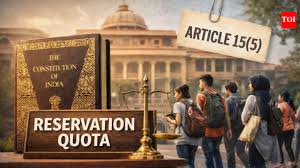
Article 15(5) of the Indian Constitution, added by the 93rd Amendment in 2005, empowers the state to make special provisionsโ€”including reservationsโ€”for the admission of socially and educationally backward classes, Scheduled Castes (SCs), and Scheduled Tribes (STs) in educational institutions, including private unaided institutions, excluding minority schools.

  • Exclusion:ย It explicitlyย excludes minority educational institutionsย referred to in Article 30(1).

Article 15(6), inserted by theย 103rd Constitutional Amendment Act, 2019,ย enables special provisions (reservation) for Economically Weaker Sections (EWS).

  • It allows up to 10% reservation in educational institutions (including private, aided/unaided) except minority institutions. This is in addition to existing reservations, specifically targeting those not covered by 15(4) or 15(5).
https://www.thehindu.com/news/national/any-higher-education-regulator-must-oversee-article-155-implementation-says-congress/article70529251.ece: Reservation in Private Colleges: Article 15(5)

Reservation in Private Colleges: Article 15(5) Read More ยป

Budget Session 2026: Key Concepts Explained

Why in News?

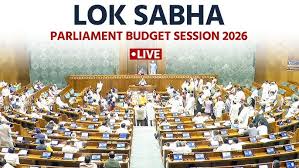
The Budget Session of Parliament 2026 is scheduled to begin on January 28 and continue till April 2

parliament budget session 2026
Concepts from Exam Point of view:

Parliamentary sessions are the designated periods when both the Lok Sabha and Rajya Sabha meet to conduct legislative business.

  • Underย Article 85ย of the Indian Constitution, the President has the power to summon each House at intervals not exceeding six months, ensuring Parliament meetsย at least twice a year.

By established convention (not a constitutional mandate), India holds three sessions annually:

  • Budget Session (January/February to May)
  • Monsoon Session (July to August/September)
  • Winter Session (November to December)
Key terms related to Parliament session
  • Summoning:
    The President officially calls both Houses of Parliament to meet, based on the advice of the Cabinet Committee on Parliamentary Affairs (CCPA).
  • Adjournment:
    It is a temporary break in the proceedings of a House for a specific time (hours, days, or weeks), declared by the Speaker or Chairman. The session continues.
  • Adjournment Sine Die:
    When a House is adjourned without fixing the next meeting date, it is called adjournment sine die.
  • Prorogation:
    The President formally ends a session of Parliament under Article 85(2). Pending bills remain unaffected.
  • Dissolution:
    This applies only to the Lok Sabha. It ends the term of the House and leads to fresh elections. Most pending bills lapse after dissolution.
https://www.newsonair.gov.in/parliaments-budget-session-to-begin-january-28-continue-till-april-2/: Budget Session 2026: Key Concepts Explained

Budget Session 2026: Key Concepts Explained Read More ยป

SC Hearing on Lambada ST Status in Telangana

Why in News?

The Supreme Court has taken up a long-pending issue regarding the Scheduled Tribe (ST) status of the Lambada community in Telangana. The matter has resurfaced due to a Special Leave Petition (SLP) filed by activists challenging the inclusion of the Lambada community in the Scheduled Tribes list for Telangana.

telangana supreme court

Background:

The Lambada community was included in the ST list for Telangana region through the Scheduled Castes and Scheduled Tribes Orders (Amendment) Act, 1976. Since then, there has been continuous disagreement between Lambadas and other tribal communities.

From Exam point of view: Article 342 & SLP Explained

Special Leave Petition (SLP) โ€“ Article 136

  • SLP is a special power of the Supreme Court.. It allows the Court to hear appeals against any judgment or order from any court or tribunal (except military courts).
  • It is discretionary, meaning the Supreme Court may accept or reject it.

Article 342 โ€“ Scheduled Tribes

Clause (1): Presidential Power

The President can notify communities as Scheduled Tribes. This is done after consulting the Governor of the State.

Clause (2): Parliamentary Power

Only Parliament can include or exclude communities from the ST list. Once notified, the President cannot modify the list independently.

https://www.downtoearth.org.in/governance/can-the-decades-old-constitutional-dispute-over-lambadas-scheduled-tribe-status-in-telangana-be-resolved: SC Hearing on Lambada ST Status in Telangana

SC Hearing on Lambada ST Status in Telangana Read More ยป