šŸ“° Today's Current Affairs — Read Now →
📷 Follow on Instagram

2026 current affairs

Telangana’s Bharat Future City Project: NGT Refuses to Grant Stay:

Why in News:

National Green Tribunal (NGT) has refused to halt Telangana’sBharat Future City project, proposed over nearly 30,000 acres

national green tribunal

The petitioner alleged: Mandatory approvals were not obtained before starting activities and bypassed procedures under the Environmental Impact Assessment (EIA) framework

What is the Bharat Future City Project?

  • A large-scale urban development project proposed by the Telangana government
  • Spread across ~30,000 acres in 56 revenue villages covering 7 mandals
  • Located between Srisailam and Nagarjunasagar highways
  • Envisioned as a modern urban hub with infrastructure and economic activities

About NGT

  • Established under the NGT Act, 2010
  • A specialized environmental court for speedy justice

Key Features

  • Chairperson: Retired Supreme Court judge or Chief Justice of a High Court
  • Tenure: 5 years (no reappointment)
  • Nature of Proceedings:
    • Follows principles of natural justice
    • Not strictly bound by the Code of Civil Procedure
  • Time Limit:
    • Aims to dispose cases within 6 months
  • Jurisdiction:
    • Covers major environmental laws (Schedule I)
    • Excludes:
      • Wildlife (Protection) Act, 1972
      • Forest Rights Act, 2006
  • Appeal Mechanism:
    • Decisions can be appealed in the Supreme Court within 90 days

To know more about National Green Tribunal from exam point of view, Click here

Telangana’s Bharat Future City Project: NGT Refuses to Grant Stay: Read More Ā»

Kali Tiger Reserve ESZ: Draft Notification Issued

The Union Ministry of Environment has issued a draft notification to declare an Eco-Sensitive Zone (ESZ) around the Kali Tiger Reserve in Karnataka

eco sensitive zone

What are Eco-Sensitive Zones (ESZs)?

Eco-Sensitive Zones are buffer areas created around protected regions like: National Parks, Wildlife Sanctuaries and Tiger Reserves

Purpose:

  • Act as a shock absorber between protected areas and human activities
  • Reduce environmental pressure
  • Promote sustainable development

Legal & Statutory Basis

  • Declared under Section 3 of the Environment (Protection) Act, 1986
  • Though the term ā€œESZā€ is not directly mentioned in the Act, it is notified through rules under it.

Extent of ESZ

  • Generally extends up to 10 km from the boundary of protected areas
  • However, it is flexible depending on: Ecological sensitivity, Population density and local conditions.

Activities in ESZ

Prohibited Activities:
  • Commercial mining
  • Setting up sawmills
  • Large hydroelectric projects
Regulated Activities:
  • Tourism
  • Road expansion
  • Construction activities
Permitted Activities:
  • Eco-friendly practices
  • Organic farming
  • Sustainable livelihood activities

To know more about Eco sensitive zones from exam point of view, Click here

Kali Tiger Reserve ESZ: Draft Notification Issued Read More Ā»

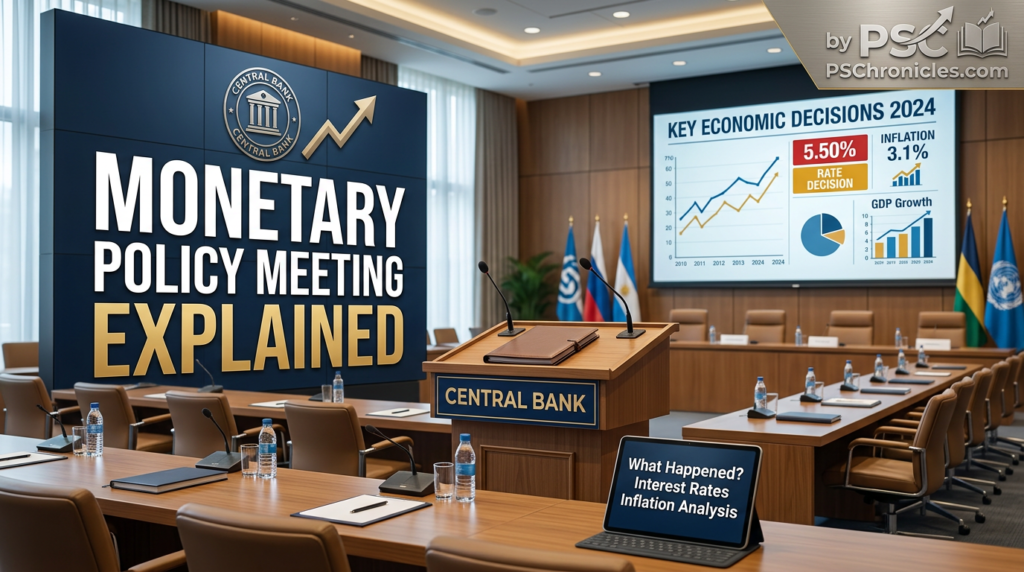
RBI Keeps Repo Rate at 5.25% – MPC Maintains Neutral Stance

Why in News?

The Reserve Bank of India (RBI), in its first monetary policy meeting of FY 2026–27, decided to keep the repo rate unchanged at 5.25%. The decision was taken unanimously by the Monetary Policy Committee (MPC) under Governor Sanjay Malhotra. The RBI also retained its ā€˜neutral’ policy stance, indicating flexibility in future actions

monetary policy meeting

Key Highlights of Monetary Policy (FY27)

  • Repo Rate: 5.25%
  • Standing Deposit Facility (SDF): 5.00%
  • Marginal Standing Facility (MSF): 5.50%
  • Bank Rate: 5.50%

These rates are crucial tools used by RBI to regulate liquidity and inflation in the economy.

What is Monetary Policy Committee (MPC)?

  • Established under the RBI Act, 1934 (amended in 2016)
  • Composition: 6 Members
    • 3 from RBI
    • 3 nominated by Government of India
  • Chairperson: RBI Governor
  • Meetings: At least 4 times a year

Objective:

  • Maintain price stability
  • Achieve inflation target of 4% (±2%)
  • Support economic growth

What is Neutral Policy Stance?

  • A neutral stance means RBI is not biased toward increasing or decreasing interest rates.

Key Features:

  • Equal focus on inflation control and growth
  • Decisions depend on future economic data
  • Provides policy flexibility

Important Policy Rates

Repo Rate

  • Repo (Repurchase Option) Rate is the rate at which RBI lends money to commercial banks.
Impact:
  • Increase in Repo Rate:
    • Loans become expensive
    • Reduces money supply
    • Controls inflation
  • Decrease in Repo Rate:
    • Loans become cheaper
    • Boosts investment & consumption
    • Promotes economic growth

SDF (Standing Deposit Facility):

  • Rate at which banks deposit surplus funds with RBI (without collateral)

MSF (Marginal Standing Facility):

  • Emergency borrowing window for banks from RBI

Bank Rate:

  • Long-term lending rate of RBI

To know more about Monetary Policy committee from exam point of view, Click here

RBI Keeps Repo Rate at 5.25% – MPC Maintains Neutral Stance Read More Ā»

Iran Threatens Closure of Bab al-Mandeb Strait

Why in News:

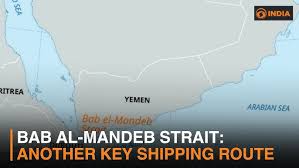
Iran has warned that its regional allies may block the Bab al-Mandeb Strait, escalating tensions in a crucial global maritime route. This comes amid disruptions already seen in the Strait of Hormuz, raising serious concerns about global trade and energy security.

bab al mandeb strait

Bab al-Mandeb Strait

The Bab al-Mandeb Strait, meaning ā€œGate of Tearsā€ in Arabic, is a vital maritime chokepoint.

Connects:

  • Red Sea (northwest)
  • Gulf of Aden & Indian Ocean (southeast)

Bordering Countries:

  • Yemen (Arabian Peninsula – Northeast)
  • Djibouti & Eritrea (Africa – Southwest)

Strategic & Economic Importance

Global Trade Route

  • Acts as a key link between:
    • Mediterranean Sea → Suez Canal → Red Sea → Indian Ocean
  • Essential for trade between Europe, Asia, and Africa

Energy Security

  • Around 12% of global seaborne oil trade passes through
  • About 8% of global LNG shipments transit this route

Impact of Possible Closure

  • Ships may reroute via Cape of Good Hope (South Africa)
  • Leads to: Longer travel time, Higher fuel and logistics costs and worsen inflation and energy crisis globally

For more current affairs on International relations, Click here

Iran Threatens Closure of Bab al-Mandeb Strait Read More Ā»

India Leads in Nagoya Protocol Compliance Certificates

Why in News?

India has emerged as a global leader in issuing Internationally Recognized Certificates of Compliance (IRCCs) under the Nagoya Protocol, contributing over 56% of all certificates worldwide.

nagoya protocol

What are IRCCs?

  • IRCC (Internationally Recognized Certificate of Compliance):
    • A digital certificate issued under the Nagoya Protocol
    • Confirms that access to genetic resources is:
      • Legal
      • Approved by authorities
      • Based on agreed benefit-sharing terms

Nagoya Protocol on Access and Benefit Sharing (2010)

The Nagoya Protocol (2010) isĀ a legally binding international agreement under the Convention on Biological Diversity (CBD) that ensures fair sharing of benefits arising from the utilization of genetic resources and associated traditional knowledge.

  • It aims to prevent biopiracy by requiring users to obtain Prior Informed Consent (PIC) and establish Mutually Agreed Terms (MAT) with the provider country, ensuring benefits like royalties or research results are shared.
  • IRCCs are issued under this protocol

To know more about Convention on Biological Diversity, Click here

India Leads in Nagoya Protocol Compliance Certificates Read More Ā»

Chairs of both Houses reject notice seeking CEC’s removal

Why in News?

Chairpersons of both Houses of Parliament rejected a notice submitted by Opposition Members of Parliament seeking the removal of the Chief Election Commissioner (CEC). It sought the removal of the current Chief Election Commissioner Gyanesh Kumar

election commission of india

Constitutional Provision: Article 324(5)

  • Article 324 deals with the Election Commission of India (ECI).
  • Clause (5) ensures security of tenure for the CEC.
  • It states that:
    • The CEC can be removed only in the same manner and on the same grounds as a Supreme Court Judge.

Grounds for Removal of CEC:

The CEC can be removed only on:

  • Proven misbehaviour
  • Incapacity

These conditions ensure independence and prevent arbitrary removal.

Procedure for Removal of CEC

The process is similar to the removal of a Supreme Court Judge and follows the Judges (Inquiry) Act, 1968. The procedure is as follows

1. Initiation of Motion
  • Requires:
    • At least 100 Lok Sabha MPs, OR
    • At least 50 Rajya Sabha MPs
Admission & Investigation
  • The motion is submitted to:
    • Lok Sabha Speaker or Rajya Sabha Chairman
  • If admitted, a 3-member inquiry committee is formed:
    • A Supreme Court Judge
    • A Chief Justice of a High Court
    • A Distinguished jurist
3. Parliamentary Approval
  • If charges are proven:
    • Both Houses must pass the motion with a Special Majority:
      • Majority of total membership AND
      • Two-thirds of members present and voting
4. Final Removal
  • After Parliament passes the motion:
    • The President of India issues the final removal order.

To Know more about Election commission of India, Click here

Chairs of both Houses reject notice seeking CEC’s removal Read More Ā»

Antariksh Venture Capital Fund (AVCF): India’s First Spacetech Fund

Why in News?

India has launched the Antariksh Venture Capital Fund (AVCF) to strengthen its growing spacetech ecosystem. This is the country’s first dedicated venture capital fund for the space sector, aimed at supporting startups

antariksh venture capital fund

What is Antariksh Venture Capital Fund (AVCF)?

The Antariksh Venture Capital Fund (AVCF) is a specialized investment fund created to provide:

  • Risk capital to spacetech startups
  • Support for early-stage and growth-stage companies
  • Funding for innovation in space technology and applications

Key Features of AVCF

1. Total Corpus
  • Target fund size: ₹1,600 crore
  • Initial committed amount: ₹1,005 crore (as of November 2025)

2. Anchor Investor
  • Indian National Space Promotion and Authorization Centre (IN-SPACe)
    • Committed ₹1,000 crore
    • Acts as the primary institutional supporter

3. Fund Management
  • Managed by SIDBI Venture Capital Limited (SVCL)
  • SVCL is a subsidiary of:
    • Small Industries Development Bank of India (SIDBI)

Institutional Background

IN-SPACe
  • A regulatory and promotional body under the Department of Space
  • Facilitates private sector participation in space activities
SIDBI
  • Apex financial institution for MSME financing
  • Supports entrepreneurship and innovation

For more current affairs on Science and Technology. Click here

Antariksh Venture Capital Fund (AVCF): India’s First Spacetech Fund Read More Ā»

INS Aridhaman: India’s 3rd Nuclear Submarine

Why in News?

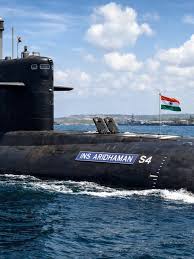
India has achieved another milestone in its strategic defence capability with the commissioning of INS Aridhaman, its third nuclear-powered ballistic missile submarine (SSBN).

ins aridhaman

INS Aridhaman:

  • INS Aridhaman (S4) is India’s third indigenously developed SSBN.
  • It is part of the Arihant-class submarines.
  • Developed under the Advanced Technology Vessel (ATV) project.
  • Represents a major advancement in indigenous defence technology.

What is India’s SSBN Programme?

India’s SSBN Programme is a highly classified, indigenous project aimed at constructing nuclear-powered ballistic missile submarines (SSBNs) to establish a credible, sea-based second-strike capability. Ā 

  • SSBN stands for ship submersible ballistic nuclear or nuclear-powered ballistic missile submarines.

Current Status of India’s SSBN Fleet (as of April 2026):

  • INS Arihant (S2):Ā Commissioned in 2016.
  • INS Arighaat (S3):Ā Commissioned in August 2024.
  • INS Aridhaman (S4):Ā Commissioned in April 2026.
  • S4Ā (likely INS Arisudan):* Currently undergoing sea trials, expected commissioning in 2027
https://www.thehindu.com/news/national/indias-new-nuclear-powered-submarine-ins-aridhaman-commissioned/article70819744.ece: INS Aridhaman: India’s 3rd Nuclear Submarine

INS Aridhaman: India’s 3rd Nuclear Submarine Read More Ā»

INS Taragiri Commissioned: Boost to India’s Naval Power

Why in News?

The INS Taragiri (F41) is the newest stealth guided-missile frigate of the Indian Navy, commissioned at the Naval Dockyard in Visakhapatnam

ins taragiri

INS Taragiri – Key Highlights

  • INS Taragiri (F41) is the fourth ship under the Project 17A (Nilgiri-class).
  • It is a stealth guided-missile frigate designed for advanced naval warfare.
  • Built by Mazagon Dock Shipbuilders Limited (MDL), Mumbai.
  • Commissioned at the Eastern Naval Command, Visakhapatnam.

What is Project 17A?

Project 17A (P17A) involves the construction of seven advanced Nilgiri-class stealth guided-missile frigates for the Indian Navy, designed for improved stealth, survivability, and combat capability. Built by Mazagon Dock Shipbuilders (MDL) and Garden Reach Shipbuilders & Engineers (GRSE),

Project 17A Vessels:

  • INS Nilgiri:Ā First of class.
  • INS Himgiri:Ā Built by GRSE.
  • INS Udaygiri:Ā Built by MDL.
  • INS Taragiri:Ā Commissioned April 2026.
  • INS Dunagiri:Ā Delivered to the Indian Navy.
  • INS Vindhyagiri:Ā Launched by GRSE.
  • Mahendragiri:Ā Seventh frigate
https://www.pib.gov.in/PressReleasePage.aspx?PRID=2248799&reg=3&lang=1: INS Taragiri Commissioned: Boost to India’s Naval Power

INS Taragiri Commissioned: Boost to India’s Naval Power Read More Ā»

National Monetisation Pipeline (NMP) 2.0 Launched: ₹16.72 Lakh Crore Asset Monetisation Plan

Why in News?

Union Finance Minister has launched National Monetisation Pipeline (NMP) 2.0. It outlines a five-year roadmap (FY 2026–2030) to monetise public infrastructure and attract private investment.

national monetisation pipeline

Key Highlights:

  • Total Monetisation Target: ₹16.72 lakh crore
  • Time Period: FY 2026–FY 2030
  • Private Investment Target: ₹5.8 lakh crore
  • Developed by NITI Aayog
  • Focus on brownfield infrastructure assets

What is National Monetisation Pipeline (NMP)?

TheĀ National Monetisation Pipeline (NMP)Ā isĀ a central government initiative to unlock value from existing public infrastructure by leasing them to the private sector. It serves as a medium-term roadmap for “asset recycling,” where funds generated from mature, operational assets are reinvested into building new infrastructure projects

  • Leasing, Not Selling: The government retains 100% ownership of the assets. Private players are granted rights to operate and maintain them for a fixed period (typically 30–60 years) in exchange for upfront or periodic payments.
  • Brownfield Focus: It exclusively targets “brownfield” assets—those that are already built and generating revenue—to minimize execution risks for investors.
https://www.pib.gov.in/PressReleasePage.aspx?PRID=2231900&reg=3&lang=1: National Monetisation Pipeline (NMP) 2.0 Launched: ₹16.72 Lakh Crore Asset Monetisation Plan

National Monetisation Pipeline (NMP) 2.0 Launched: ₹16.72 Lakh Crore Asset Monetisation Plan Read More Ā»