📰 Today's Current Affairs — Read Now →
📷 Follow on Instagram

2026 current affairs

Centre Issues New Guidelines on ‘Vande Mataram’: Key Facts, History & Exam Notes

Why in News?

Union Government has issued new guidelines for the rendition of ‘Vande Mataram’, India’s National Song. It mandates that all six stanzas of the official version be rendered first when performed along with the National Anthem.

Vande Mataram

Composition

  • Written by Bankim Chandra Chattopadhyay in 1875
  • First published in Bangadarshan journal
  • Later included in his novel Anandamath (1882)

Political & Historical Significance

  • First sung publicly by Rabindranath Tagore at the 1896 INC Session (Calcutta)
  • Became a symbol of India’s freedom struggle
  • Used as a rallying cry against British rule

Global Recognition

  • Madam Bhikaji Cama unfurled India’s early flag with Vande Mataram” inscribed in Stuttgart (1907)

Constitutional Status

  • On 24 January 1950, the Constituent Assembly:
    • Declared ‘Vande Mataram’ as National Song
    • Granted it status “equal in honour” to National Anthem (‘Jana Gana Mana’)
  • Initially, only the first two stanzas were officially adopted
https://timesofindia.indiatimes.com/india/all-6-stanzas-of-vande-mataram-now-must-for-all-govt-events-schools-what-centres-new-guidelines-say/articleshow/128187027.cms: Centre Issues New Guidelines on ‘Vande Mataram’: Key Facts, History & Exam Notes

Centre Issues New Guidelines on ‘Vande Mataram’: Key Facts, History & Exam Notes Read More »
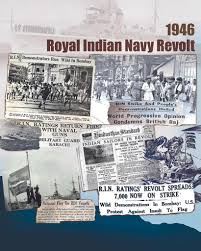
80th Anniversary of Royal Indian Navy Revolt (1946): Key Facts, Causes & Significance for exams:

Why in News?

February 18, 2026 marks the 80th anniversary of the Royal Indian Navy (RIN) Revolt, 1946.

royal indian navy (rin) revolt

Key Highlights:

  • Also known as the 1946 Naval Uprising.
  • Began on February 18, 1946, and lasted for 5 days.
  • Originated at HMIS Talwar (Bombay) and spread to other naval establishments.
  • Involved around 20,000 naval ratings across ships and shore establishments.
  • Received mass public support including strikes by workers and students.

Causes of the RIN Revolt

  • Poor Quality of Food served to Indian sailors
  • Racial Discrimination and ill-treatment by British officers
  • Low Pay and Harsh Working Conditions
  • Influence of nationalist movements and INA trials

Course of Events

Immediate Trigger

  • Began as a hunger strike by ~1,100 ratings at HMIS Talwar
  • Protest against Commander Arthur Frederick King’s racial behaviour

Organisation

  • Formation of Naval Central Strike Committee (NCSC)
  • Leadership by M.S. Khan

Demands

  • Better food and service conditions
  • Equal treatment with British personnel
  • Release of Indian National Army (INA) prisoners

Outcome

  • Revolt ended on February 23, 1946, after surrender
  • Suppressed by British authorities with negotiations and force

Significance
  • Demonstrated declining loyalty of Indian armed forces to British rule
  • Seen as the “final nail in the coffin” of British colonialism in India
  • Accelerated British decision to transfer power in 1947
  • Highlighted unity among soldiers, workers, and civilians
https://www.thehindu.com/education/the-1946-royal-navy-revolt-solidarity-amid-sharpening-polarisation/article70642960.ece: 80th Anniversary of Royal Indian Navy Revolt (1946): Key Facts, Causes & Significance for exams:

80th Anniversary of Royal Indian Navy Revolt (1946): Key Facts, Causes & Significance for exams: Read More »

Right to Menstrual Health as Fundamental Right: Supreme Court Expands Article 21 in Jaya Thakur Case

Why in News

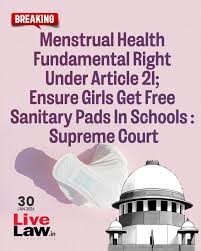
Dr. Jaya Thakur vs Union of India, the Supreme Court recognized the right to menstrual health as a fundamental right under Article 21.

right to menstrual health as fundamental right

Key Highlights

Right to Menstrual Health is now part of:

  • Right to Life and Personal Liberty (Article 21)

Key Directions by Supreme Court:

  • Provision of free sanitary pads in schools
  • Establishment of separate toilets for girls

Article 21:

  • States:
    • “No person shall be deprived of his life or personal liberty except according to procedure established by law.”
  • Applicability:
    • Available to citizens and foreigners (except enemy aliens)

Judicial Evolution of Article 21

  • A.K. Gopalan v. State of Madras (1950)
    • Took a narrow interpretation
    • Focused only on procedure established by law
  • Maneka Gandhi v. Union of India (1978)
    • Introduced “fair, just and reasonable” procedure
    • Expanded Article 21 to include due process of law
    • Linked Article 21 with Articles 14 & 19
https://www.downtoearth.org.in/health/menstrual-health-now-a-fundamental-right-its-gender-inclusive-constitutional-justice: Right to Menstrual Health as Fundamental Right: Supreme Court Expands Article 21 in Jaya Thakur Case

Right to Menstrual Health as Fundamental Right: Supreme Court Expands Article 21 in Jaya Thakur Case Read More »

White Revolution 2.0: Government Initiative to Boost Dairy Sector & Women Empowerment (UPSC/PSC Notes)

Why in News?

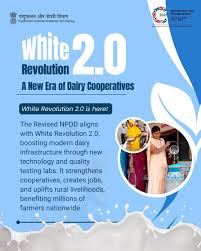
The Government of India has launched “White Revolution 2.0” under the Ministry of Cooperation

“white revolution 2.0

Key Highlights:

1. Objective of White Revolution 2.0

  • Expand cooperative coverage in dairy sector
  • Promote women empowerment
  • Generate rural employment
  • Improve market access for dairy farmers

2. Milk Procurement Target

  • Increase milk procurement by 50% in 5 years
  • Target: 1,007 lakh kg per day by 2028–29

3. Strategy (Two-Pronged Approach)

  • Expansion
    • Establish 75,000 new Dairy Cooperative Societies (DCS) in uncovered areas
  • Strengthening Existing Network
    • Upgrade 46,422 existing DCS
    • Improve:
      • Market access
      • Farmer income
      • Supply chain efficiency

Background-White Revolution (Operation Flood)

  • Known as Operation Flood
  • Objective:
    • Transform India into a self-sufficient milk producer
  • Achievements:
    • India became the world’s largest milk producer by 1998
  • Key Personality
    • Dr. Verghese Kurien
    • Known as the “Father of White Revolution”
    • Founder of NDDB (National Dairy Development Board)
https://ddnews.gov.in/en/centre-launches-white-revolution-2-0-to-boost-womens-role-in-dairy-sector/: White Revolution 2.0: Government Initiative to Boost Dairy Sector & Women Empowerment (UPSC/PSC Notes)

White Revolution 2.0: Government Initiative to Boost Dairy Sector & Women Empowerment (UPSC/PSC Notes) Read More »

No-Confidence Motion Against Lok Sabha Speaker: Removal Process, Articles & Key Facts (UPSC/PSC Notes)

Why in News?

Opposition parties have submitted a no-confidence motion seeking the removal of Lok Sabha Speaker . The notice has met the minimum support requirement, and the motion may be taken up after the mandatory 14-day notice period.

no confidence motion

Procedure for Removal of Speaker

Article 94(c) → Provides for removal of the Lok Sabha Speaker through a resolution passed by the House.

Notice Requirement

  • Minimum 14 days’ written notice must be given

Support for Admission

  • At least 50 Members of Parliament (MPs) must support the motion

Presiding Restriction

  • Speaker cannot preside during the proceedings
  • However, can participate and defend himself (Article 96)

Voting Requirement

  • Requires Effective Majority:
    • Majority of all existing members of Lok Sabha

Outcome

  • If passed → Speaker removed immediately
  • If rejected → Speaker continues in office
  • Even after removal → continues as MP
https://www.ndtv.com/india-news/oppositions-no-confidence-motion-against-speaker-defeated-in-lok-sabha-11200786: No-Confidence Motion Against Lok Sabha Speaker: Removal Process, Articles & Key Facts (UPSC/PSC Notes)

No-Confidence Motion Against Lok Sabha Speaker: Removal Process, Articles & Key Facts (UPSC/PSC Notes) Read More »

16th Finance Commission Recommendations 2026 – Key Highlights, Devolution Formula & Fiscal Reforms (UPSC/PSC Notes)

Why in News?

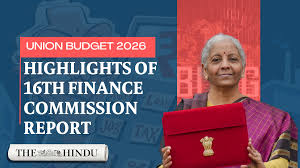
The 16th Finance Commission (FC) report was tabled in Parliament on February 1, 2026, along with the Union Budget. The Government has accepted key tax devolution and grant recommendations for the period 2026–27 to 2030–31.

16th finance commission recommendations

Key Recommendations:

1. Vertical Devolution (Centre–State Share)

  • 41% of divisible tax pool allocated to States
  • Unchanged from the 15th Finance Commission
  • Ensures continuity and fiscal stability for States

2. Grants-in-Aid (2026–27)

  • Total allocation: â‚č1.4 lakh crore
  • Includes:
    • Grants to Rural Local Bodies (Panchayats)
    • Grants to Urban Local Bodies (Municipalities)
    • Disaster management funding

Horizontal Devolution Formula (2026–31)

Criterion 15th FC Weight (2021–26)
16th FC Weight (2026–31)
Income Distance
45.0%
42.5%
Population (2011 Census)15.0%
17.5%
Demographic Performance12.5%10.0%
Area15%10%
Forest & Ecology10%10%
Contribution to GDP (New)–10%
Tax and Fiscal Effort2.5%–

Background:

The Finance Commission is a constitutional body under Article 280. Constituted every 5 years by the President of India. Functions:

  • Recommend tax sharing (Centre–State)
  • Suggest grants-in-aid
  • Promote fiscal federalism

16th Finance Commission

  • Chairman: Dr. Arvind Panagariya
  • Award Period: 2026–27 to 2030–31
https://www.pib.gov.in/PressReleasePage.aspx?PRID=2221390&reg=3&lang=2: 16th Finance Commission Recommendations 2026 – Key Highlights, Devolution Formula & Fiscal Reforms (UPSC/PSC Notes)

16th Finance Commission Recommendations 2026 – Key Highlights, Devolution Formula & Fiscal Reforms (UPSC/PSC Notes) Read More »

AP Govt Signs MoU with IIC to Strengthen Dokka Seethamma Midday Meal Scheme:

Why in News?

The School Education Department of Andhra Pradesh signed an MoU with International Innovation Corps to improve implementation of the Dokka Seethamma Midday Meal Scheme

dokka seethamma midday meal scheme

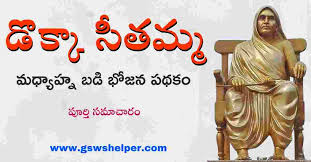
Dokka Seethamma Midday Meal Scheme:

Dokka Seethamma Midday Meal Scheme is named after Dokka Seethamma, a historical figure from the Godavari region renowned for her selfless service in feeding the poor, the scheme focuses on improving student nutrition, attendance, and health across the state

Key Developments (2025–2026)

  • Extension to Intermediate Students: scheme was officially extended to cover students in Government Junior Colleges. This expansion aims to benefit approximately 1.48 lakh students across 475 colleges.
  • Introduction of Fine Rice: From the start of the 2025 academic year, the government began serving meals made with high-quality fine rice (sanna biyyam) in all government and aided schools to enhance meal quality.
https://www.deccanchronicle.com/southern-states/andhra-pradesh/ap-signs-pact-with-iic-to-digitally-strengthen-dokka-seethamma-midday-meal-scheme-1938554: AP Govt Signs MoU with IIC to Strengthen Dokka Seethamma Midday Meal Scheme:

AP Govt Signs MoU with IIC to Strengthen Dokka Seethamma Midday Meal Scheme: Read More »

Haven-1: World’s First Private Space Station to Launch in 2027

Why in News?

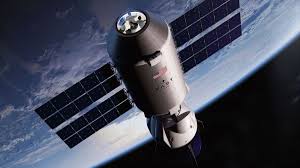
  • The world’s first private space station “Haven-1” is scheduled to launch in 2027 aboard a SpaceX Falcon 9 rocket.
  • It marks a major shift from government-led missions to commercial space infrastructure.
haven 1

Key Highlights

Developed by:

  • US-based aerospace company Vast

Launch Timeline:

  • Expected in early 2027

Launch Vehicle:

  • SpaceX Falcon 9, a reusable rocket reducing mission costs

Significance:

  • First privately owned space station
  • Beginning of commercial space station era

Context:

  • Comes as the International Space Station is expected to be retired by the end of this decade

What is International Space Station?

A habitable artificial satellite in Low Earth Orbit (LEO) Serves as a microgravity research laboratory One of the most complex international collaborations involving:

  • NASA (USA)
  • Roscosmos (Russia)
  • European Space Agency (Europe)
  • JAXA (Japan)
  • Canadian Space Agency (Canada)
https://timesofindia.indiatimes.com/science/worlds-first-private-space-station-haven-1-aboard-a-spacex-falcon-9-rocket-set-to-launch-in-2027/articleshow/127884540.cms: Haven-1: World’s First Private Space Station to Launch in 2027

Haven-1: World’s First Private Space Station to Launch in 2027 Read More »

Strait of Hormuz Closure by Iran – Location, Importance & Impact on Global Energy for UPSC, APPSC, TGPSC and other state PSC exams

Why in News?

Iran announced a temporary closure of parts of the Strait of Hormuz to conduct live-fire naval exercises. The move has raised concerns over global energy supply and maritime security.

strait of hormuz

Strait of Hormuz:

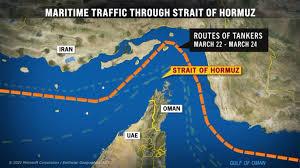
Strait of Hormuz is narrow waterway separating Iran (north) from the Musandam Peninsula (an exclave of Oman) and the United Arab Emirates (south).

  • World’s Most Vital Chokepoint: It is the only sea passage from the Persian Gulf to the open ocean.
  • Energy Lifeline: Approximately 20-25% of the world’s seaborne oil and 20-30% of global Liquefied Natural Gas (LNG) pass through it daily.
  • Major Exporters: Key OPEC members like Saudi Arabia, Iraq, Kuwait, UAE, and Iran rely on it to export crude. Qatar, the world’s leading LNG exporter, sends nearly all its LNG through this strait. 
Significance for India
  • Energy Security: India is highly dependent on this route, as nearly 40% of its crude oil imports and 54% of its LNG imports pass through the strait.
  • Economic Impact: Any disruption leads to immediate spikes in global oil prices, impacting India’s Current Account Deficit (CAD) and fueling domestic inflation.
https://www.bbc.com/news/articles/c78n6p09pzno: Strait of Hormuz Closure by Iran – Location, Importance & Impact on Global Energy for UPSC, APPSC, TGPSC and other state PSC exams

Strait of Hormuz Closure by Iran – Location, Importance & Impact on Global Energy for UPSC, APPSC, TGPSC and other state PSC exams Read More »

National Commission for Scheduled Tribes (NCST) – 23rd Foundation Day | Article 338A, Functions & Composition

Why in News?

The 23rd Foundation Day of the National Commission for Scheduled Tribes (NCST) was recently celebrated in New Delhi. It highlights the role of NCST in protecting the rights of Scheduled Tribes (STs) in India.

national commission for scheduled tribes

National Commission for Scheduled Tribes

  • NCST is a constitutional body established under Article 338A of the Indian Constitution.
  • It works for the protection, welfare, and development of Scheduled Tribes.
  • Formed after the Constitution (89th Amendment) Act, 2003.

Separation of Commissions (2003):

  • Earlier: A single body for SCs & STs
  • After Amendment:
    • National Commission for Scheduled Castes (NCSC) – Article 338
    • National Commission for Scheduled Tribes (NCST) – Article 338A
Composition of NCST:
  • Chairperson
  • Vice-Chairperson
  • 3 other Members
Appointment & Tenure:
  • Appointed by the President of India
  • Tenure: 3 years
Functions of NCST
  • Investigate and monitor safeguards for STs
  • Inquire into complaints regarding deprivation of rights
  • Advise on planning process for socio-economic development
  • Present reports to the President annually
https://www.pib.gov.in/PressReleasePage.aspx?PRID=2230380&reg=3&lang=1: National Commission for Scheduled Tribes (NCST) – 23rd Foundation Day | Article 338A, Functions & Composition

National Commission for Scheduled Tribes (NCST) – 23rd Foundation Day | Article 338A, Functions & Composition Read More »