πŸ“° Today's Current AffairsRead Now →
📷 Follow on Instagram

2026 current affairs

Telangana Gets 2 New Airports: Warangal & Adilabad-Explained for TGPSC exams

Why in News?

The Government of India has approved the development of two new airports in Telanganaβ€”Warangal and Adilabad. This move aims to boost regional connectivity, economic growth, and aviation infrastructure in the state.

warangal adilabad airport 202604091226

Warangal (Mamnoor) Airport

  • Approved by the Ministry of Civil Aviation
  • Located at Mamnoor near Warangal
  • Historically used as a training airfield Will be redeveloped into a major aviation hub for North Telangana

Adilabad Airport (Dual-Use Airport)

  • To be developed by the Ministry of Defence Designed as a dual-use airport:
  • Military training operations
  • Civilian air services

To study Telangana current affairs from exam point of view, Click here

Telangana Gets 2 New Airports: Warangal & Adilabad-Explained for TGPSC exams Read More Β»

India Withdraws Bid for COP 33 (2028)

India has withdrawn its bid to host the 33rd Conference of Parties (COP 33) scheduled for 2028.

  • COP is the annual global climate summit held under the United Nations climate framework, where countries discuss actions to tackle climate change
unfccc psc

What is UNFCCC?

The United Nations Framework Convention on Climate Change (UNFCCC) is the main international agreement guiding global efforts to combat climate change.

Key Facts:

  • Adopted: 1992
  • Event: Earth Summit (Rio de Janeiro)
  • Objective: Stabilize greenhouse gas emissions to prevent dangerous climate change
  • Nature: Framework treaty (not legally binding emission targets)

Important Agreements under UNFCCC:

  • Kyoto Protocol
    • Legally binding emission reduction targets for developed countries
  • Paris Agreement
    • Aim: Limit global warming to well below 2Β°C, preferably 1.5Β°C

To study more about UNFCCC, Click here

India Withdraws Bid for COP 33 (2028) Read More Β»

New CPI Series 2024 Explained:

Why in News?

The Ministry of Statistics and Programme Implementation (MoSPI) has introduced a new Consumer Price Index (CPI) series with base year 2024=100. According to the latest data, India’s retail inflation stood at 2.75% in January 2026 (year-on-year), reflecting changes in consumption patterns and economic structure.

cpi inflation

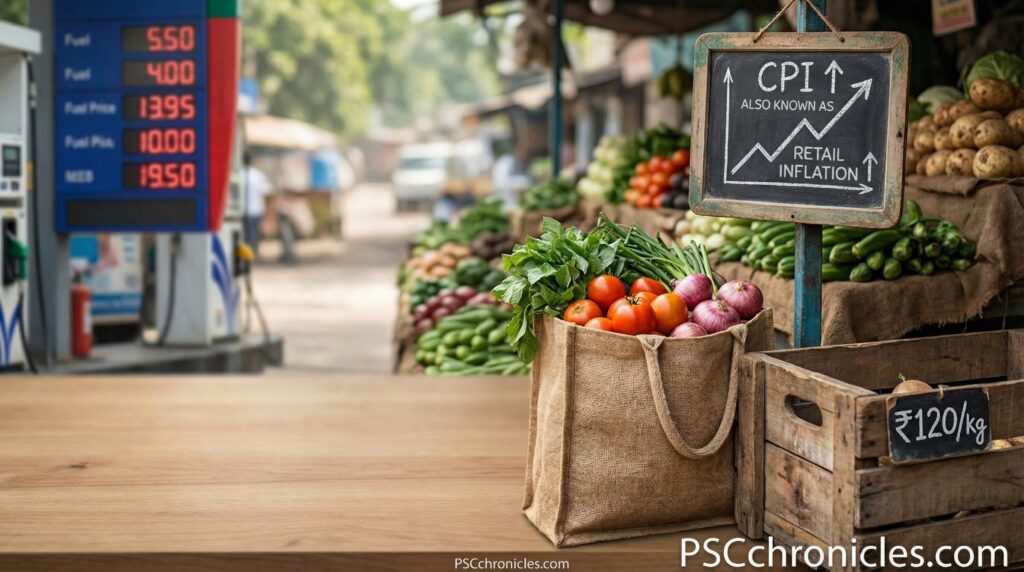
What is CPI?

  • Consumer Price Index (CPI) measures the average change in prices of goods and services consumed by households.
  • It is the most important indicator of inflation in India.
  • Used by the Reserve Bank of India (RBI) for monetary policy decisions.

Key Changes in New CPI Series (Base Year 2024)

1. Change in Base Year

  • Updated from 2012 β†’ 2024
  • Reflects latest consumption patterns of households.

2. Weight Realignment

  • Reduced weight: Food & beverages
  • Increased weight: Services, Housing

3. Expanded Consumption Basket

  • Total items increased:
    • From 299 β†’ 358 items
      • 308 goods
      • 50 services

4. New Items Added

  • Online streaming services , Rural housing , Value-added dairy products, Babysitting services, Fitness equipment
5. Inclusion of Rural House Rent
  • First-time inclusion
  • Improves representation of rural consumption patterns
6. Updated Classification System
  • Now follows COICOP 2018 classification
  • Shift:
    • From 6 groups β†’ 12 divisions

To know more about Consumer Price Index from exam point of view, Click here

New CPI Series 2024 Explained: Read More Β»

Telangana’s Bharat Future City Project: NGT Refuses to Grant Stay:

Why in News:

National Green Tribunal (NGT) has refused to halt Telangana’sBharat Future City project, proposed over nearly 30,000 acres

national green tribunal

The petitioner alleged: Mandatory approvals were not obtained before starting activities and bypassed procedures under the Environmental Impact Assessment (EIA) framework

What is the Bharat Future City Project?

  • A large-scale urban development project proposed by the Telangana government
  • Spread across ~30,000 acres in 56 revenue villages covering 7 mandals
  • Located between Srisailam and Nagarjunasagar highways
  • Envisioned as a modern urban hub with infrastructure and economic activities

About NGT

  • Established under the NGT Act, 2010
  • A specialized environmental court for speedy justice

Key Features

  • Chairperson: Retired Supreme Court judge or Chief Justice of a High Court
  • Tenure: 5 years (no reappointment)
  • Nature of Proceedings:
    • Follows principles of natural justice
    • Not strictly bound by the Code of Civil Procedure
  • Time Limit:
    • Aims to dispose cases within 6 months
  • Jurisdiction:
    • Covers major environmental laws (Schedule I)
    • Excludes:
      • Wildlife (Protection) Act, 1972
      • Forest Rights Act, 2006
  • Appeal Mechanism:
    • Decisions can be appealed in the Supreme Court within 90 days

To know more about National Green Tribunal from exam point of view, Click here

Telangana’s Bharat Future City Project: NGT Refuses to Grant Stay: Read More Β»

Kali Tiger Reserve ESZ: Draft Notification Issued

The Union Ministry of Environment has issued a draft notification to declare an Eco-Sensitive Zone (ESZ) around the Kali Tiger Reserve in Karnataka

eco sensitive zone

What are Eco-Sensitive Zones (ESZs)?

Eco-Sensitive Zones are buffer areas created around protected regions like: National Parks, Wildlife Sanctuaries and Tiger Reserves

Purpose:

  • Act as a shock absorber between protected areas and human activities
  • Reduce environmental pressure
  • Promote sustainable development

Legal & Statutory Basis

  • Declared under Section 3 of the Environment (Protection) Act, 1986
  • Though the term β€œESZ” is not directly mentioned in the Act, it is notified through rules under it.

Extent of ESZ

  • Generally extends up to 10 km from the boundary of protected areas
  • However, it is flexible depending on: Ecological sensitivity, Population density and local conditions.

Activities in ESZ

Prohibited Activities:
  • Commercial mining
  • Setting up sawmills
  • Large hydroelectric projects
Regulated Activities:
  • Tourism
  • Road expansion
  • Construction activities
Permitted Activities:
  • Eco-friendly practices
  • Organic farming
  • Sustainable livelihood activities

To know more about Eco sensitive zones from exam point of view, Click here

Kali Tiger Reserve ESZ: Draft Notification Issued Read More Β»

RBI Keeps Repo Rate at 5.25% – MPC Maintains Neutral Stance

Why in News?

The Reserve Bank of India (RBI), in its first monetary policy meeting of FY 2026–27, decided to keep the repo rate unchanged at 5.25%. The decision was taken unanimously by the Monetary Policy Committee (MPC) under Governor Sanjay Malhotra. The RBI also retained its β€˜neutral’ policy stance, indicating flexibility in future actions

monetary policy meeting

Key Highlights of Monetary Policy (FY27)

  • Repo Rate: 5.25%
  • Standing Deposit Facility (SDF): 5.00%
  • Marginal Standing Facility (MSF): 5.50%
  • Bank Rate: 5.50%

These rates are crucial tools used by RBI to regulate liquidity and inflation in the economy.

What is Monetary Policy Committee (MPC)?

  • Established under the RBI Act, 1934 (amended in 2016)
  • Composition: 6 Members
    • 3 from RBI
    • 3 nominated by Government of India
  • Chairperson: RBI Governor
  • Meetings: At least 4 times a year

Objective:

  • Maintain price stability
  • Achieve inflation target of 4% (Β±2%)
  • Support economic growth

What is Neutral Policy Stance?

  • A neutral stance means RBI is not biased toward increasing or decreasing interest rates.

Key Features:

  • Equal focus on inflation control and growth
  • Decisions depend on future economic data
  • Provides policy flexibility

Important Policy Rates

Repo Rate

  • Repo (Repurchase Option) Rate is the rate at which RBI lends money to commercial banks.
Impact:
  • Increase in Repo Rate:
    • Loans become expensive
    • Reduces money supply
    • Controls inflation
  • Decrease in Repo Rate:
    • Loans become cheaper
    • Boosts investment & consumption
    • Promotes economic growth

SDF (Standing Deposit Facility):

  • Rate at which banks deposit surplus funds with RBI (without collateral)

MSF (Marginal Standing Facility):

  • Emergency borrowing window for banks from RBI

Bank Rate:

  • Long-term lending rate of RBI

To know more about Monetary Policy committee from exam point of view, Click here

RBI Keeps Repo Rate at 5.25% – MPC Maintains Neutral Stance Read More Β»

PLFS 2025: Key Highlights of India’s Labour Data

Why in News:

Ministry of Statistics and Programme Implementation (MoSPI) has released the Periodic Labour Force Survey (PLFS) Annual Report 2025, providing crucial insights into employment trends in India

periodic labour force survey

Key Findings of PLFS 2025

  • Unemployment Rate (UR): Remained stable at 3.1%
  • Labour Force Participation Rate (LFPR): Stood at 59.3%
    • Indicates proportion of people working or seeking work
  • Worker Population Ratio (WPR): Recorded at 57.4%
    • Shows percentage of employed population

What is PLFS?

  • Periodic Labour Force Survey (PLFS) is India’s main survey for employment and unemployment data.
  • Launched in 2017.
  • Conducted by the National Statistical Office (NSO) under MoSPI.

Frequency of PLFS

  • Quarterly Reports:
    • For urban areas
    • Based on Current Weekly Status (CWS)
  • Annual Reports:
    • For both rural and urban areas
    • Based on Usual Status

To know more about Periodic Labour Force survey, Click here

PLFS 2025: Key Highlights of India’s Labour Data Read More Β»

Iran Threatens Closure of Bab al-Mandeb Strait

Why in News:

Iran has warned that its regional allies may block the Bab al-Mandeb Strait, escalating tensions in a crucial global maritime route. This comes amid disruptions already seen in the Strait of Hormuz, raising serious concerns about global trade and energy security.

bab al mandeb strait

Bab al-Mandeb Strait

The Bab al-Mandeb Strait, meaning β€œGate of Tears” in Arabic, is a vital maritime chokepoint.

Connects:

  • Red Sea (northwest)
  • Gulf of Aden & Indian Ocean (southeast)

Bordering Countries:

  • Yemen (Arabian Peninsula – Northeast)
  • Djibouti & Eritrea (Africa – Southwest)

Strategic & Economic Importance

Global Trade Route

  • Acts as a key link between:
    • Mediterranean Sea β†’ Suez Canal β†’ Red Sea β†’ Indian Ocean
  • Essential for trade between Europe, Asia, and Africa

Energy Security

  • Around 12% of global seaborne oil trade passes through
  • About 8% of global LNG shipments transit this route

Impact of Possible Closure

  • Ships may reroute via Cape of Good Hope (South Africa)
  • Leads to: Longer travel time, Higher fuel and logistics costs and worsen inflation and energy crisis globally

For more current affairs on International relations, Click here

Iran Threatens Closure of Bab al-Mandeb Strait Read More Β»

India Leads in Nagoya Protocol Compliance Certificates

Why in News?

India has emerged as a global leader in issuing Internationally Recognized Certificates of Compliance (IRCCs) under the Nagoya Protocol, contributing over 56% of all certificates worldwide.

nagoya protocol

What are IRCCs?

  • IRCC (Internationally Recognized Certificate of Compliance):
    • A digital certificate issued under the Nagoya Protocol
    • Confirms that access to genetic resources is:
      • Legal
      • Approved by authorities
      • Based on agreed benefit-sharing terms

Nagoya Protocol on Access and Benefit Sharing (2010)

The Nagoya Protocol (2010) isΒ a legally binding international agreement under the Convention on Biological Diversity (CBD) that ensures fair sharing of benefits arising from the utilization of genetic resources and associated traditional knowledge.

  • It aims to prevent biopiracy by requiring users to obtain Prior Informed Consent (PIC) and establish Mutually Agreed Terms (MAT) with the provider country, ensuring benefits like royalties or research results are shared.
  • IRCCs are issued under this protocol

To know more about Convention on Biological Diversity, Click here

India Leads in Nagoya Protocol Compliance Certificates Read More Β»

Iran War and Stagflation Risks

Why in News?

The ongoing Iran War (2026) has created disruptions in global energy supplies, especially oil. This has raised concerns among economists about a possible stagflation scenario, which combines inflation with economic slowdown.

stagflation

What is Stagflation?

  • Stagflation is a rare economic condition where:
    • Economic growth is slow or stagnant
    • Unemployment is high
    • Inflation is high simultaneously

Impact of Iran War on Global Economy

  • The conflict has affected oil supply routes and production.
  • Leads to increase in global crude oil prices.
  • Causes higher fuel and transportation costs worldwide.
  • Triggers inflationary pressures in many countries.
  • May slow down global economic growth due to rising costs.

To understand more about Stagflation, Click here

Iran War and Stagflation Risks Read More Β»