Why in News?
Union Home Minister laid the foundation stone for a Bio-Safety Level 4 (BSL-4) Containment Facility in Gandhinagar, Gujarat, marking a significant step in strengthening India’s high-risk pathogen research infrastructure.
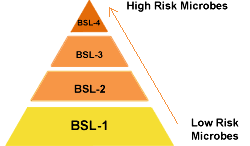
Biosafety levels: Explained
- BSL-1 (Lowest Level): Handles organisms that do not cause disease in healthy humans, such as non-pathogenic E. coli. Standard precautions like hand hygiene and basic protective gear are sufficient.
- BSL-2: Deals with pathogens causing moderate illness (e.g., Staphylococcus aureus, Hepatitis viruses). Requires restricted access, proper waste management, PPE, and biosafety cabinets.
- BSL-3: Involves pathogens that can cause severe or potentially fatal diseases and spread through aerosols, such as Mycobacterium tuberculosis, SARS-CoV, and MERS-CoV. Enhanced containment and ventilation systems are essential.
- BSL-4 (Highest Level): Reserved for highly dangerous pathogens with high fatality rates and no available treatment, such as Ebola and Marburg viruses. These labs feature complete isolation, full-body positive-pressure suits, and stringent decontamination protocols.
Biosafety level laboratories are specifically designed to study the world’s most dangerous and highly infectious pathogens, many of which have no known vaccines or effective treatments.
Exam Tip
Remember the sequence: BSL-1 → BSL-2 → BSL-3 → BSL-4 (increasing risk and containment)
https://indianexpress.com/article/explained/explained-health/gujarat-bsl-4-lab-10474986/: India to Establish First State-Funded BSL-4 Lab in Gujarat