Why in News?
February 18, 2026 marks the 80th anniversary of the Royal Indian Navy (RIN) Revolt, 1946.
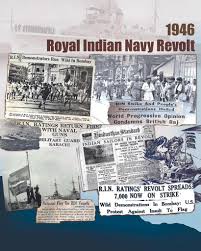
Key Highlights:
- Also known as the 1946 Naval Uprising.
- Began on February 18, 1946, and lasted for 5 days.
- Originated at HMIS Talwar (Bombay) and spread to other naval establishments.
- Involved around 20,000 naval ratings across ships and shore establishments.
- Received mass public support including strikes by workers and students.
Causes of the RIN Revolt
- Poor Quality of Food served to Indian sailors
- Racial Discrimination and ill-treatment by British officers
- Low Pay and Harsh Working Conditions
- Influence of nationalist movements and INA trials
Course of Events
Immediate Trigger
- Began as a hunger strike by ~1,100 ratings at HMIS Talwar
- Protest against Commander Arthur Frederick King’s racial behaviour
Organisation
- Formation of Naval Central Strike Committee (NCSC)
- Leadership by M.S. Khan
Demands
- Better food and service conditions
- Equal treatment with British personnel
- Release of Indian National Army (INA) prisoners
Outcome
- Revolt ended on February 23, 1946, after surrender
- Suppressed by British authorities with negotiations and force
Significance
- Demonstrated declining loyalty of Indian armed forces to British rule
- Seen as the “final nail in the coffin” of British colonialism in India
- Accelerated British decision to transfer power in 1947
- Highlighted unity among soldiers, workers, and civilians