πŸ“° Today's Current AffairsRead Now →
📷 Follow on Instagram

Indian economy notes

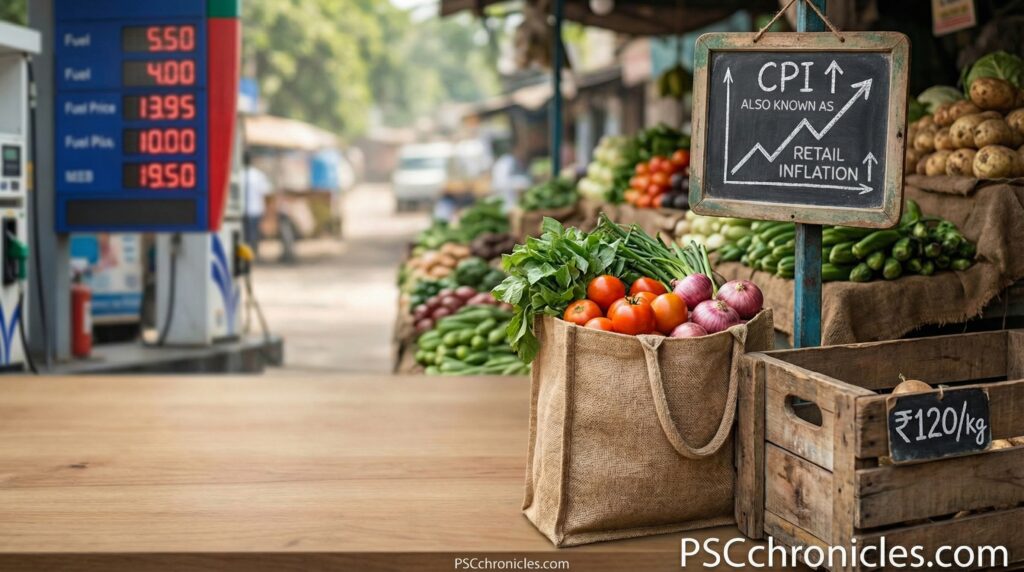
Consumer Price Index (CPI)-Explained for UPSC and State PSC exams

What is Consumer Price Index (CPI)?

The Consumer Price Index (CPI) measures the average change in prices of a basket of goods and services consumed by households over time.

  • It tracks the average change over time in the prices paid by consumers for a fixed basket of goods and services.Β 
cpi inflation

Who Releases CPI in India?

  • Released by: National Statistical Office (NSO)
  • Under: Ministry of Statistics and Programme Implementation (MoSPI)

Types of CPI in India

Type of CPI Releasing AuthorityPurpose/Use Case
CPI-Combined (Rural + Urban)NSO (MoSPI)Headline inflation indicator for RBI’s monetary policy.
CPI for Industrial Workers (IW)Labour BureauUsed for Dearness Allowance (DA) revision for govt employees.
CPI for Agricultural Labourers (AL)Labour BureauUsed for wage fixation under MGNREGA and state minimum wages.
CPI for Rural Labourers (RL)Labour BureauMeasures price changes faced by rural labour households.

Recent changes in CPI

  • Ministry of Statistics and Programme Implementation (MoSPI) has revised the base year for the CPI series from 2012 toΒ 2024
  • Weight Source: Based on theΒ Household Consumption Expenditure Survey (HCES) 2023-24.
  • Expanded Basket: The number of weighted items increased from 299 toΒ 358Β (308 goods and 50 services).
  • New Items: Included modern services likeΒ OTT streaming, e-commerce, andΒ rural house rentΒ for the first time.
  • Weightage Shift: The weight ofΒ Food and BeveragesΒ has been reduced from approximately 45.86% toΒ 36.75%, reflecting its decreasing share in modern household budgets

Other facts related to CPI:

  • Headline Inflation: Measured byΒ CPI-Combined (Rural + Urban), it is the primary indicator used by theΒ Reserve Bank of India (RBI)Β for monetary policy and inflation targeting (target:Β 4% Β± 2%).
  • Core Inflation: Headline inflation minus the volatile components (Food and Fuel).
  • Calculation Method: Uses theΒ Laspeyres Index Formula

CPI vs. WPI

  • Scope: CPI covers bothΒ goods and services, while WPI (Wholesale Price Index) coversΒ only goods.
  • Price Level: CPI measures retail prices (consumer perspective); WPI measures wholesale prices (producer/bulk perspective).
  • Weights: Food has a significantlyΒ higher weightageΒ in CPI (over 36%) compared to WPI (~24%)

To study current affairs of Indian economy from exam point of view, Click here

Consumer Price Index (CPI)-Explained for UPSC and State PSC exams Read More Β»

Monetary Policy Committee (MPC) – Complete Notes for UPSC & State PSC Exams

What is the Monetary Policy Committee (MPC)?

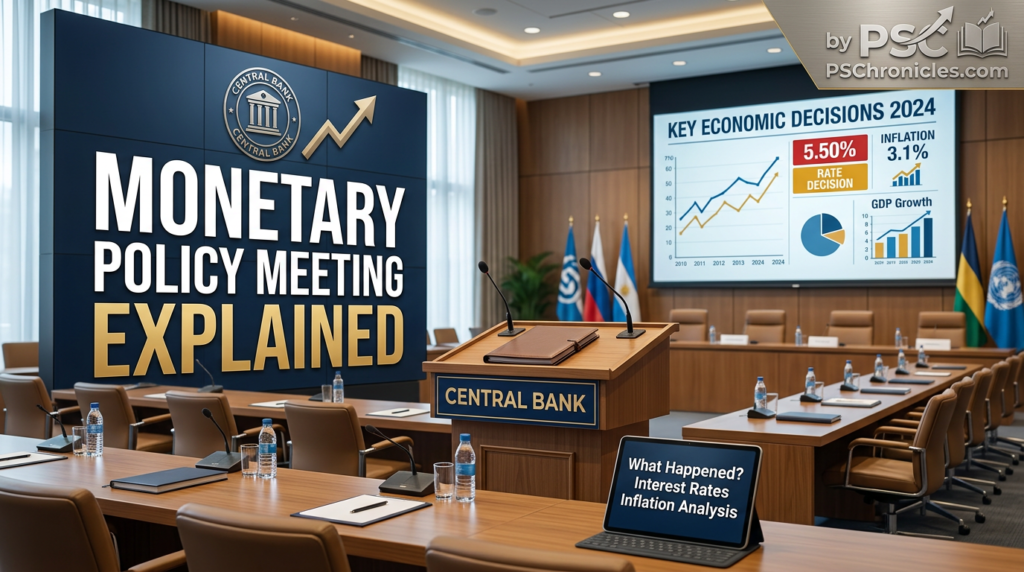
The Monetary Policy Committee (MPC) is a statutory body responsible for fixing India’s policy interest rate (Repo Rate) to control inflation and ensure price stability.

  • It is a key institution under the inflation targeting framework in India.
monetary policy meeting

Legal & Institutional Basis

  • Established under Reserve Bank of India Act, 1934 (amended in 2016)
  • Works under Flexible Inflation Targeting (FIT) framework
  • Central Bank: Reserve Bank of India (RBI)

Composition of MPC-6 members

MembersAppointing Authority
RBI Governor (Chairperson)RBI
Deputy Governor (Monetary Policy)RBI
One RBI officialRBI
Three external membersCentral Government

How MPC Works?

  • Meets at least 4 times a year (usually 6 times)
  • Decisions taken by majority voting
  • Each member has one vote
  • In case of tie β†’ Governor has casting vote

MPC and inflation targeting:

The Monetary Policy Committee (MPC) in India manages a Flexible Inflation Targeting (FIT) framework, aiming to maintain Consumer Price Index (CPI) inflation at 4% with a Β±2% tolerance band (2%-6%). This mechanism, set every five years, prioritizes price stability while supporting growth, with accountability to the government if targets are missed for three consecutive quarters.

For Indian economy current affairs from exam point of view, Click here

Monetary Policy Committee (MPC) – Complete Notes for UPSC & State PSC Exams Read More Β»

Periodic Labour Force Survey (PLFS) – Complete Notes for UPSC & State PSC Exams

What is Periodic Labour Force Survey (PLFS)?

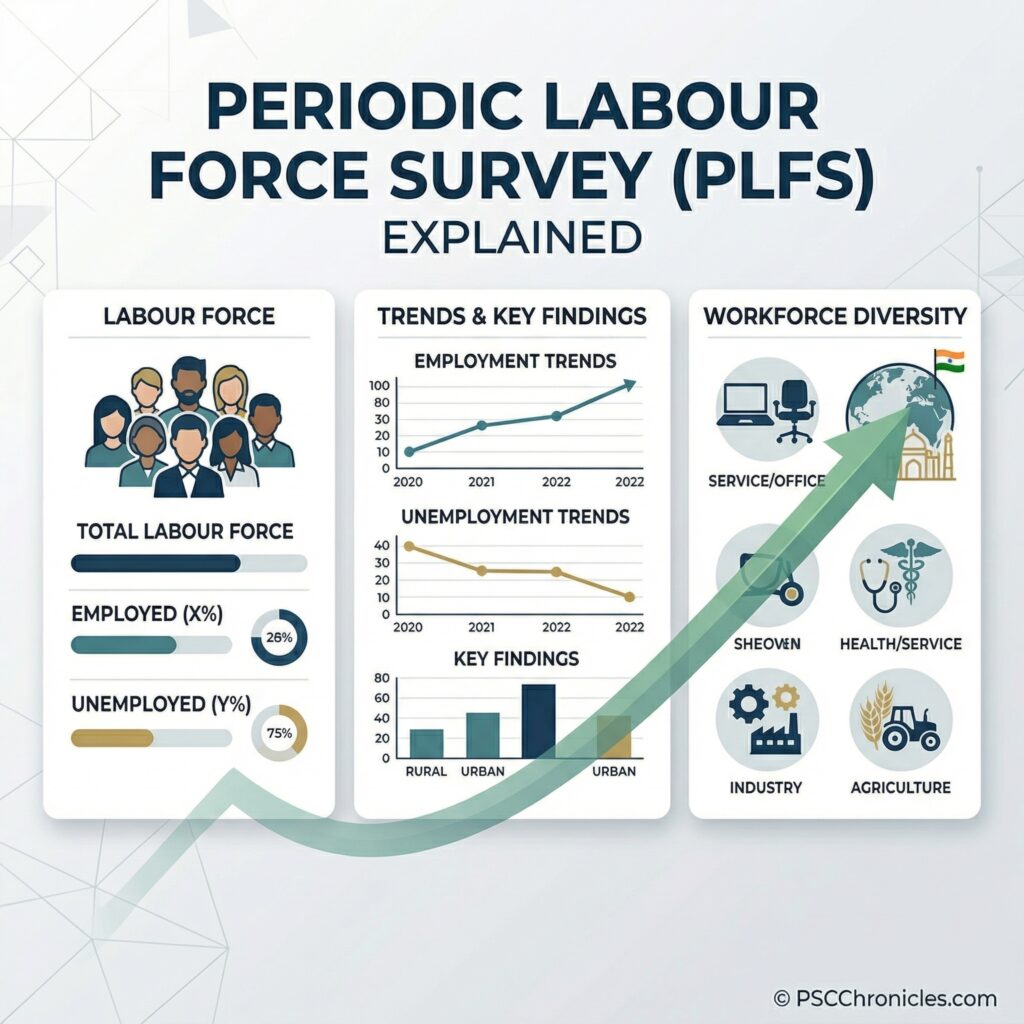
The Periodic Labour Force Survey (PLFS) is a large-scale nationwide survey conducted by the National Statistical Office (NSO) to collect data on employment and unemployment in India.

  • It was launched in 2017 to provide more frequent and reliable labour market data.
periodic labour force survey

Objectives of PLFS

  1. Estimate Labour Force Participation Rate (LFPR)
  2. Estimate Worker Population Ratio (WPR)
  3. Estimate Unemployment Rate (UR)
  4. Capture employment trends (rural & urban)

Key Features of PLFS

1. Two Types of Estimates

(a) Annual Estimates
  • Covers both rural and urban areas
  • Based on July–June period
(b) Quarterly Estimates
  • Covers urban areas only
  • Helps in short-term analysis

Measurement Approaches

(a) Usual Status (PS+SS)
  • Measures long-term employment/unemployment
(b) Current Weekly Status (CWS)
  • Based on last 7 days

Important Indicators:

1. Labour Force Participation Rate (LFPR)
  • % of population working or seeking work
2. Worker Population Ratio (WPR)
  • % of population actually employed
3. Unemployment Rate (UR)
  • % of labour force unemployed

PLFS vs Census vs NSSO Surveys

FeaturePLFSCensusNSSO (Old)
FrequencyAnnual/Quarterly10 years5 years
FocusEmploymentPopulationConsumption & Employment
AgencyNSORegistrar GeneralNSSO

To access current affairs related to Indian economy, Click here

Periodic Labour Force Survey (PLFS) – Complete Notes for UPSC & State PSC Exams Read More Β»

Stagflation – Complete Notes for UPSC & State PSC Exams

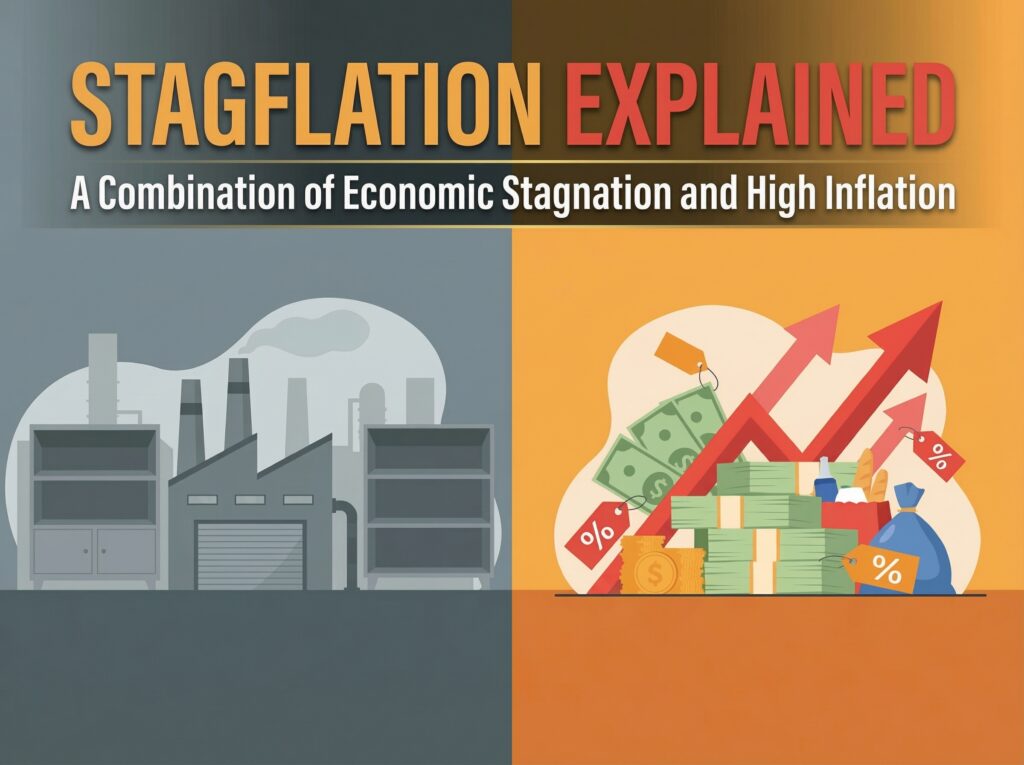
Stagflation is a rare and complex economic condition characterized by the simultaneous occurrence of:

  • Stagnant Economic Growth (low or negative GDP growth)
  • High Inflation (rising prices)
  • High Unemployment

It is considered paradoxical because it contradicts the Phillips Curve, which suggests an inverse relationship between inflation and unemployment.

stagflation

Key Features of Stagflation

  1. Slow or negative GDP growth
  2. Persistent inflation
  3. Rising unemployment
  4. Decline in purchasing power
  5. Reduced investment and production

Causes of Stagflation

1. Supply Shock:
  • Sudden increase in input costs (especially oil)
  • Example: 1973 Oil Crisis

Leads to:

  • Higher production costs
  • Reduced supply
  • Price rise + unemployment

2. Cost-Push Inflation
  • Increase in wages or raw material prices
  • Firms pass costs to consumers

3. Poor Economic Policies
  • Excessive money supply (loose monetary policy)
  • High fiscal deficits

4. Structural Weaknesses
  • Inefficient markets
  • Low productivity
  • Supply bottlenecks

5. External Factors
  • Wars, geopolitical tensions (e.g., oil disruptions)
  • Pandemic-related supply chain issues

Why Stagflation is Dangerous

  • Difficult to control simultaneously
  • Policy dilemma:
    • To reduce inflation β†’ tighten monetary policy β†’ increases unemployment
    • To boost growth β†’ increase spending β†’ worsens inflation

Hence called β€œPolicy Trap”

FeatureInflationRecessionStagflation
GrowthModerate/HighNegativeLow/Negative
InflationHighLowHigh
UnemploymentLowHighHigh

For Practice Questions on Indian economy, Clickhere

Stagflation – Complete Notes for UPSC & State PSC Exams Read More Β»

Small Industries Development Bank of India (SIDBI) topic explained

Introduction:

Small Industries Development Bank of India (SIDBI) is the principal financial institution for the promotion, financing, and development of the Micro, Small and Medium Enterprises (MSME) sector in India.

sidbi

Establishment

  • Established: 1990
  • Act: SIDBI Act, 1989
  • Headquarters: Lucknow
  • It is a statutory body under the Government of India.
  • Jurisdiction: Operates under the Department of Financial Services, Ministry of Finance, Government of India
Primary Functions:
  • Refinancing: Provides funds to banks and state-level financial institutions that lend to small businesses.
  • Direct Lending: Offers term loans, working capital, and venture capital directly to MSMEs through various schemes.
  • Developmental Role: Promotes financial inclusion, green energy adoption, and capacity building for entrepreneurs.
  • Regulatory Coordination: Acts as the apex body coordinating institutions engaged in similar MSME-focused activitie.

Small Industries Development Bank of India (SIDBI) topic explained Read More Β»