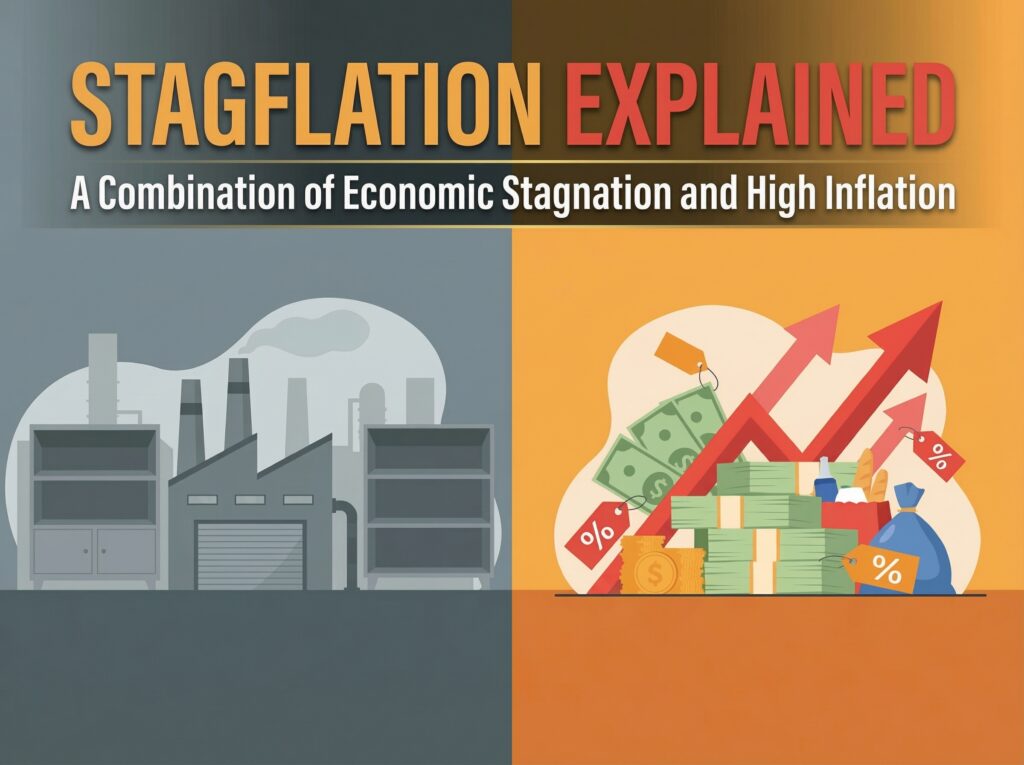
Stagflation is a rare and complex economic condition characterized by the simultaneous occurrence of:
- Stagnant Economic Growth (low or negative GDP growth)
- High Inflation (rising prices)
- High Unemployment
It is considered paradoxical because it contradicts the Phillips Curve, which suggests an inverse relationship between inflation and unemployment.
Key Features of Stagflation
- Slow or negative GDP growth
- Persistent inflation
- Rising unemployment
- Decline in purchasing power
- Reduced investment and production
Causes of Stagflation
1. Supply Shock:
- Sudden increase in input costs (especially oil)
- Example: 1973 Oil Crisis
Leads to:
- Higher production costs
- Reduced supply
- Price rise + unemployment
2. Cost-Push Inflation
- Increase in wages or raw material prices
- Firms pass costs to consumers
3. Poor Economic Policies
- Excessive money supply (loose monetary policy)
- High fiscal deficits
4. Structural Weaknesses
- Inefficient markets
- Low productivity
- Supply bottlenecks
5. External Factors
- Wars, geopolitical tensions (e.g., oil disruptions)
- Pandemic-related supply chain issues
Why Stagflation is Dangerous
- Difficult to control simultaneously
- Policy dilemma:
- To reduce inflation → tighten monetary policy → increases unemployment
- To boost growth → increase spending → worsens inflation
Hence called “Policy Trap”
| Feature | Inflation | Recession | Stagflation |
|---|---|---|---|
| Growth | Moderate/High | Negative | Low/Negative |
| Inflation | High | Low | High |
| Unemployment | Low | High | High |
For Practice Questions on Indian economy, Clickhere