Andhra Pradesh government has approved the establishment of AP FIRST (Andhra Pradesh Futuristic Innovation and Research in Science and Technology) in Tirupati.
Key Highlights:
Location: Tirupati, Andhra Pradesh
Project Name: AP FIRST (Andhra Pradesh Futuristic Innovation and Research in Science and Technology)
Collaboration: IIT Tirupati & IISER Tirupati
Objective: Prepare future workforce for evolving industrial demands.
Andhra Pradesh Chief Minister laid the foundation stone for India’s first mega green ammonia plant in Kakinada.
Key highlights:
Location: Kakinada, Andhra Pradesh.
Developer: AM Green (part of Greenko Group)
Project Type: Green Ammonia Production Plant
Production Capacity: 1.5 Million Metric Tonnes per Annum (MMTA)
Significance: First large-scale green ammonia project in India.
What is Green Ammonia?
Green Ammonia is ammonia (NH₃) produced using renewable energy sources like solar or wind. It uses green hydrogen (obtained via electrolysis of water) instead of fossil fuels.
Ponduru Khadi from Srikakulam district, Andhra Pradesh, has been awarded the Geographical Indication (GI) tag, recognizing its unique craftsmanship and heritage value.
Ponduru Khadi:
Ponduru Khadi is a premium, handspun, and handwoven cotton fabric originating from Ponduru village in Andhra Pradesh’s Srikakulam district. Often known locally asPatnulu, the weaving technique is passed down through generations in a village with a long history of khadi production.
Ponduru Khadi receives prestigious GI tag.
Khadi and Village Industries Commission named as registered proprietor.
Ensures only authentic khadi from Ponduru is marketed under this name.
Boosts handloom sector and rural artisans’ livelihood
Geographical Indication (GI) Tag:
GI tag identifies products with specific geographical origin and unique qualities.
It is a collective intellectual property right.
Key Features:
Law →
Geographical Indications of Goods (Registration and Protection) Act, 1999
Came into force in 2003
Nodal Agency →
Geographical Indications Registry (under DPIIT)
International Link →
Aligned with WTO TRIPS Agreement and Paris Convention
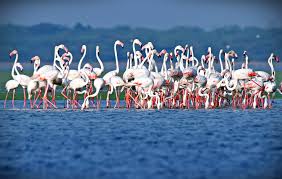
The Flamingo Festival has commenced at Nelapattu Bird Sanctuary, celebrating the arrival of migratory birds like flamingos and pelicans.
Nelapattu Bird Sanctuary:
Nelapattu Bird Sanctuary is located in Tirupati district, Andhra Pradesh.
Situated near Pulicat Lake, India’s second-largest brackish water lagoon.
The region forms an important wetland ecosystem supporting migratory birds.
Key species
Spot-billed Pelican (Endangered):
Nelapattu is one of the major breeding sites in South India & Southeast Asia
Flamingos:
Seasonal migratory birds visiting during winter
Pulicat lake:
Pulicat Lake is the second-largest brackish water lagoon in India, following Odisha’s Chilika Lake. Straddling the border of Andhra Pradesh and Tamil Nadu on the Coromandel Coast, it serves as a critical ecological haven and a popular destination for birdwatchers and nature enthusiasts
Andhra Pradesh Cabinet has approved the establishment of the AP Logistics Infrastructure Corporation (APLINC) and an AP Logistics Fund to strengthen logistics infrastructure and reduce costs.
Key Highlights:
Formation of APLINC as an integrated holding company.
Creation of AP Logistics Fund as an Alternative Investment Fund (AIF).
Aim: Mobilize institutional investments for infrastructure projects.
Focus on integrating road, inland waterways, and sea transport.
Implementation support through Andhra Pradesh Maritime Board.
Andhra Pradesh government has approved the establishment of a Greenfield Port and Shipbuilding Cluster at Dugarajapatnam under the Shipbuilding Development Scheme (SbDS) of the Ministry of Ports Shipping and Waterways.
Shipbuilding Cluster at Dugarajapatnam:
Andhra Pradesh government has officially approved the development of a ₹29,253 crore greenfield port and National Mega Shipbuilding Cluster at Dugarajapatnam in Tirupati district. This project is envisioned as India’s first mega greenfield shipbuilding cluster and a central component of the national Maritime Amrit Kaal Vision 2047.
Special Purpose Vehicle (SPV): The state has created “National Shipbuilding and Heavy Industries Park Andhra Pradesh Limited” to oversee development.
Infrastructure: The hub will include 1,000 acres for shipyards and 1,000 acres for supporting ancillary industries, with a 2 km waterfront.
Capacity: It aims to build a capacity of 1.2 million Gross Tonnage Per Annum (GTPA), including an anchor shipyard.
Prime Minister Narendra Modi highlighted the Narsapuram Lace Craft during the 129th episode of “Mann Ki Baat”, praising its role in women’s empowerment and self-help groups (SHGs).
Narsapuram Lace Craft:
Narsapuram Lace Craft (also known as Narasapur Crochet Lace) is a centuries-old hand-crocheted textile tradition from the West Godavari and Dr. B.R. Ambedkar Konaseema districts of Andhra Pradesh.
Known for intricate floral and geometric designs.
Has received a Geographical Indication (GI) tag.
About GI Tag:
A Geographical Indication (GI) Tag is a sign used on products that have a specific geographical origin and possess qualities or a reputation that are due to that origin
It is a form of collective intellectual property right.
Validity → 10 years (renewable)
Legal framework →Geographical Indications of Goods (Registration and Protection) Act, 1999. Came into force in 2003
Central Government has allocated ₹500 crore to develop Rakhigarhi as a global heritage site, recognizing its archaeological and tourism importance.
Rakhigarhi :
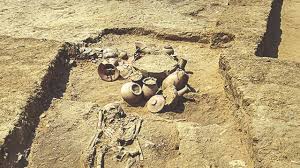
Rakhigarhi belongs to the Indus Valley Civilization (c. 2500–1900 BCE) and is the largest Harappan (Indus Valley Civilization) site.
Located in Hisar district, Haryana. Part of the Ghaggar-Hakra river basin.
Initially excavated by Amarendra Nath of the Archaeological Survey of India (ASI). Later excavations led by Vasanth Shinde confirmed its larger size than Mohenjodaro.
Rakhigarhi is one of five “Iconic Sites” identified by the Government of India for development into a vibrant cultural destination.
Exam Tip:
Earlier largest site → Mohenjo-daro.
Now recognized → Rakhigarhi as largest site in Indian subcontinent
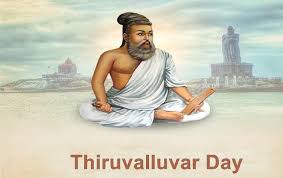
Prime Minister Narendra Modi paid homage to Thiruvalluvar on Thiruvalluvar Day, highlighting the timeless relevance of his work Tirukkural.
Thiruvalluvar:
Thiruvalluvar, also known as Valluvar, was a legendary Tamil poet and philosopher best known as the author of the Tirukkuṟaḷ, a foundational work of Tamil literature on ethics, governance, and love.
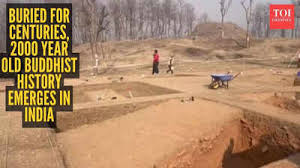
Archaeologists have discovered a 2,000-year-old Buddhist monastic complex at Zehanpora Stupa in Jammu & Kashmir, revealing important insights into Kashmir’s ancient Buddhist heritage.
Key Highlights:
Located in Zehanpora village, Baramulla district (J&K).
Dates back to the Kushan period (~1st–3rd century CE).
Excavation revealed stupas, monastic structures, and cultural remains.
Situated along the ancient Silk Route, linking India with Central Asia.
Confirms Kashmir’s role as a major Buddhist centre.
Buddhism in Kashmir:
Founded by Gautama Buddha (Siddhartha).
Tradition says Buddhism spread to Kashmir during Ashoka’s reign.
However, Rajatarangini suggests Buddhism existed before Ashoka.
Mahavamsa mentions Kashmir scholars in Ashoka’s council.