National Women’s Day in India is observed annually on 13 February. The day commemorates the birth anniversary of Sarojini Naidu, a key figure in India’s freedom struggle and women’s empowerment.
Sarojini Naidu:
Sarojini Naidu is a vital figure representing the intersection of the Indian national movement, women’s empowerment, and literary excellence. Known as the “Nightingale of India” (Bharat Kokila).
Key Institutional Milestones
Indian National Congress (INC): She was the first Indian woman to be elected President of the INC at the 1925 Kanpur Session. (Note: Annie Besant was the first woman President overall in 1917).
First Woman Governor: In 1947, she was appointed the Governor of United Provinces (now Uttar Pradesh), becoming the first woman to hold such a post in independent India.
Women’s Indian Association (WIA): She co-founded the WIA in 1917 alongside Annie Besant to advocate for women’s suffrage and education
Role in the Freedom Struggle
Non-Cooperation & Civil Disobedience: A staunch follower of Mahatma Gandhi, she participated in the Non-Cooperation Movement (1920) and the Salt Satyagraha (1930).
Dharasana Satyagraha: After Gandhi’s arrest during the Salt March, she took command of the raid on the Dharasana Salt Works on May 21, 1930, leading 2,500 volunteers.
Literary & Cultural Contributions
Her poetry is noted for its vivid imagery and themes of patriotism and Indian life. Key works include
The Andhra Pradesh government announced the launch of a Free Power Scheme for Weavers from April 1, 2026. The scheme aims to provide financial relief and livelihood support to handloom and power loom workers.
AP Free Power Scheme:
Scheme Launch Date: April 1, 2026
Electricity Benefit:
Handloom weavers: Free power up to 200 units/month
Power loom weavers: Free power up to 500 units/month
Union Budget 2026 approved the establishment of two major telescopes to boost India’s capabilities in space and astrophysical research. The initiative focuses on studying the Sun and the origin of the universe.
Key Highlights
New Telescopes Approved:
National Large Solar Telescope (NLST) at Merak region near Pangong Tso (Ladakh)
National Large Optical–Near Infrared Telescope (NLOT) at Hanle, Ladakh
Important Fact
NLST will become India’s 3rd ground-based solar observatory after:
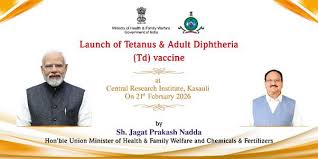
The Union Health Minister launched a Tetanus and Diphtheria (Td) vaccine programme. The initiative aims to strengthen protection against life-threatening infectious diseases in India.
Tetanus and Adult Diphtheria (Td) vaccine is a dual-protection shot that immunizes older children and adults against tetanus and diphtheria.
About Tetanus:
Tetanus is a serious, sometimes fatal, disease caused by Clostridium tetani bacteria, which produce a toxin causing severe, painful muscle spasms and “lockjaw”
Source: Soil, dust, animal manure.
Transmission: Enters body through cuts, wounds, or injuries
About Diphtheria:
Diphtheria is a serious, highly contagious bacterial infection caused by toxin-producing strains of Corynebacterium diphtheriae. While it typically affects the mucous membranes of the nose and throat, it can also impact the skin.
Cause: Bacterium Corynebacterium diphtheriae.
Transmission: Spread through respiratory droplets.
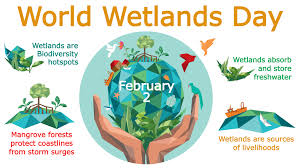
World Wetlands Day is observed on February 2, marking the anniversary of the Ramsar Convention (1971). The 2026 theme highlights traditional knowledge and cultural heritage linked to wetlands.
Key Highlights:
Date: February 2 (every year).
Purpose: To raise awareness about the importance of wetlands for ecology, biodiversity, and livelihoods.
2026 Theme:“Wetlands and Traditional Knowledge: Celebrating Cultural Heritage”
Ramsar Convention on Wetlands:
Signed on February 2, 1971 in Ramsar
It is the only global treaty focused on a specific ecosystem (wetlands)
India became a member on February 1, 1982
Objective: Conservation and wise use of wetlands
Montreux Record:
A register under the Ramsar Convention
Includes wetlands facing ecological threats due to human interference or pollution
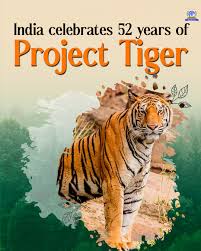
The Government of India has constituted four expert working groups to review five decades of tiger conservation policies under Project Tiger, marking its 50-year milestone.
Project Tiger:
Project Tiger was launched on 1 April 1973.
The launch took place at Jim Corbett National Park.
It is a Centrally Sponsored Scheme.
Objective: To ensure a viable population of Bengal tigers in their natural habitats.
Recognized as the world’s largest species conservation programme.
Exam TIP: National Tiger Conservation Authority (NTCA):
Established in 2005 and given statutory status in 2006.
Formed under the Wildlife (Protection) Act, 1972.
Functions:
Supervises Project Tiger implementation
Strengthens tiger conservation efforts
Chaired by the Union Minister of Environment, Forest and Climate Change