πŸ“° Today's Current AffairsRead Now →
📷 Follow on Instagram

PSC Chronicles Team

Stagflation – Complete Notes for UPSC & State PSC Exams

Stagflation is a rare and complex economic condition characterized by the simultaneous occurrence of:

  • Stagnant Economic Growth (low or negative GDP growth)
  • High Inflation (rising prices)
  • High Unemployment

It is considered paradoxical because it contradicts the Phillips Curve, which suggests an inverse relationship between inflation and unemployment.

stagflation

Key Features of Stagflation

  1. Slow or negative GDP growth
  2. Persistent inflation
  3. Rising unemployment
  4. Decline in purchasing power
  5. Reduced investment and production

Causes of Stagflation

1. Supply Shock:
  • Sudden increase in input costs (especially oil)
  • Example: 1973 Oil Crisis

Leads to:

  • Higher production costs
  • Reduced supply
  • Price rise + unemployment

2. Cost-Push Inflation
  • Increase in wages or raw material prices
  • Firms pass costs to consumers

3. Poor Economic Policies
  • Excessive money supply (loose monetary policy)
  • High fiscal deficits

4. Structural Weaknesses
  • Inefficient markets
  • Low productivity
  • Supply bottlenecks

5. External Factors
  • Wars, geopolitical tensions (e.g., oil disruptions)
  • Pandemic-related supply chain issues

Why Stagflation is Dangerous

  • Difficult to control simultaneously
  • Policy dilemma:
    • To reduce inflation β†’ tighten monetary policy β†’ increases unemployment
    • To boost growth β†’ increase spending β†’ worsens inflation

Hence called β€œPolicy Trap”

FeatureInflationRecessionStagflation
GrowthModerate/HighNegativeLow/Negative
InflationHighLowHigh
UnemploymentLowHighHigh

For Practice Questions on Indian economy, Clickhere

Stagflation – Complete Notes for UPSC & State PSC Exams Read More Β»

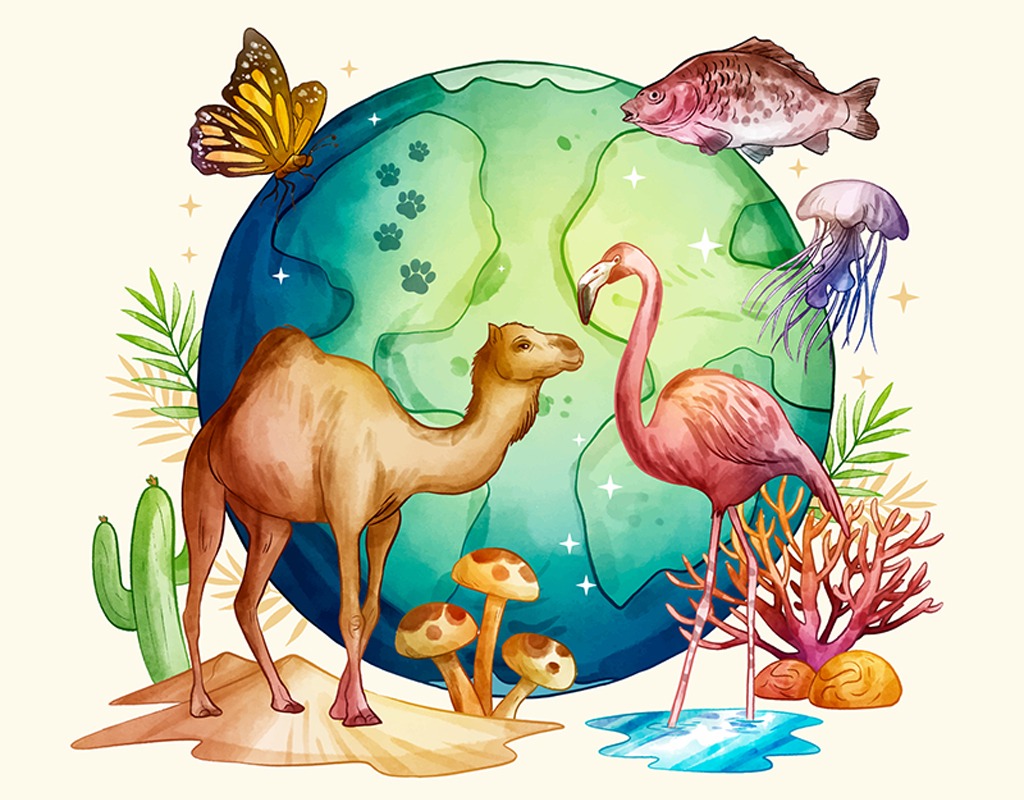
Practice Questions on Biodiversity

The term ‘biodiversity’ was popularized globally by which scientist through his landmark 1988 book ‘BioDiversity’?


Which international convention, adopted at the 1992 Rio Earth Summit, primarily deals with the conservation of biological diversity?


How many biodiversity hotspots are recognized globally as per the most recent listing by Conservation International?


How many biodiversity hotspots are located fully or partially within the territory of India?


The National Biodiversity Authority (NBA), established under the Biological Diversity Act 2002, is headquartered in which Indian city?


Which of the following is NOT recognized as one of the three major levels of biodiversity?


The Red List of Threatened Species, the world’s most comprehensive inventory of species conservation status, is published by which organization?


An ‘endemic species’ is defined as a species that:


The United Nations International Day for Biological Diversity is observed every year on which date?


Which is the LARGEST National Park in India by geographic area?


The Western Ghats is designated as a biodiversity hotspot primarily because of which characteristic?


Under the Wildlife (Protection) Act 1972, species listed in Schedule I are provided with what level of protection?


Project Tiger, one of India’s most successful wildlife conservation programmes, was officially launched in which year?


Biosphere Reserves in India are designated under which international programme?


The Nagoya Protocol, adopted in 2010 as a supplementary agreement under the CBD, primarily deals with which subject?


Which of the following is a designated Ramsar Wetland of International Importance located in Andhra Pradesh?


‘In-situ conservation’ of biodiversity refers to the conservation of species by:


The Biological Diversity Act, providing for conservation of biodiversity and benefit sharing, was enacted in India in which year?


Which of the following is an example of EX-SITU conservation of biodiversity?


The concept of a ‘biodiversity hotspot’ β€” a biologically rich area under exceptional threat β€” was first introduced by which scientist?


As of 2023, which Indian state has the HIGHEST number of Tiger Reserves?


CITES (Convention on International Trade in Endangered Species of Wild Fauna and Flora) was created primarily to regulate:


Kaziranga National Park, a UNESCO World Heritage Site in Assam, is primarily known globally for the conservation of which species?


The Cartagena Protocol on Biosafety (2000), adopted as a supplementary agreement to the CBD, primarily regulates:


According to IUCN and IPBES assessments, which factor is considered the SINGLE MOST IMPORTANT driver of global biodiversity loss?


‘Genetic diversity’ in the context of biodiversity refers to:


India became a signatory to the Convention on Biological Diversity at which international event?


Which of the following Indian National Parks is NOT a UNESCO Natural World Heritage Site?


‘Alpha diversity’ (alpha-diversity) in ecology specifically refers to:


The ‘latitudinal diversity gradient’ β€” one of ecology’s most robust empirical patterns β€” shows that species richness generally:


India, as one of the 17 ‘megadiverse’ countries, harbors approximately what percentage of the world’s recorded species despite occupying only 2.4% of Earth’s land area?


Which of the following pairs of National Park and its State is CORRECTLY matched?


The Kunming-Montreal Global Biodiversity Framework (GBF), which sets new global targets for biodiversity by 2030 and 2050, was adopted in:


A ‘keystone species’ in an ecosystem is best described as a species that:


UNESCO’s Man and Biosphere (MAB) Programme requires Biosphere Reserves to be organized into how many concentric functional zones?


According to the India State of Forest Report published biennially by the Forest Survey of India (FSI), which state has the HIGHEST total forest cover by geographic area?


The Biological Diversity Rules, which operationalize and provide regulatory details for the Biological Diversity Act 2002, were officially notified in which year?


Sundarbans Biosphere Reserve, shared between India and Bangladesh, is globally significant because it:


Which of the following is a well-documented invasive alien species in India that severely threatens native forest biodiversity?


COP-15 of the Convention on Biological Diversity, which adopted the Kunming-Montreal Global Biodiversity Framework, was held at:


The ‘Aichi Biodiversity Targets’ β€” a set of 20 global biodiversity goals β€” were adopted as part of which specific Strategic Plan, and at which CBD COP?


According to the Biogeographic Classification of India developed by Rodgers and Panwar (1988), India is divided into how many primary biogeographic zones?


The Millennium Ecosystem Assessment (2005) classified ecosystem services into four broad categories. Which option CORRECTLY and COMPLETELY lists all four?


MacArthur and Wilson’s (1967) Equilibrium Theory of Island Biogeography established what specific relationship between island area and species number?


Under the Biological Diversity Act 2002, which of the following statements regarding access by INDIAN NATIONALS to biological resources is INCORRECT?


The IPBES (Intergovernmental Science-Policy Platform on Biodiversity and Ecosystem Services), often called the ‘biodiversity equivalent of the IPCC’, was established in which year?


The ‘Debt-for-Nature Swap’ mechanism in international biodiversity conservation finance involves which arrangement?


Under the Scheduled Tribes and Other Traditional Forest Dwellers (Recognition of Forest Rights) Act 2006, which of the following COMBINATIONS of rights is recognized for eligible forest-dwelling communities?


The ‘Satoyama Initiative’, promoted jointly by UNU-IAS and UNEP through the International Partnership for the Satoyama Initiative (IPSI) launched in 2010, aims to revitalize what kind of landscapes?


The concept of ‘extinction debt’ in conservation biology β€” first formally described by Tilman et al. (1994) β€” refers to which ecological phenomenon?


Practice Questions on Biodiversity

imgi 2 eo blog july 24

for more practice questions on Eco System

Practice Questions on Biodiversity Read More Β»

Defence ministry clears β‚Ή39,000 Cr Ghatak Stealth Drone Project

Why in News?

India has taken a major step in strengthening its defence capabilities by approving a β‚Ή39,000 crore project to develop advanced stealth drones. These drones, known as Ghatak, will significantly enhance the Indian Air Force’s (IAF) strike capabilities using indigenous technology.

ghatak project

What is the Ghatak Project?

  • The Ghatak is an unmanned stealth combat aerial vehicle (UCAV).
  • It is also referred to as the Remotely Piloted Strike Aircraft (RPSA) programme.
  • Developed by the Defence Research and Development Organisation (DRDO).
  • Designed mainly for deep penetration strike missions in hostile territories.

For more Defence related current affairs, Click here

Defence ministry clears β‚Ή39,000 Cr Ghatak Stealth Drone Project Read More Β»

Fast Breeder Reactor (FBR) – Complete Notes for UPSC/State PSC exams

A Fast Breeder Reactor (FBR) is an advanced type of nuclear reactor that produces more fissile material than it consumes. It uses fast neutrons (without moderators) to convert fertile material into usable nuclear fuel.

  • Key Idea: β€œBreeds fuel while generating energy.”
fast breeder reactor
  • Fuel Used: Plutonium-239 (fissile material)
  • Fertile Material: Uranium-238 or Thorium-232
  • No Moderator: Unlike thermal reactors, FBR uses fast neutrons
  • Coolant: Usually liquid sodium (excellent heat conductor)

Process:

  • Fast neutrons cause fission of plutonium β†’ energy released
  • Extra neutrons convert U-238 β†’ Plutonium-239
  • Newly formed plutonium acts as fresh fuel

Fast Breeder Reactor (FBR) – Complete Notes for UPSC/State PSC exams Read More Β»

India’s First Fast Breeder Reactor Achieves Criticality

Why in News?

India has reached a significant milestone in its nuclear energy programme as the first indigenous Prototype Fast Breeder Reactor (PFBR) at Kalpakkam, Tamil Nadu, has achieved criticality. This marks a major step towards energy security and efficient utilization of nuclear fuel resources.

fast breeder reactor

What is β€˜Criticality’?

  • It indicates that the reactor is operational and ready for controlled power generation.
  • Criticality refers to the stage when a nuclear reactor sustains a self-sustaining chain reaction.

About India’s PFBR at Kalpakkam

  • Location: Kalpakkam, Tamil Nadu
  • Capacity: 500 MWe
  • Type: Prototype Fast Breeder Reactor (PFBR)
  • Developed by: BHAVINI (Bharatiya Nabhikiya Vidyut Nigam Limited

To know more about Fast Breeder Reactor, Click here

India’s First Fast Breeder Reactor Achieves Criticality Read More Β»

All you need to know about World Health Day

World Health Day is observed every year on April 7 to create awareness about global health issues. It marks the foundation day of the World Health Organization (WHO) in 1948

History & Background

  • WHO was established on April 7, 1948
  • The first World Health Day was celebrated in 1950
  • The day highlights priority health concerns identified by WHO
Objectives of World Health Day
  • Raise awareness about critical health issues
  • Promote healthy lifestyles and preventive care
  • Encourage governments to improve healthcare systems
  • Support Universal Health Coverage (UHC)

To know about 2026 World Health Day, Click here

world health day

All you need to know about World Health Day Read More Β»

World Health Day: 2026

World Health Day is celebrated annually on 7 April to mark the anniversary of the founding of the World Health Organization (WHO) in 1948.

world health day

2026 Theme: “Together for Health. Stand with Science

This year’s campaign focuses on the power of scientific collaboration and evidence-based decision-making to protect the health of people, animals, plants, and the entire planet

History & Background

  • WHO was established on April 7, 1948
  • The first World Health Day was celebrated in 1950
  • The day highlights priority health concerns identified by WHO

To know more about World Health Day, Click here

World Health Day: 2026 Read More Β»

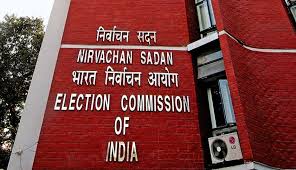
Election Commission of India (ECI) – Complete Notes for UPSC & State PSC exams

The Election Commission of India (ECI) is an autonomous constitutional authority responsible for administering election processes in India. It ensures free, fair, and transparent elections, which are the backbone of democracy.

add below pscchronicles.com 202604071048

Constitutional Provisions

  • Article 324: Provides for the establishment of the ECI.
  • It vests the superintendence, direction, and control of elections in the Commission.

Elections Conducted by ECI:

  • Lok Sabha
  • Rajya Sabha
  • State Legislative Assemblies & Councils
  • President and Vice-President of India

Composition of ECI

  • Initially: Single-member body (only Chief Election Commissioner)
  • Present: Multi-member body (3 members)
    • Chief Election Commissioner (CEC)
    • Two Election Commissioners (ECs)

Appointment:

  • Appointed by the President of India
Tenure:
  • 6 years or until age of 65 years (whichever earlier)

Removal of Members

  • CEC: Removed like a Supreme Court judge
    (by Parliament through impeachment – Article 324(5))
  • Election Commissioners: Removed by President on recommendation of CEC

This ensures independence of the Commission

Revision:
FeatureDetails
Article324
TypeConstitutional Body
Members3 (CEC + 2 ECs)
AppointmentPresident
Removal of CECLike SC Judge
FunctionsConduct elections, MCC, advisory role

For detailed explanation on Procedure for removal of CEC, Click here

Election Commission of India (ECI) – Complete Notes for UPSC & State PSC exams Read More Β»

Chairs of both Houses reject notice seeking CEC’s removal

Why in News?

Chairpersons of both Houses of Parliament rejected a notice submitted by Opposition Members of Parliament seeking the removal of the Chief Election Commissioner (CEC). It sought the removal of the current Chief Election Commissioner Gyanesh Kumar

election commission of india

Constitutional Provision: Article 324(5)

  • Article 324 deals with the Election Commission of India (ECI).
  • Clause (5) ensures security of tenure for the CEC.
  • It states that:
    • The CEC can be removed only in the same manner and on the same grounds as a Supreme Court Judge.

Grounds for Removal of CEC:

The CEC can be removed only on:

  • Proven misbehaviour
  • Incapacity

These conditions ensure independence and prevent arbitrary removal.

Procedure for Removal of CEC

The process is similar to the removal of a Supreme Court Judge and follows the Judges (Inquiry) Act, 1968. The procedure is as follows

1. Initiation of Motion
  • Requires:
    • At least 100 Lok Sabha MPs, OR
    • At least 50 Rajya Sabha MPs
Admission & Investigation
  • The motion is submitted to:
    • Lok Sabha Speaker or Rajya Sabha Chairman
  • If admitted, a 3-member inquiry committee is formed:
    • A Supreme Court Judge
    • A Chief Justice of a High Court
    • A Distinguished jurist
3. Parliamentary Approval
  • If charges are proven:
    • Both Houses must pass the motion with a Special Majority:
      • Majority of total membership AND
      • Two-thirds of members present and voting
4. Final Removal
  • After Parliament passes the motion:
    • The President of India issues the final removal order.

To Know more about Election commission of India, Click here

Chairs of both Houses reject notice seeking CEC’s removal Read More Β»

3 ships – Dunagiri, Sanshodhak, and Agray – handed over to Navy

Why in News?

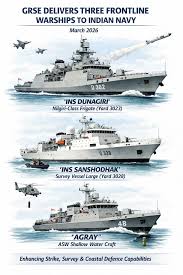
In a significant boost to India’s maritime strength, Garden Reach Shipbuilding and Engineers Ltd (GRSE) handed over three advanced naval platforms β€” Dunagiri, Sanshodhak, and Agray β€” to the Indian Navy.

dunagiri, sanshodhak, and agray

1. INS Dunagiri (Project 17A)

  • Type: Stealth Frigate
  • Class: Nilgiri Class
  • Project: Project 17A
  • Position: Fifth ship in the series

2. INS Agray (Arnala Class ASW SWC)

  • Type: Anti-Submarine Warfare Shallow Water Craft
  • Class: Arnala Class
  • Position: Fourth of eight vessels

INS Sanshodhak (Survey Vessel Large)

  • Type: Survey Vessel (Large)
  • Position: Final ship in SVL Project

For more Defence current affairs, Click here

3 ships – Dunagiri, Sanshodhak, and Agray – handed over to Navy Read More Β»