
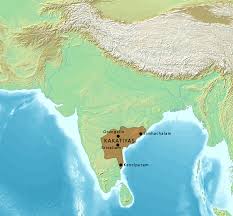
Practice Questions on Eastern Chalukyas of Vengi for APPSC exams
Practice Questions on Eastern Chalukyas of Vengi
Practice Questions on Eastern Chalukyas of Vengi

For Practice Questions on Satavahanas Click here
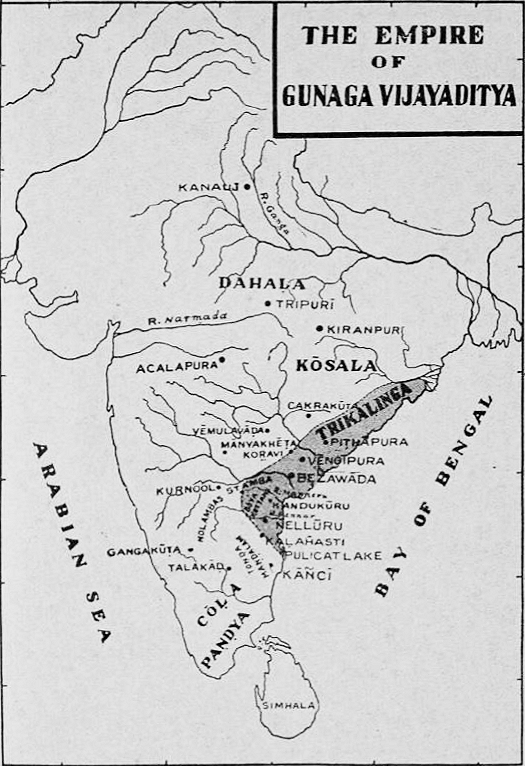
Practice Questions on Eastern Chalukyas of Vengi for APPSC exams Read More »
INS Aridhaman: India’s 3rd Nuclear Submarine
Why in News?
India has achieved another milestone in its strategic defence capability with the commissioning of INS Aridhaman, its third nuclear-powered ballistic missile submarine (SSBN).
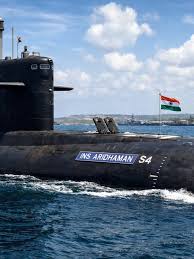
INS Aridhaman:
- INS Aridhaman (S4) is India’s third indigenously developed SSBN.
- It is part of the Arihant-class submarines.
- Developed under the Advanced Technology Vessel (ATV) project.
- Represents a major advancement in indigenous defence technology.
What is India’s SSBN Programme?
India’s SSBN Programme is a highly classified, indigenous project aimed at constructing nuclear-powered ballistic missile submarines (SSBNs) to establish a credible, sea-based second-strike capability.
- SSBN stands for ship submersible ballistic nuclear or nuclear-powered ballistic missile submarines.
Current Status of India’s SSBN Fleet (as of April 2026):
- INS Arihant (S2): Commissioned in 2016.
- INS Arighaat (S3): Commissioned in August 2024.
- INS Aridhaman (S4): Commissioned in April 2026.
- S4 (likely INS Arisudan):* Currently undergoing sea trials, expected commissioning in 2027
INS Taragiri Commissioned: Boost to India’s Naval Power
Why in News?
The INS Taragiri (F41) is the newest stealth guided-missile frigate of the Indian Navy, commissioned at the Naval Dockyard in Visakhapatnam
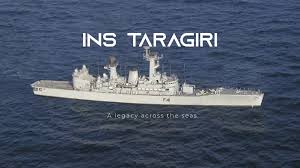
INS Taragiri – Key Highlights
- INS Taragiri (F41) is the fourth ship under the Project 17A (Nilgiri-class).
- It is a stealth guided-missile frigate designed for advanced naval warfare.
- Built by Mazagon Dock Shipbuilders Limited (MDL), Mumbai.
- Commissioned at the Eastern Naval Command, Visakhapatnam.
What is Project 17A?
Project 17A (P17A) involves the construction of seven advanced Nilgiri-class stealth guided-missile frigates for the Indian Navy, designed for improved stealth, survivability, and combat capability. Built by Mazagon Dock Shipbuilders (MDL) and Garden Reach Shipbuilders & Engineers (GRSE),
Project 17A Vessels:
- INS Nilgiri: First of class.
- INS Himgiri: Built by GRSE.
- INS Udaygiri: Built by MDL.
- INS Taragiri: Commissioned April 2026.
- INS Dunagiri: Delivered to the Indian Navy.
- INS Vindhyagiri: Launched by GRSE.
- Mahendragiri: Seventh frigate
INS Taragiri Commissioned: Boost to India’s Naval Power Read More »
Index of Industrial Production (IIP) – Complete Guide for UPSC, APPSC, TGPSC and other state PSC exams:
What is Index of Industrial Production (IIP)?
- The Index of Industrial Production (IIP) measures the short-term changes in the volume of production of industrial sectors in an economy.
- It indicates the growth or contraction of industrial activity over a period of time.
Base Year of IIP
- Current Base Year: 2011–12
- Base year is revised periodically to reflect structural changes in the economy.
Components of IIP
The IIP is divided into three major sectors:
1. Manufacturing Sector
- Weight: ~77.6%
- Largest contributor to IIP
2. Mining Sector
- Weight: ~14.4%
3. Electricity Sector
- Weight: ~8%
Manufacturing dominates, so its performance heavily influences IIP.
Who Releases IIP?
- Released by: National Statistical Office (NSO)
- Under: Ministry of Statistics and Programme Implementation (MoSPI)
- Frequency: Monthly
- Time lag: Usually released 6 weeks after the reference month
How is IIP Calculated?
IIP is calculated using the Laspeyres Index formula, which compares current production with base year production.
- Uses fixed weights (based on base year)
- Tracks volume, not value
- Based on physical output data
The Core Industries & IIP
Within the IIP, there are eight “core” industries that represent approximately 40.27% of the total weight. They are considered high-frequency indicators of infrastructure and industrial performance
- Refinery Products (highest weightage).
- Electricity, Steel, Coal, Crude Oil, Natural Gas, Cement, and Fertilisers.
Governor Must Follow Cabinet Advice on Remission: Madras HC
Why in News?
In a significant constitutional ruling, the Madras High Court clarified that the Governor cannot act independently in matters of remission and must follow the advice of the Council of Ministers under Article 161.
Article 161:
Article 161 of the Constitution of India defines the pardoning power of the Governor, enabling them to grant pardons, reprieves, respites, or remissions of punishment.
Article 161 of the Constitution empowers the Governor to:
- Grant Pardon – Complete removal of punishment
- Grant Reprieve – Temporary suspension of punishment
- Grant Respite – Reduced punishment due to special circumstances
- Grant Remission – Reduction in the duration of sentence
- Commute sentences – Change to a lesser form of punishment
Scope of Power
- Applies only to offences against State laws
- Similar to the President’s powers under Article 72, but limited to state jurisdiction
To read more on Pardoning Power of governor Click here
Governor Must Follow Cabinet Advice on Remission: Madras HC Read More »
Pardoning Power of Governor (Article 161) – Explained for UPSC and State PSC exams
Article 161: Pardoning Power of Governor
What is Pardoning Power?
The Pardoning Power of the Governor refers to the authority granted under Article 161 of the Indian Constitution, which allows the Governor of a State to grant relief to individuals convicted of offences under State laws.
It is an important part of the executive powers of the Governor and acts as a safeguard against judicial errors and ensures justice with mercy.
Constitutional Provision:
- Article 161 empowers the Governor to:
- Grant pardons
- Reprieves
- Respites
- Remissions
- Commute sentences
Applies only to offences against laws under State jurisdiction.
Types of Pardoning Powers:
1. Pardon
- Completely removes both sentence and conviction
- The person is treated as innocent
2. Commutation
- Substitution of one form of punishment with a lighter one
(e.g., death sentence → life imprisonment)
3. Remission
- Reduction in the duration of sentence without changing its nature
(e.g., 5 years → 3 years)
4. Respite
- Awarding a lesser sentence due to special circumstances
(e.g., pregnancy, physical disability)
5. Reprieve
- Temporary stay of execution, especially in death sentence cases
Scope of Governor’s Pardoning Power
- Applicable to:
- Offences under State laws
- Cases involving State executive power
- Limitations:
- Cannot pardon death sentence independently (can only suspend/remit/commute)
- Cannot grant pardon in court-martial cases
Governor vs President – Key Differences
| Feature | Governor | President |
|---|---|---|
| Constitutional Article | Article 161 | Article 72 |
| Jurisdiction | State laws | Union laws |
| Death Sentence | Cannot pardon | Can pardon |
| Court Martial | No power | Has power |
Judicial Review of Pardoning Power
The pardoning power is not absolute. Courts can review it in cases of:
- Malafide (bad intention)
- Arbitrariness
- Irrelevant considerations
Important Case Laws:
- Maru Ram vs Union of India (1980)
→ Governor acts on the aid and advice of Council of Ministers - Kehar Singh vs Union of India (1989)
→ Scope of judicial review explained - Epuru Sudhakar vs Government of Andhra Pradesh (2006)
→ Pardoning power can be challenged if misused
Pardoning Power of Governor (Article 161) – Explained for UPSC and State PSC exams Read More »
Practice Questions on Vishnukundins (AP History) for APPSC exams
Practice Questions on Vishnukundins
Please go to Practice Questions on Vishnukundins (AP History) for APPSC exams to view the testFor Practice Questions on Ikshavakus Click here
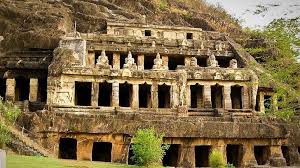
Practice Questions on Vishnukundins (AP History) for APPSC exams Read More »
Free Power Scheme for Weavers in Andhra Pradesh
Why in News?
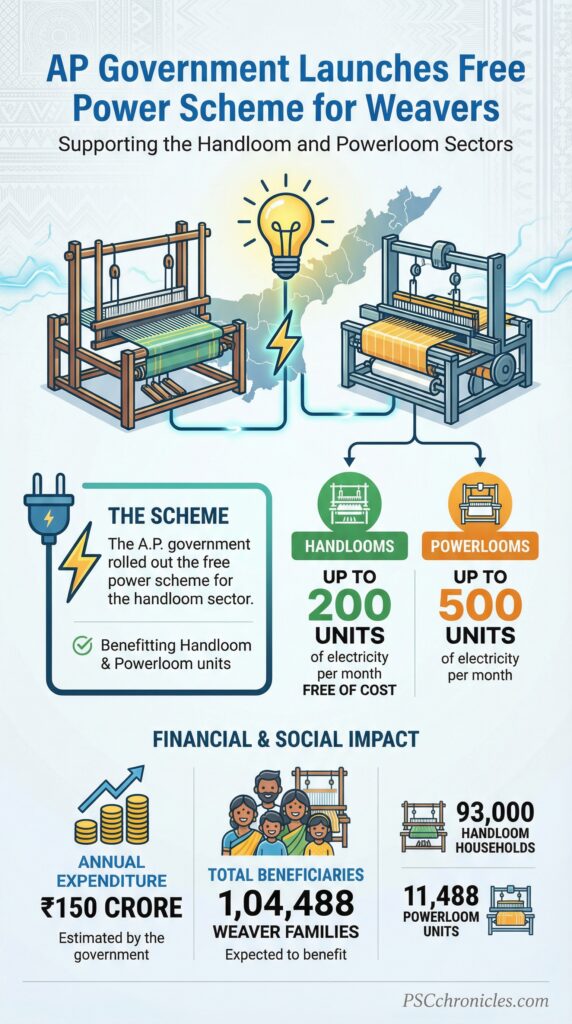
Andhra Pradesh government has introduced a Free Power Scheme for Weavers to support the handloom and powerloom sectors
Key features of the scheme:
The scheme provides free electricity to weavers in Andhra Pradesh.
- Handloom weavers: Up to 200 units/month.
- Powerloom units: Up to 500 units/month
Beneficiaries:
- Total: 1,04,488 weaver families
- Handloom households: 93,000
- Powerloom units: 11,488
For other Andhra Pradesh current affairs Click here
Practice Questions on Ikshavakus for APPSC exams
Practice Questions on Ikshavakus
Please go to Practice Questions on Ikshavakus for APPSC exams to view the testFor Practice Questions on Satavahanas click here:
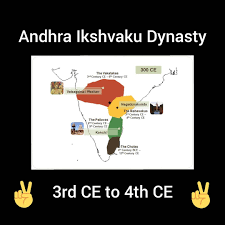
Practice Questions on Ikshavakus for APPSC exams Read More »