πŸ“° Today's Current AffairsRead Now →
📷 Follow on Instagram

April 2026 current affairs

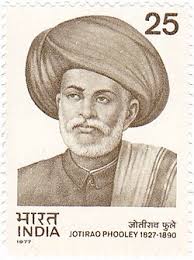
Mahatma Jyotiba Phule Jayanti 2026: Complete Notes for UPSC & PSC Exams

Why in News?

Prime Minister Narendra Modi paid tribute to Mahatma Jyotiba Phule on his birth anniversary, recognizing his immense contribution to social justice, education, and equality in India.

mahatma jyotiba phule

Mahatma Jyotiba Phule Major contributions:

1. Pioneer of Women’s Education

  • In 1848, started the first girls’ school at Bhide Wada, Pune
  • Educated his wife Savitribai Phule, who became India’s first woman teacher
  • Promoted education as a tool for social transformation

2. Satyashodhak Samaj (1873)

  • Founded Satyashodhak Samaj to promote social equality and fight against caste discrimination

3. Concept of β€˜Dalit’

  • Among the first leaders to use the term β€œDalit” (meaning oppressed)

4. Literary Contribution – Gulamgiri (1873)

  • Famous book Gulamgiri (means Slavery)
  • Compared caste oppression in India with racial slavery in America
  • Highlighted exploitation and inequality

5. Title of β€œMahatma”

  • Conferred in 1888 by social activist Vithalrao Krishnaji Vandekar
  • Recognized for his lifelong service to society

Legacy and Influence

  • Inspired leaders like Dr. B. R. Ambedkar
  • Ambedkar considered Phule as one of his three gurus (along with Buddha and Kabir)
  • Laid foundation for the modern anti-caste movement in India

To know more about Jyotiba Phule, Click here

Mahatma Jyotiba Phule Jayanti 2026: Complete Notes for UPSC & PSC Exams Read More Β»

President Nominates Harivansh to Rajya Sabha:

Why in News:

The President of India, Droupadi Murmu, has nominated Harivansh Narayan Singh to the Rajya Sabha. This nomination fills a vacancy created due to the retirement of a previously nominated member.

  • The nomination was made under Article 80 of the Constitution.
design clean simple and professional and creative

About Rajya Sabha: Article 80

Article 80 of the Indian Constitution deals with the composition of the Rajya Sabha.

Important Provisions
  • Maximum Strength: 250 members
  • Current Strength (2026): 245 members
  • Nominated Members: 12 members nominated by the President
  • Eligibility for Nomination:
    • Excellence in:
      • Art
      • Literature
      • Science
      • Social Service

Seat Allocation

  • Based on population of states
  • Examples:
    • Uttar Pradesh: Highest representation (31 seats)
    • Goa & Sikkim: 1 seat each

Tenure & Retirement

  • Term: 6 years
  • Rotation System:
    • One-third members retire every 2 years
  • Ensures continuity of the House

To study more about Rajya Sabha from exam point of view, Click here

President Nominates Harivansh to Rajya Sabha: Read More Β»

India Withdraws Bid for COP 33 (2028)

India has withdrawn its bid to host the 33rd Conference of Parties (COP 33) scheduled for 2028.

  • COP is the annual global climate summit held under the United Nations climate framework, where countries discuss actions to tackle climate change
unfccc psc

What is UNFCCC?

The United Nations Framework Convention on Climate Change (UNFCCC) is the main international agreement guiding global efforts to combat climate change.

Key Facts:

  • Adopted: 1992
  • Event: Earth Summit (Rio de Janeiro)
  • Objective: Stabilize greenhouse gas emissions to prevent dangerous climate change
  • Nature: Framework treaty (not legally binding emission targets)

Important Agreements under UNFCCC:

  • Kyoto Protocol
    • Legally binding emission reduction targets for developed countries
  • Paris Agreement
    • Aim: Limit global warming to well below 2Β°C, preferably 1.5Β°C

To study more about UNFCCC, Click here

India Withdraws Bid for COP 33 (2028) Read More Β»

New CPI Series 2024 Explained:

Why in News?

The Ministry of Statistics and Programme Implementation (MoSPI) has introduced a new Consumer Price Index (CPI) series with base year 2024=100. According to the latest data, India’s retail inflation stood at 2.75% in January 2026 (year-on-year), reflecting changes in consumption patterns and economic structure.

cpi inflation

What is CPI?

  • Consumer Price Index (CPI) measures the average change in prices of goods and services consumed by households.
  • It is the most important indicator of inflation in India.
  • Used by the Reserve Bank of India (RBI) for monetary policy decisions.

Key Changes in New CPI Series (Base Year 2024)

1. Change in Base Year

  • Updated from 2012 β†’ 2024
  • Reflects latest consumption patterns of households.

2. Weight Realignment

  • Reduced weight: Food & beverages
  • Increased weight: Services, Housing

3. Expanded Consumption Basket

  • Total items increased:
    • From 299 β†’ 358 items
      • 308 goods
      • 50 services

4. New Items Added

  • Online streaming services , Rural housing , Value-added dairy products, Babysitting services, Fitness equipment
5. Inclusion of Rural House Rent
  • First-time inclusion
  • Improves representation of rural consumption patterns
6. Updated Classification System
  • Now follows COICOP 2018 classification
  • Shift:
    • From 6 groups β†’ 12 divisions

To know more about Consumer Price Index from exam point of view, Click here

New CPI Series 2024 Explained: Read More Β»

Telangana’s Bharat Future City Project: NGT Refuses to Grant Stay:

Why in News:

National Green Tribunal (NGT) has refused to halt Telangana’sBharat Future City project, proposed over nearly 30,000 acres

national green tribunal

The petitioner alleged: Mandatory approvals were not obtained before starting activities and bypassed procedures under the Environmental Impact Assessment (EIA) framework

What is the Bharat Future City Project?

  • A large-scale urban development project proposed by the Telangana government
  • Spread across ~30,000 acres in 56 revenue villages covering 7 mandals
  • Located between Srisailam and Nagarjunasagar highways
  • Envisioned as a modern urban hub with infrastructure and economic activities

About NGT

  • Established under the NGT Act, 2010
  • A specialized environmental court for speedy justice

Key Features

  • Chairperson: Retired Supreme Court judge or Chief Justice of a High Court
  • Tenure: 5 years (no reappointment)
  • Nature of Proceedings:
    • Follows principles of natural justice
    • Not strictly bound by the Code of Civil Procedure
  • Time Limit:
    • Aims to dispose cases within 6 months
  • Jurisdiction:
    • Covers major environmental laws (Schedule I)
    • Excludes:
      • Wildlife (Protection) Act, 1972
      • Forest Rights Act, 2006
  • Appeal Mechanism:
    • Decisions can be appealed in the Supreme Court within 90 days

To know more about National Green Tribunal from exam point of view, Click here

Telangana’s Bharat Future City Project: NGT Refuses to Grant Stay: Read More Β»

Kali Tiger Reserve ESZ: Draft Notification Issued

The Union Ministry of Environment has issued a draft notification to declare an Eco-Sensitive Zone (ESZ) around the Kali Tiger Reserve in Karnataka

eco sensitive zone

What are Eco-Sensitive Zones (ESZs)?

Eco-Sensitive Zones are buffer areas created around protected regions like: National Parks, Wildlife Sanctuaries and Tiger Reserves

Purpose:

  • Act as a shock absorber between protected areas and human activities
  • Reduce environmental pressure
  • Promote sustainable development

Legal & Statutory Basis

  • Declared under Section 3 of the Environment (Protection) Act, 1986
  • Though the term β€œESZ” is not directly mentioned in the Act, it is notified through rules under it.

Extent of ESZ

  • Generally extends up to 10 km from the boundary of protected areas
  • However, it is flexible depending on: Ecological sensitivity, Population density and local conditions.

Activities in ESZ

Prohibited Activities:
  • Commercial mining
  • Setting up sawmills
  • Large hydroelectric projects
Regulated Activities:
  • Tourism
  • Road expansion
  • Construction activities
Permitted Activities:
  • Eco-friendly practices
  • Organic farming
  • Sustainable livelihood activities

To know more about Eco sensitive zones from exam point of view, Click here

Kali Tiger Reserve ESZ: Draft Notification Issued Read More Β»

RBI Keeps Repo Rate at 5.25% – MPC Maintains Neutral Stance

Why in News?

The Reserve Bank of India (RBI), in its first monetary policy meeting of FY 2026–27, decided to keep the repo rate unchanged at 5.25%. The decision was taken unanimously by the Monetary Policy Committee (MPC) under Governor Sanjay Malhotra. The RBI also retained its β€˜neutral’ policy stance, indicating flexibility in future actions

monetary policy meeting

Key Highlights of Monetary Policy (FY27)

  • Repo Rate: 5.25%
  • Standing Deposit Facility (SDF): 5.00%
  • Marginal Standing Facility (MSF): 5.50%
  • Bank Rate: 5.50%

These rates are crucial tools used by RBI to regulate liquidity and inflation in the economy.

What is Monetary Policy Committee (MPC)?

  • Established under the RBI Act, 1934 (amended in 2016)
  • Composition: 6 Members
    • 3 from RBI
    • 3 nominated by Government of India
  • Chairperson: RBI Governor
  • Meetings: At least 4 times a year

Objective:

  • Maintain price stability
  • Achieve inflation target of 4% (Β±2%)
  • Support economic growth

What is Neutral Policy Stance?

  • A neutral stance means RBI is not biased toward increasing or decreasing interest rates.

Key Features:

  • Equal focus on inflation control and growth
  • Decisions depend on future economic data
  • Provides policy flexibility

Important Policy Rates

Repo Rate

  • Repo (Repurchase Option) Rate is the rate at which RBI lends money to commercial banks.
Impact:
  • Increase in Repo Rate:
    • Loans become expensive
    • Reduces money supply
    • Controls inflation
  • Decrease in Repo Rate:
    • Loans become cheaper
    • Boosts investment & consumption
    • Promotes economic growth

SDF (Standing Deposit Facility):

  • Rate at which banks deposit surplus funds with RBI (without collateral)

MSF (Marginal Standing Facility):

  • Emergency borrowing window for banks from RBI

Bank Rate:

  • Long-term lending rate of RBI

To know more about Monetary Policy committee from exam point of view, Click here

RBI Keeps Repo Rate at 5.25% – MPC Maintains Neutral Stance Read More Β»

Defence ministry clears β‚Ή39,000 Cr Ghatak Stealth Drone Project

Why in News?

India has taken a major step in strengthening its defence capabilities by approving a β‚Ή39,000 crore project to develop advanced stealth drones. These drones, known as Ghatak, will significantly enhance the Indian Air Force’s (IAF) strike capabilities using indigenous technology.

ghatak project

What is the Ghatak Project?

  • The Ghatak is an unmanned stealth combat aerial vehicle (UCAV).
  • It is also referred to as the Remotely Piloted Strike Aircraft (RPSA) programme.
  • Developed by the Defence Research and Development Organisation (DRDO).
  • Designed mainly for deep penetration strike missions in hostile territories.

For more Defence related current affairs, Click here

Defence ministry clears β‚Ή39,000 Cr Ghatak Stealth Drone Project Read More Β»

World Health Day: 2026

World Health Day is celebrated annually on 7 April to mark the anniversary of the founding of the World Health Organization (WHO) in 1948.

world health day

2026 Theme: “Together for Health. Stand with Science

This year’s campaign focuses on the power of scientific collaboration and evidence-based decision-making to protect the health of people, animals, plants, and the entire planet

History & Background

  • WHO was established on April 7, 1948
  • The first World Health Day was celebrated in 1950
  • The day highlights priority health concerns identified by WHO

To know more about World Health Day, Click here

World Health Day: 2026 Read More Β»

Chairs of both Houses reject notice seeking CEC’s removal

Why in News?

Chairpersons of both Houses of Parliament rejected a notice submitted by Opposition Members of Parliament seeking the removal of the Chief Election Commissioner (CEC). It sought the removal of the current Chief Election Commissioner Gyanesh Kumar

election commission of india

Constitutional Provision: Article 324(5)

  • Article 324 deals with the Election Commission of India (ECI).
  • Clause (5) ensures security of tenure for the CEC.
  • It states that:
    • The CEC can be removed only in the same manner and on the same grounds as a Supreme Court Judge.

Grounds for Removal of CEC:

The CEC can be removed only on:

  • Proven misbehaviour
  • Incapacity

These conditions ensure independence and prevent arbitrary removal.

Procedure for Removal of CEC

The process is similar to the removal of a Supreme Court Judge and follows the Judges (Inquiry) Act, 1968. The procedure is as follows

1. Initiation of Motion
  • Requires:
    • At least 100 Lok Sabha MPs, OR
    • At least 50 Rajya Sabha MPs
Admission & Investigation
  • The motion is submitted to:
    • Lok Sabha Speaker or Rajya Sabha Chairman
  • If admitted, a 3-member inquiry committee is formed:
    • A Supreme Court Judge
    • A Chief Justice of a High Court
    • A Distinguished jurist
3. Parliamentary Approval
  • If charges are proven:
    • Both Houses must pass the motion with a Special Majority:
      • Majority of total membership AND
      • Two-thirds of members present and voting
4. Final Removal
  • After Parliament passes the motion:
    • The President of India issues the final removal order.

To Know more about Election commission of India, Click here

Chairs of both Houses reject notice seeking CEC’s removal Read More Β»